
Reviewed · GLASGOW TOURS
Glasgow City and Clyde Bridges Bike Tour
Glasgow reveals itself quickly from a bicycle. In roughly three hours, you move from the Clyde waterfront to the university, leafy cycle paths, old canals, grand museums, and the city’s famous bridges. The route gives you a useful first look at Glasgow without asking you to master the map or public transport.
I like the small maximum of 10 people, which keeps the ride personal and makes it easier to ask questions. I also like the mix of city streets and quieter paths, especially beside the Kelvin and Clyde. The main thing to consider is that the standard bikes are simple, three-gear machines, and the route includes a few hills.
Key points to know before you pedal off
- A broad Glasgow sampler: Cover the Clyde, university quarter, cathedral, Necropolis, museums, canals, and bridges in one ride.
- Small-group guiding: With no more than 10 people, your guide can keep an eye on the group and help with city traffic.
- Postal-bike character: The standard bikes are old-style postal bikes, a fun and distinctive part of the outing, though not high-performance machines.
- Mostly scenic riding: The route includes the Kelvin riverside path, the Clyde, canals, and sections with limited city traffic.
- A little effort required: You should be fit enough to ride for three hours, with some hills that can raise your heart rate.
- Simple meeting point: Start at Drygate Bar, Kitchen and Brewing Co., where you receive your bike and have time to get used to it.
Why a bicycle works so well in Glasgow
Glasgow is spread out enough that a walking tour cannot easily connect its major sights. On foot, you might see the cathedral or Kelvingrove Museum, then spend much of the day crossing ordinary streets between them. A bicycle changes that.
This route links the city’s grand public buildings with its waterways and green paths. You get a sense of how Glasgow grew around the River Clyde, canals, shipbuilding, trade, universities, and industry. You also cover about eight miles according to one detailed account, though the exact distance may vary.
The pace is faster than walking, but this is not a race. The guide leads the way, handles the route, and helps you deal with traffic. That matters in an unfamiliar city, especially when you want to watch the architecture instead of checking a phone every few minutes.
The ride is limited to 10 people. That is small enough for a guide to notice if someone is struggling, answer questions, and keep the group together. It also means the experience can feel more like a guided outing than a large procession.
More bike tours in Glasgow:
- Glasgow Highlights Bike or Ebike Tour
★ 5.0 · 134 reviews - Glasgow Private Bike Tour: Highlights & Hidden Gems
★ 5.0 · 33 reviews - Glasgow: City Highlights Guided Bike Tour
★ 4.8 · 24 reviews
Starting at Drygate with a practical postal bike
The meeting point is Drygate Bar, Kitchen and Brewing Co. at 85 Drygate, Glasgow G4 0UT. You meet the guide there, receive a bicycle and helmet, and get a short chance to practice before setting off. The tour ends back at the same place.
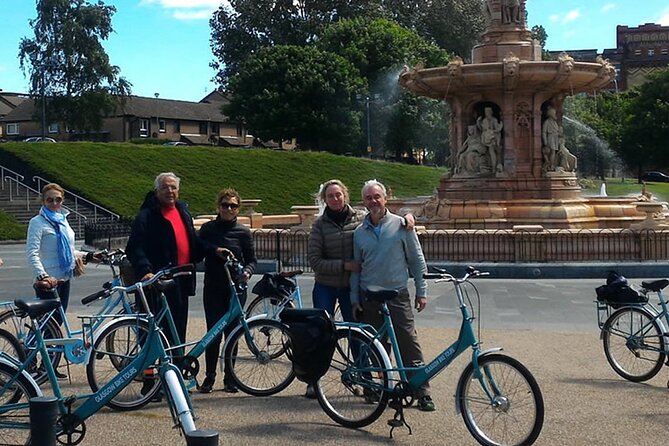
The standard bicycle is a postal-style bike. It has character, and riding one adds a local, slightly old-fashioned feel to the outing. Several accounts describe the bikes as comfortable and easy to ride, but one points out that the standard model has only three gears. You should not expect a sleek road bike or a modern mountain bike.
An e-bike is available for a £20 supplement, but it must be arranged directly rather than through the standard booking. That option may make sense if hills are a concern or if you want to save energy for sightseeing. A helmet is available if you want one.
The meeting point is near public transportation. Direct bookings also include free secure parking, according to the tour details. A classic Glasgow snack is included, giving you a small taste of local food during the outing.
The Clyde, Armadillo, and Glasgow’s working waterfront
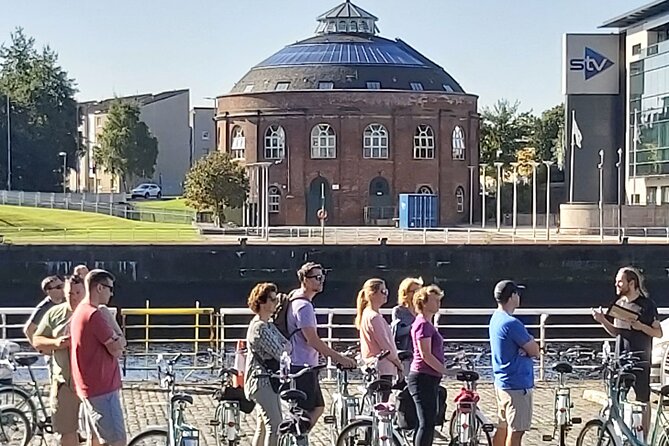
The route reaches the River Clyde and the Clyde Arc Bridge, better known locally as the Squinty Bridge because of its angled shape. You will hear about the Squinty and Squiggly bridges, two memorable pieces of Glasgow bridge slang, and stop for a closer look at the river.
The Clyde is more than a pretty waterfront. It explains much of Glasgow’s past and gives the ride a clear sense of place. The river shaped the city’s work, trade, industry, and transport. From a bicycle, you can move along it rather than simply viewing it from one fixed point.
The SEC Armadillo is another quick stop. Its shape is often compared with the Sydney Opera House, but the guide explains the design’s actual inspiration. This is the kind of short architectural story that makes a building more interesting than a quick photograph would.
You also visit the Tall Ship Glenlee, a three-masted vessel near the river. The ship does not sail away during the tour, so you can stop without worrying about missing it. Admission is not included, and the itinerary allows about 10 minutes there. The Clydeside Distillery is nearby, and the stop provides a look at Glasgow’s modern whisky industry. The standard tour does not include a distillery admission.
Kelvingrove, the university, and Glasgow’s greener side
One of the best parts of the ride is the university area. The University of Glasgow gives you a change of mood, with its grand campus buildings and hilltop setting. The guide also uses a curious connection between minus 273 degrees Celsius and Gilmorehill campus as a talking point. You will need to listen closely for the explanation.
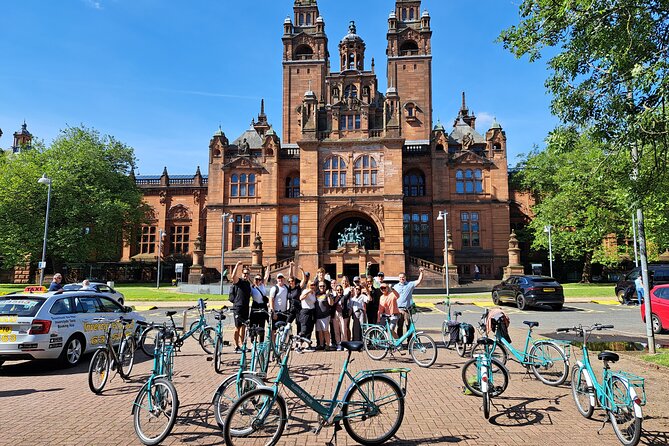
Kelvingrove Art Gallery and Museum is another major stop. The building itself is worth seeing, and general admission is free. The tour allows about 15 minutes, enough for an outside look and a short orientation, not enough for a full museum visit.
That time limit is important. If Kelvingrove is high on your Glasgow wish list, plan a separate visit. The same applies to the Riverside Museum, which covers transport and includes displays ranging from skateboards to aircraft. Ten minutes gives you an introduction, not a proper museum session.
The ride through Kelvingrove Park is one of the route’s strongest sections. The Kelvin riverside path feels quieter and more rural than you might expect inside a city. It is a good reminder that Glasgow is not only stone buildings and traffic. The path can also be busy with local walkers and cyclists, so stay alert and follow your guide’s pace.
One practical point: Glasgow weather can change quickly. A ride may pass through rain, sun, and more rain in a single morning. Dress for wet conditions and bring layers. The tour requires good weather to operate, and a cancellation caused by poor weather gives you the choice of another date or a full refund.
A few more Glasgow days to weigh up
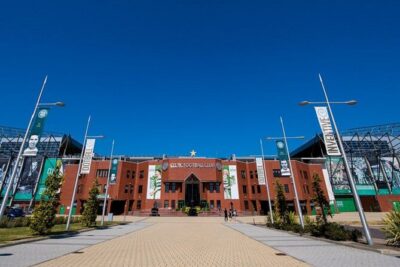
- Glasgow: Celtic Park Stadium Tour
★ 4.9 · 3,336 reviews - Guided Celtic Park Stadium Tour
★ 5.0 · 3,136 reviews - Glasgow: City Sightseeing Hop-On Hop-Off Bus Tour
★ 4.5 · 3,095 reviews - From Glasgow: Oban, Glencoe, Highland Lochs & Castles Tour
★ 4.9 · 2,123 reviews
Cathedral, Necropolis, and older Glasgow
Glasgow Cathedral brings the route back to the city’s older core. Its history reaches back to 1189, making it one of the most important historic stops on the ride. The 15-minute visit is mainly an introduction, so you should return later if you want time inside.
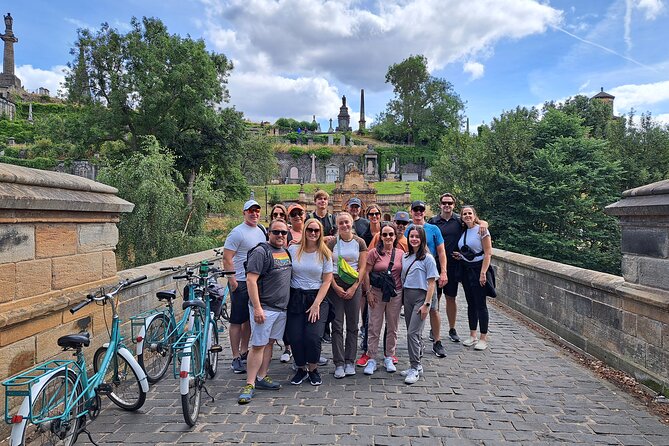
Nearby, the Necropolis adds a very different view of Glasgow. Around 50,000 people are buried there, and the elevated cemetery provides historic monuments along with views back toward the city. It is not a polished park, and the stonework can feel solemn, but it helps explain the wealth, faith, and social divisions of earlier Glasgow.
The bicycle is especially useful here because the cathedral and Necropolis sit away from the waterfront and university area. Connecting them on foot would take more time and energy. With a guide, you can focus on the stories rather than finding the entrance or choosing the best route.
The tour’s humor is part of the format. The stop descriptions use playful jokes about drinking, old buildings, and Glasgow’s rivalry with Edinburgh. That style will suit you if you enjoy a guide who mixes facts with local teasing. If you want a quiet, formal history lecture, this may feel too loose.
Riverside Museum, canals, and Speirs Wharf
The Riverside Museum offers another quick look at Glasgow’s transport story. Its collection includes vehicles and objects such as skateboards and aircraft. The stop is scheduled for around 10 minutes, so consider it a preview rather than a museum visit.
The route then reaches Speirs Wharf, linked with the Forth and Clyde Canal. The canal was completed in 1790 and helped connect Scotland’s east and west coasts. This is a useful stop for understanding how Glasgow’s waterways supported movement and trade before modern road networks.
Speirs Wharf is listed as an optional stop, so the exact experience may depend on the group, timing, or route conditions. The canals also offer a change from the main city streets. One memorable part of the ride is a slide near the canal, which adds a bit of fun to an otherwise historical section.
The canal paths are not a substitute for a full canal walk, but they give you a taste of Glasgow’s quieter edges. You may also find the riding pace a little quick if you stop often for photographs. One account specifically warns that a rider who stopped to take pictures could fall behind. Tell the guide early if you need frequent stops.
How the guides shape the experience
The guide can make or break a city bike tour. Here, the guide names connected with especially strong outings include Keith, Mike, Dillon, Alastair, Ali, Owen, and Johann. You are not guaranteed a particular guide, but these names give you an idea of the personal nature of the experience.
Keith is described as a proud Glaswegian who takes care with safety, pacing, and local stories. Mike received praise for clear route instructions and traffic handling, including on a day when the group became a private tour because nobody else had booked. Alastair was noted for careful riding and the Kelvin Walkway and canal sections.
Other guide accounts highlight humor, energy, and a willingness to answer questions. That last point is worth keeping in perspective. Most of the feedback is very positive, but some riders felt a guide was less comfortable with questions outside the prepared commentary. The quality of conversation may depend on who leads your ride.
The route itself is clear enough that you should know what you are signing up for. It is a broad overview, not a detailed historical seminar. You will see many places, hear short explanations, and leave with ideas for what to visit later.
Fitness, traffic, and bike comfort
You need to be fit enough to ride a bicycle for about three hours. The route is manageable for someone in generally good health, but it is not entirely flat. A few hills can make you work, particularly if you are using the standard three-gear bike.
The guide leads through traffic and communicates the route. Much of the ride uses riverside paths, parks, and canals, with only short stretches on city streets. Still, this is an active tour. You need to pay attention, control your bicycle, and stay with the group.
The bikes have received mixed practical feedback. Some riders found them comfortable and easy to ride. Another found the limited gears less suitable, and one person felt the pace was a little fast. If you are a confident cyclist, this should be straightforward. If you rarely cycle, ask about an e-bike before booking and arrange it directly.
The helmet is optional. You can use one if you prefer, and I would recommend it for anyone who feels uneasy in traffic or on unfamiliar paths.
Is $81.87 a fair price?
At $81.87 per person, this is not the cheapest way to see Glasgow. The value comes from what the fee combines: a three-hour guided route, bicycle use, an optional helmet, local commentary, a snack, and transport between sights that are too spread out for a comfortable walk.
You are not paying for long admissions. Most stops are outside views or short introductions, and the Tall Ship Glenlee does not include admission. Kelvingrove, Glasgow Cathedral, the Necropolis, and the other public areas are approached as sightseeing stops rather than extended visits.
That makes the tour a good use of money if you have limited time or want a city orientation on your first day. It is less useful if you already know Glasgow well, plan to spend hours inside the museums, or want a slow photography ride.
The small group improves the value. A large group would make traffic, questions, and stops harder. With a maximum of 10 people, you are paying for a more controlled route and direct help from the guide.
Who should book this Glasgow bike tour?
I would choose this tour for a first visit, a short stay, or a cruise stop in Greenock when you want to reach Glasgow and see a lot in one morning. One practical route to the meeting point is the shuttle bus from the port, with a nearby train also available, followed by a walk to Drygate.
It suits active couples, friends, solo riders, and families with older children who can manage a three-hour ride. It also works well as a first overview before returning on foot to Kelvingrove, the cathedral, the Riverside Museum, or the Necropolis.
You may want another type of tour if you dislike hills, need a slow pace, want detailed museum time, or prefer a fully sheltered activity in uncertain weather. The route has a maximum of 10 people, but a small group does not remove the physical demands of cycling.
Should you book it?
Book it if you want to connect Glasgow’s major districts in one outing and enjoy seeing the city through its rivers, canals, parks, bridges, and old buildings. The mix of scenery, exercise, local humor, and practical navigation is the main reason to choose it.
Skip it if you want long visits inside museums or a purely historical tour. If you book, wear weatherproof layers, arrive ready to ride, ask about the £20 e-bike option if needed, and tell the guide when you need extra photo stops. For an active first look at Glasgow, this is a strong choice.
FAQ
How long does the Glasgow City and Clyde Bridges Bike Tour last?
The tour lasts approximately three hours.
Where does the tour start and finish?
It starts at Drygate Bar, Kitchen and Brewing Co., 85 Drygate, Glasgow G4 0UT. The activity ends back at the same meeting point.
How many people can join the tour?
The group is limited to a maximum of 10 participants.
Is bicycle rental included?
Yes. Use of a standard bicycle is included in the tour price.
Can I book an e-bike?
An e-bike is available for a £20 supplement, but it must be booked directly with Glasgow Bike Tours.
Is a helmet included?
A helmet is available if you want one.
Is the tour conducted in English?
Yes. The guide provides commentary in English.
Do I need to be physically fit?
You should be fit enough to ride a bicycle for about three hours. The route includes some hills.
What happens if bad weather cancels the tour?
If poor weather causes cancellation, you will be offered another date or a full refund. You can also cancel for a full refund up to 24 hours before the experience start time.
Just added around Glasgow
- Private Harry Potter, Glenfinnan Viaduct, Highlands tour Glasgow★ 5.0 · 8 reviews
- Glasgow: Mountains, Glens & The Loch Ness Monster Day Tour★ 4.8 · 8 reviews
- From Glasgow: Castles, Clans & Outlander Day Tour★ 4.8 · 8 reviews
- Edinburgh Custom Private Walking Tour With A Guide (Private Tour)★ 4.5 · 8 reviews
- From Glasgow; Loch Lomond and Highlands Private Day Tour★ 5.0 · 9 reviews
- Loch Lomond, Inveraray and Argyll Private Tour from Glasgow★ 5.0 · 9 reviews
- Fun and Flexible Treasure Hunt Around Glasgow with Cryptic Clues★ 5.0 · 9 reviews
- Fun Glasgow City Centre Walking Tour Guided★ 5.0 · 9 reviews
Glasgow Tours, compared.

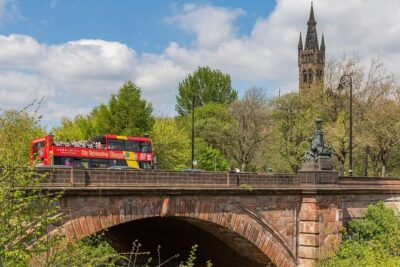
City Sightseeing Glasgow Hop-On Hop-Off Bus Tour
Read our review →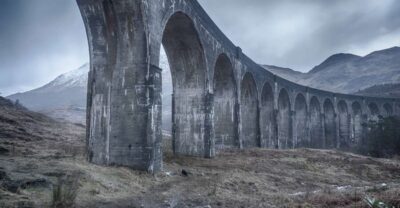
Glenfinnan, Fort William, and Glencoe Day Trip
Read our review →
Loch Ness, Glencoe and Highlands Tour with Cruise
Read our review →
Browse the lists this tour appears in