
Reviewed · GLASGOW TOURS
Walking Tour of Glasgow
Glasgow’s past comes alive through its characters. This short walk uses actor-guides such as Gordon Hart, Ian, Luke, and Marty to turn grand buildings, odd statues, and old trade routes into stories you can remember. George Square and the City Chambers provide the grand opening, while the cone-topped Duke of Wellington supplies the city’s best bit of comic mystery.
I like the small maximum group of 12, which makes it easier to hear the guide and ask questions. I also like the practical touch of ending near Glasgow Cathedral, giving you a useful starting point for your own visit. The main drawback is the compact route: you get a strong central introduction, but not a broad tour of Glasgow, and the usual Scottish rain can affect the experience.
Key points at a glance
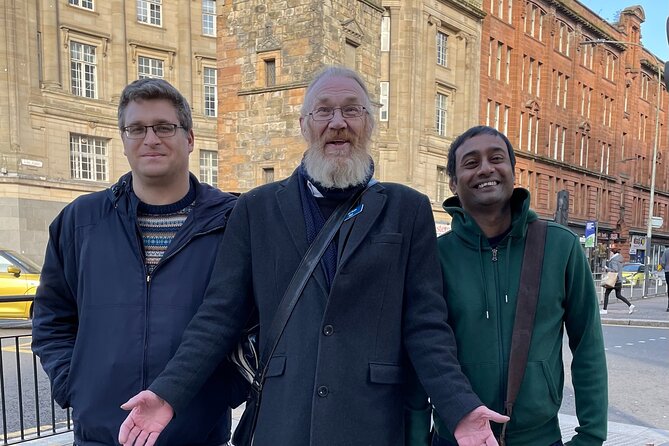
- Actor-guides bring the past to life: Gordon, Ian, Luke, and Marty have each led lively, story-driven walks.
- Five central stops cover a lot: See the City Chambers, Gallery of Modern Art, George Square, Merchant City, and Glasgow Cathedral.
- The tour is genuinely small: The maximum group size is 12 people.
- Expect history with humor: Stories can touch on tobacco, coal, shipyards, witch trials, football rivalry, science, and the American War of Independence.
- The route ends well: Glasgow Cathedral and Glasgow Cross put you near the medieval heart of the city.
- At $23.61, it is a useful first-day orientation: You pay for a guided introduction, not entry to indoor attractions or refreshments.
Why this Glasgow walk works so well
Many city walks simply point at buildings and recite dates. This one takes a more theatrical route. The guides are actors, and that matters in Glasgow, where local history is full of strong personalities, sharp social contrasts, and stories that benefit from a good delivery.
Gordon Hart receives especially strong praise for his humor and ability to keep a group engaged in poor weather. Ian is described as charming and engaging, with a flair for telling Glasgow stories. Luke brings a clear voice and a strong grasp of the city’s past, while Marty has a knack for making Scottish history concise and amusing.
You should expect the exact style to vary with the guide. That is part of the character of this experience. One guide may spend more time on historical detail, while another may lean harder into performance and local anecdotes.
The walk begins at 10:30 a.m. and lasts about two hours, though one account puts the walk at just over an hour and a half. At roughly $23.61 per person, I see it as a fair price for a first look at central Glasgow, especially if you use the guide’s food suggestions and sightseeing tips during the rest of your stay.
More Walking Tours in Glasgow
- Glasgow City Centre Walking Tour with Local Guide
★ 5.0 · 1,326 reviews - Glasgow: Ghouls, Ghosts & Gruesome Tales Guided Walking Tour
★ 4.9 · 887 reviews - Glasgow: City Center Guided Walking Tour
★ 4.7 · 759 reviews
City Chambers and Glasgow’s grand civic face
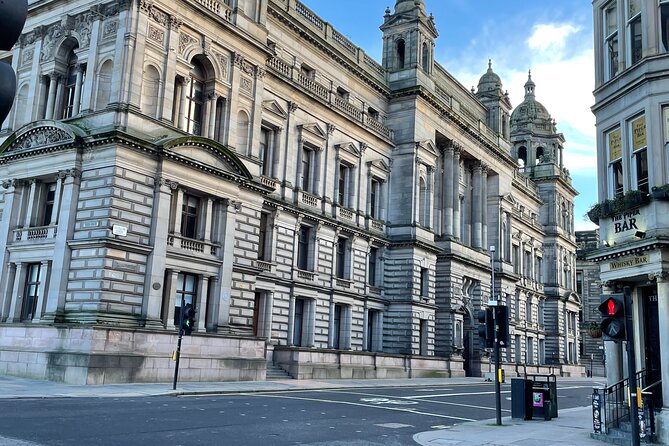
The first stop is Glasgow City Chambers, one of the city’s most impressive municipal buildings. You get about 10 minutes here, with no admission fee included or needed for this outdoor stop.
The building reflects Glasgow’s Victorian and Edwardian confidence. The marble staircase is described as one of the largest in Europe, and the building’s scale helps explain the money and ambition that once powered the city. This is not a modest town hall. It was built to project civic strength.
Film fans may recognize the City Chambers from Indiana Jones and the Dial of Destiny, The Buccaneers, and World War Z. The film connection is a nice extra, but the building is more interesting when you look at it as a statement about Glasgow’s industrial age.
The 10-minute pause is enough to get the main idea, but not enough for a slow architectural inspection. If the interior is open to you later, plan a separate visit. The tour uses this stop as a visual and historical starting point, not as a full building tour.
The Duke of Wellington and the city’s favorite cone
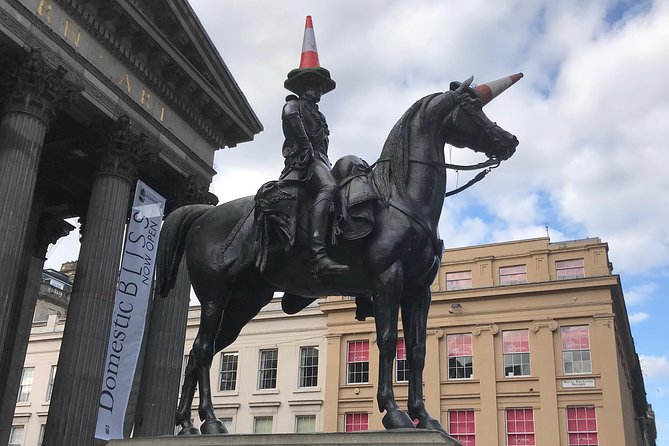
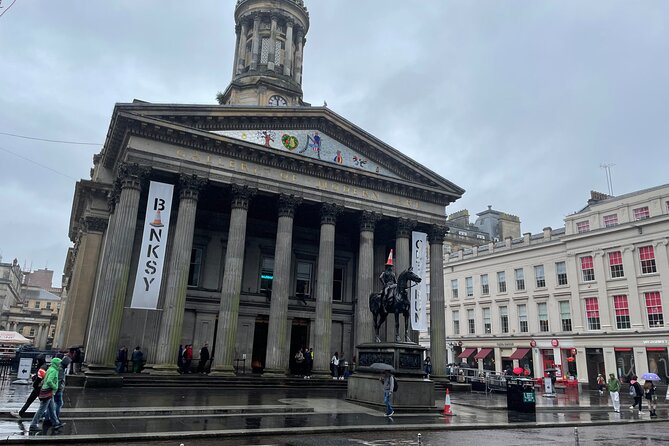
Next comes the Gallery of Modern Art, where the famous statue of the Duke of Wellington waits outside with a traffic cone often placed on his head. The tour uses this unusual sight to explain both the building and Glasgow’s sense of humor.
The statue is one of the city’s most recognizable landmarks, and its cone has become a symbol of local mischief. You will learn about the building’s earlier lives as a private house, stock exchange, and library before it became a gallery.
This is a good example of the tour’s method. You are not only told what a building is now. You get a quick sense of how Glasgow has reused its spaces as the city changed.
Again, the stop lasts about 10 minutes. That is enough for the story and a photograph, but you will not have time to visit the gallery’s exhibitions as part of the walk. If modern art interests you, treat this stop as a preview and return later.
George Square’s statues and uncomfortable history
George Square is one of the best places to see how public monuments shape a city’s story. More than a dozen statues fill the square, representing Scottish and British history, empire, literature, science, politics, and public life.
The collection is not balanced by modern standards. Only one statue represents a woman, and the group reflects the priorities of the people who commissioned and celebrated these monuments. That imbalance is not glossed over. It becomes part of the discussion.
You may hear about writers, scientists, and less familiar figures, along with some amusing or infamous characters. The result is not a simple parade of famous names. It is a chance to ask who gets remembered in stone, and who does not.
The guide spends around 10 minutes here. That short window works if you want an introduction, but it may leave you wanting to return and inspect the statues yourself. I recommend noting the names that catch your attention, then taking a second look after the tour.
Same country, a completely different kind of day out:
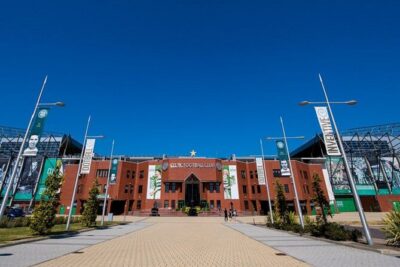
- Glasgow: Celtic Park Stadium Tour
★ 4.9 · 3,336 reviews - Guided Celtic Park Stadium Tour
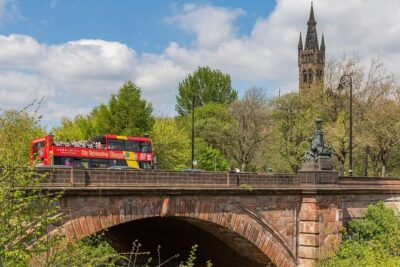
★ 5.0 · 3,136 reviews - Glasgow: City Sightseeing Hop-On Hop-Off Bus Tour
★ 4.5 · 3,095 reviews - From Glasgow: Oban, Glencoe, Highland Lochs & Castles Tour
★ 4.9 · 2,123 reviews
Merchant City and the money behind Glasgow
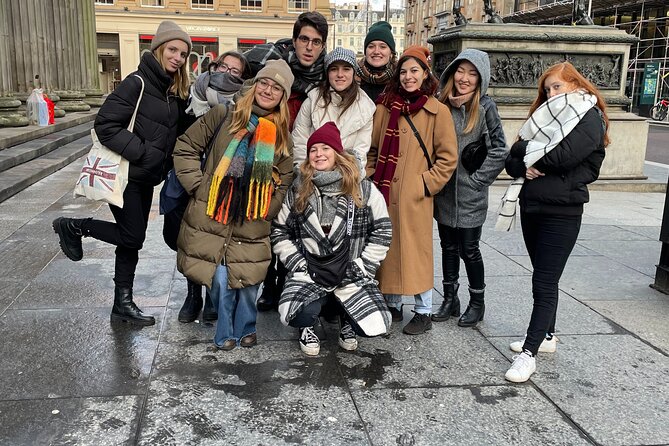
Merchant City gives the walk its economic backbone. This was where Glasgow’s wealth grew through trade, shipping, industry, and connections across the British Empire.
The area is tied to tobacco merchants, port activity, shipyards, coal, and the rise of Glasgow’s first millionaires. The stories help connect the grand civic buildings and statues to the less comfortable sources of the city’s wealth.
This part of the walk can also put Glasgow’s architecture in context. Coal affected the appearance of buildings, while trade funded the homes, businesses, and public projects that helped shape the center.
The tour’s historical range can be wide. You might hear about the American War of Independence, trade measurements introduced in 1882, and the origins of major industries. These details are useful because they show Glasgow as a working city, not just a collection of handsome facades.
You get about 10 minutes here, so expect a brisk explanation rather than a long neighborhood wander. The walk does not cover a large part of Merchant City, but it gives you a reason to explore the area again for restaurants, shops, and architecture.
Glasgow Cathedral and the walk’s useful finish
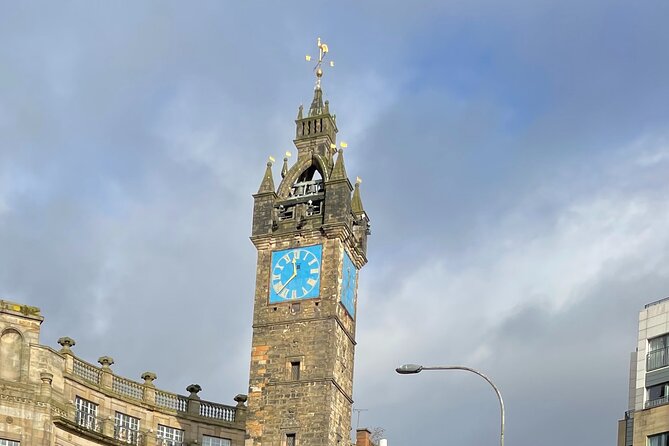
The final stop is Glasgow Cathedral, described as Scotland’s only surviving medieval cathedral. The tour ends close to the entrance, allowing you to continue with your own visit.
This is a smart place to finish. The earlier stops focus on Glasgow’s civic and commercial identity, while the cathedral points you toward the city’s older roots. You can spend time inside at your own pace rather than being hurried through a short group visit.
The ending is also practical. You finish at Mercat Cross on High Street, in the area known as Glasgow Cross. From there, you are close to the medieval core of the city. The description makes a playful point that the end is about 10 minutes away, or 500 years, from the start. In other words, the walk moves you from modern civic Glasgow toward its older center.
The cathedral stop is listed as 20 minutes, but the tour ends nearby. If you want a proper visit, allow extra time after the group walk. Admission is not listed as an included feature, so do not treat this as a prepaid cathedral entry.
The actor-guide difference
The strongest reason to choose this walk is the guide. Gordon, Ian, Luke, and Marty are not simply reading a script beside a building. Their performance skills help with pacing, voice, comic timing, and character.
That does not mean the tour is only entertainment. Luke is praised for clear explanations and strong historical detail. Gordon is noted for useful restaurant suggestions, including affordable places to eat and a pizza recommendation that helped on a chilly day. Ian is repeatedly associated with engaging stories and humor.
The best moments seem to come when the guide links a small fact to a wider story. The cone on the Duke of Wellington becomes a local custom. A measurement system becomes part of the history of trade. A statue becomes a way to discuss who Glasgow chose to honor.
You should still keep your expectations sensible. Actor-led tours can feel more personal and lively, but the experience depends on who leads your group. The supplied information does not promise a particular guide, so book for the format and route rather than for Gordon, Ian, Luke, or Marty specifically.
What you will and will not cover
This is a central Glasgow introduction, not a full city tour. The route focuses on a compact area around George Square, the City Chambers, the Gallery of Modern Art, Merchant City, and Glasgow Cathedral.
That compact design has a benefit. You can learn the city center without spending half the day walking between distant sights. It is a sensible choice on your first full day, when you want basic orientation before visiting museums, shops, restaurants, or historic sites on your own.
The tradeoff is limited geographic range. You will not see every district or major attraction in Glasgow. One account specifically notes that the walk covers a small amount of ground, while another appreciated its slow pace through the center.
The pace seems manageable for most people. Most participants can take part, and service animals are allowed. Still, it is a walking tour, so comfortable shoes and a waterproof layer make sense. The experience requires good weather, and poor conditions can lead to a different date or a full refund.
Group size, timing, and practical value
The walk begins at 10:30 a.m. and accepts no more than 12 people. That is a useful limit. A guide can keep a small group together more easily, and you have a better chance of hearing stories clearly on a city street.
At two hours, it fits neatly into a morning. You can have breakfast beforehand, take the walk, and still have most of the afternoon for the cathedral, museums, shopping, or a longer meal.
The tour includes local taxes. Bottled water, coffee, and tea are not included, so bring your own drink if you want one during the walk. There is no admission charge listed for the five stops, but the route mainly introduces them from outside, with the cathedral visit continuing independently after the tour.
The $23.61 cost is reasonable if you value context and storytelling. You could walk through the same streets for free, but you would miss the connections between civic architecture, trade, empire, statues, coal, and local customs. If you prefer to explore alone and read plaques at your own pace, the fee may feel less useful.
Confirmation arrives when you book, and the meeting point is in Glasgow. The walk ends at Mercat Cross, High Street, Glasgow G1 5AA. Free cancellation is available up to 24 hours before the 10:30 a.m. start. Late cancellations and changes are not refunded, and the operator may cancel for poor weather or if too few people book.
Who should book this walk
I would choose this for a first visit to Glasgow, especially if you have only a short stay. It gives you names, landmarks, and local stories that make later independent exploring easier.
It also suits anyone who likes history delivered with humor. The material can range from the Romans and witch trials to tobacco barons, football rivalry, coal, and industrial growth. The guides add personality without turning the city into a stage show at every stop.
Families and mixed-age groups may appreciate the short route and clear storytelling, though the experience is not described as a child-specific tour. The small group is helpful for anyone who dislikes crowded sightseeing groups.
You may want something else if your main goal is modern Glasgow culture. The historical focus is strong, and one account specifically wished for more information about present-day local life. You may also prefer a longer route if you want to cover more ground.
Should you book it?
Book this tour if you want a lively, affordable introduction to central Glasgow, with a small group and a guide who can turn facts into stories. The best reasons are the actor-led delivery, the useful central route, and the mix of grand buildings with odd details such as the Duke of Wellington’s cone.
Skip it if you want extensive time inside each attraction, a broad tour of the whole city, or a detailed look at present-day Glasgow. For most first-time visitors, though, this is a smart way to spend a morning. Use it to get oriented, note the places you want to revisit, and follow the guide’s food advice after the walk.
FAQ
How long does the Walking Tour of Glasgow last?
The tour lasts approximately two hours. One account describes the walk as just over an hour and a half, so allow about two hours in your schedule.
What time does the tour start?
The tour starts at 10:30 a.m.
Where does the tour end?
It ends at Mercat Cross on High Street, Glasgow G1 5AA, near Glasgow Cross and the medieval center of the city.
What sights are included on the route?
The route visits or discusses Glasgow City Chambers, the Gallery of Modern Art, George Square, Merchant City, and Glasgow Cathedral.
Is entry to the attractions included?
The listed stops have no admission ticket included. The tour ends close to Glasgow Cathedral’s entrance, giving you time to conduct your own visit afterward.
How many people can join the tour?
The maximum group size is 12 people.
Can I cancel for a full refund?
Yes. You can cancel at least 24 hours before the experience start time for a full refund. Cancellations or changes made less than 24 hours before the start are not refunded.
Just added around Glasgow
- Glasgow: Mountains, Glens & The Loch Ness Monster Day Tour★ 4.8 · 8 reviews
- Private Harry Potter, Glenfinnan Viaduct, Highlands tour Glasgow★ 5.0 · 8 reviews
- From Glasgow: Castles, Clans & Outlander Day Tour★ 4.8 · 8 reviews
- Edinburgh Custom Private Walking Tour With A Guide (Private Tour)★ 4.5 · 8 reviews
- From Glasgow; Loch Lomond and Highlands Private Day Tour★ 5.0 · 9 reviews
- Loch Lomond, Inveraray and Argyll Private Tour from Glasgow★ 5.0 · 9 reviews
- Fun and Flexible Treasure Hunt Around Glasgow with Cryptic Clues★ 5.0 · 9 reviews
- Fun Glasgow City Centre Walking Tour Guided★ 5.0 · 9 reviews
Glasgow Tours, compared.


City Sightseeing Glasgow Hop-On Hop-Off Bus Tour
Read our review →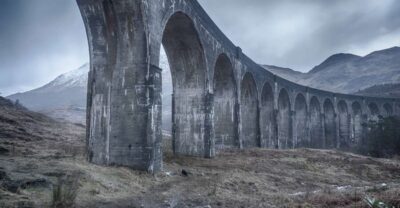
Glenfinnan, Fort William, and Glencoe Day Trip
Read our review →

Loch Ness, Glencoe and Highlands Tour with Cruise
Read our review →
Browse the lists this tour appears in