
Reviewed · GLASGOW TOURS
Glasgow’s Music Mile Tour
Glasgow’s Music Mile turns a city-center walk into a backstage pass. In two hours, you move from the grand Royal Concert Hall to scruffy clubs and the legendary King Tut’s Wah Wah Hut, hearing how Glasgow made room for traditional music, punk, pop, jazz, and young guitar bands.
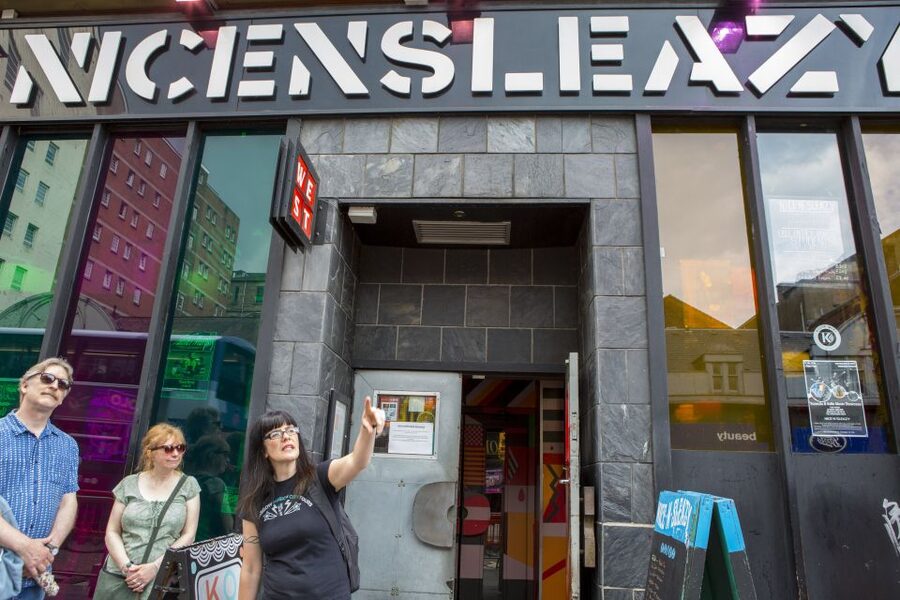
I like the mix of lost venues and working music rooms, especially the stories of the late Apollo and the chance to see where Oasis, Blur, and the Manic Street Preachers got early breaks. I also like the Nice ‘n’ Sleazy refreshment stop, which gives the tour a lived-in pub feel rather than making it a series of outside photo stops.
The main consideration is pace. This is a whistle-stop walk with stairs and inclines, and a strong Scottish accent can take extra effort to follow. Wear flat shoes, bring waterproof clothing, and remember that a stage selfie at King Tut’s depends on access that day.
Key points about Glasgow’s Music Mile

- The Apollo’s lost stage: Hear stories about the famous Glasgow concert hall and the rock acts that once played there.
- King Tut’s Wah Wah Hut: Finish at one of the city’s best-known small venues, with a possible chance to take a photo onstage.
- Celtic Connections: Learn how a winter festival grew into one of the world’s biggest celebrations of traditional music.
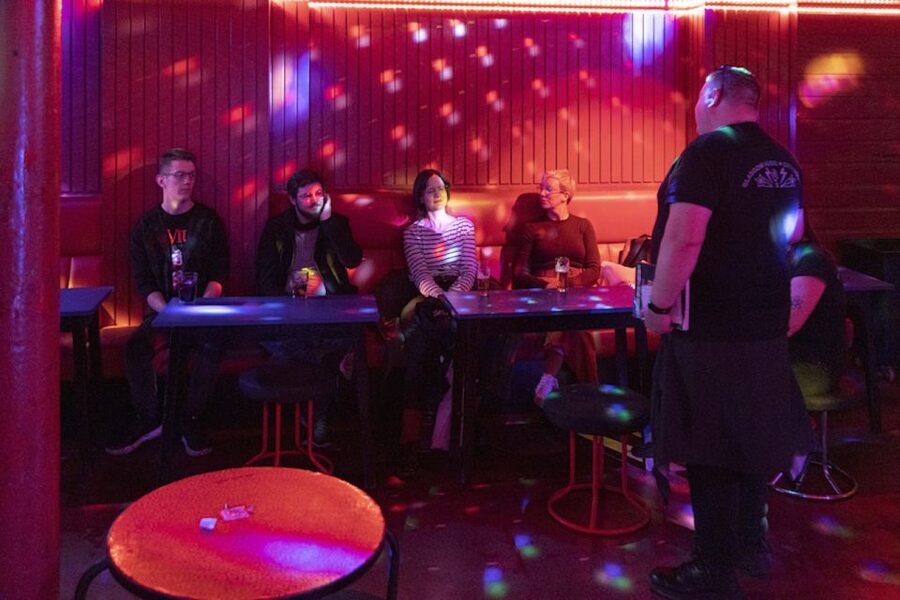
- Nice ‘n’ Sleazy stop: Pause for a drink in a pub closely tied to Glasgow’s club and band culture. Your drink is not included.
- Many Glasgow sounds: The route reaches from dancehall and traditional jazz to punk, pop, and current guitar bands.
- Good value for music fans: At $26 per person, the tour gives you two hours of local stories, venue access when possible, and a guide who knows the city’s music scene.
Starting at the Royal Concert Hall
Meet on the steps at the Sauchiehall Street entrance to the Glasgow Royal Concert Hall. Look for a guide wearing a black Glasgow Music City Tours T-shirt with the company logo.
This is a useful starting point because the Royal Concert Hall represents the polished end of Glasgow’s music life. From here, the walk quickly widens its view. You are not getting a tour devoted only to famous rock bands or only to traditional Scottish music. The route connects formal concert spaces, arts institutions, old halls, pubs, and small clubs.
The tour lasts two hours, so expect a steady pace rather than a long visit inside every building. Your guide does the explaining while you move through central Glasgow. That format works well if you want a clear introduction early in your trip, since it gives you a map of the places that shaped the city’s music culture.
Guides have included Fiona and Phil, both praised for making the material lively and easy to follow. Fiona’s storytelling has been especially playful, while Phil has been noted for mixing information with humor. The exact guide depends on the date, but the tour is conducted in English.
A few more Glasgow days to weigh up
- Glasgow: Celtic Park Stadium Tour
★ 4.9 · 3,336 reviews - Guided Celtic Park Stadium Tour
★ 5.0 · 3,136 reviews - Glasgow: City Sightseeing Hop-On Hop-Off Bus Tour
★ 4.5 · 3,095 reviews
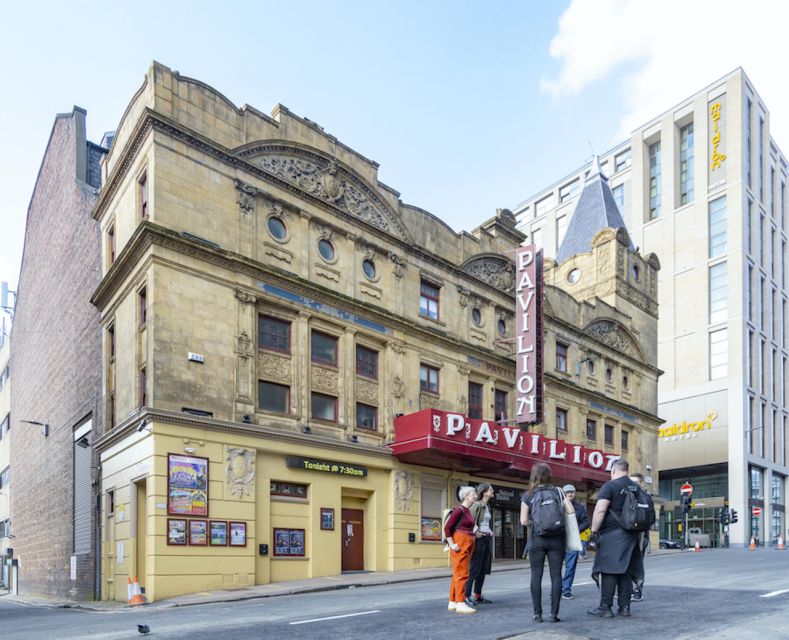
Remembering the Apollo and the old Empire
One of the most appealing parts of the walk is its attention to venues that no longer operate. The Apollo is the star of this section. The hall is gone, but its reputation remains tied to major rock concerts and the excitement of Glasgow’s touring scene.
You hear about the Apollo’s legendary gigs and the atmosphere around a venue that once mattered greatly to music fans. This is more than a list of performers. The value is in understanding how a now-absent building can still shape the way people remember a city.
The old Empire adds another layer. Its stories take you back to an earlier period of entertainment, before Glasgow’s modern club circuit fully took shape. The route shows that the city’s music story did not begin with guitar bands. It has passed through different halls, audiences, styles, and social habits.
I like this section because it asks you to picture a venue you cannot enter. That can be more rewarding than visiting a preserved museum room, but it also requires imagination. If you want a tour filled with intact interiors and long stops, this walk may feel too quick. If you enjoy connecting present-day streets with vanished places, the Apollo stories are a strong reason to book.
Celtic Connections and Glasgow’s traditional sound

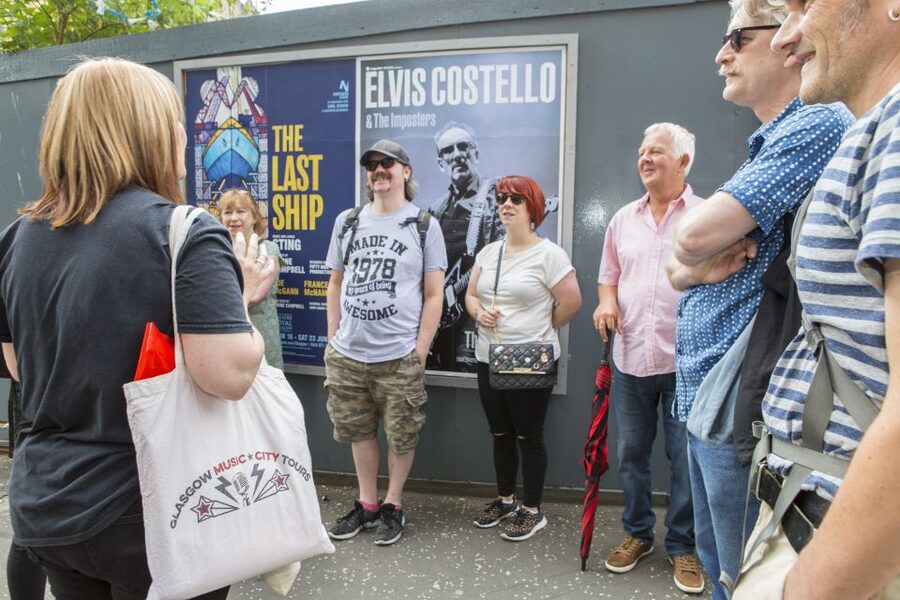
The tour also visits the home of Celtic Connections and explains how the festival became one of the biggest winter music festivals in the world. This gives the walk a welcome change of rhythm.
Glasgow is often reduced to its rock reputation, but Celtic Connections shows another side of the city. The festival helps place traditional music in a modern setting, with Glasgow acting as a meeting point for performers and audiences. You learn how a seasonal event can become a major part of a city’s cultural calendar.
This stop matters even if you do not usually listen to folk music. It helps explain why Glasgow received UNESCO City of Music status and why the city’s music identity reaches far beyond concert halls and late-night clubs.
The festival material is also a good counterweight to the Apollo and King Tut’s. One tells the story of large touring acts. The other focuses on emerging bands. Celtic Connections shows how older musical traditions continue to draw large audiences and shape Glasgow’s public life.
The Conservatoire and Glasgow School of Art
The walk links music with education and the arts at the Conservatoire and Glasgow School of Art. These are not presented as unrelated sightseeing stops. Your guide explains how both institutions have contributed to the city’s music scene.
That connection is useful because music rarely develops in isolation. Schools, rehearsal spaces, art communities, clubs, and concert halls all help give performers a place to learn and work. The route lets you see those links while moving through the center.
You should expect commentary rather than a full interior tour of either institution. The appeal lies in the stories and the setting. If you are interested in how a city produces new artists, this part adds substance to the more familiar tales of famous bands.
The walk includes stairs and inclines, so this is not a completely flat stroll. Comfortable shoes matter, especially if Glasgow’s weather is wet. Waterproof clothing is also a sensible choice, since the experience takes place largely on foot.
Same country, a completely different kind of day out:
- From Glasgow: Oban, Glencoe, Highland Lochs & Castles Tour
★ 4.9 · 2,123 reviews - City Sightseeing Glasgow Hop-On Hop-Off Bus Tour
★ 4.5 · 1,873 reviews - From Glasgow: Glenfinnan, Fort William, and Glencoe Day Trip
★ 4.7 · 1,753 reviews - From Glasgow: Loch Ness, Glencoe and the Highlands Tour
★ 4.6 · 1,746 reviews
From the Centre for Contemporary Arts to Nice ‘n’ Sleazy
The Centre for Contemporary Arts brings the route into a more experimental cultural setting. From there, the tour reaches Nice ‘n’ Sleazy, a pub known for its place in Glasgow’s music culture.
The refreshment stop is included in the tour, but your drink is not. That distinction is worth noting when you budget. You get a chance to pause and buy something, but you should not expect a meal or a complimentary beverage.
I like the pub stop because it gives the group a change of pace. After hearing about old halls and institutions, you can sit or pause in a working music venue rather than simply looking at a plaque. Nice ‘n’ Sleazy helps show how Glasgow’s music life continues in informal spaces.
The route’s range of styles becomes especially clear around this part of the walk. The guide may touch on dancehall, traditional jazz, punk, pop, and current young guitar heroes. The result is not a specialist lesson in one genre. It is a quick, broad account of how different sounds have found a place in the city.
The drawback is that two hours cannot give each style equal treatment. If you have a particular interest, ask questions as you walk. A good guide can often add useful detail, but the tour still needs to keep moving to reach King Tut’s on time.
Finishing at King Tut’s Wah Wah Hut

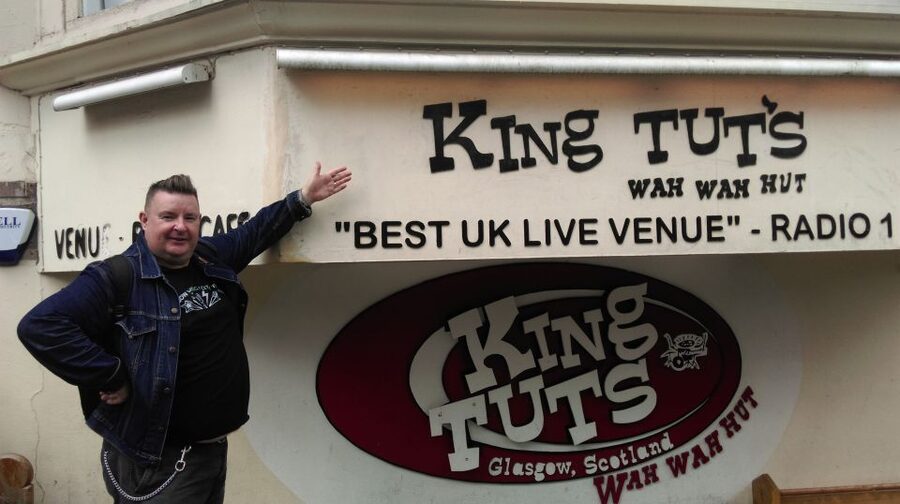
The final stop is King Tut’s Wah Wah Hut, one of the most important small venues on the route. It is linked with the early careers of Oasis, Blur, and the Manic Street Preachers, making it a natural finish for a tour about music venues and opportunity.
Depending on access, you may be able to step under the stage lights and take a selfie on the platform where major acts once played. This is not guaranteed, so treat it as a welcome possibility rather than the central promise of the tour.
That limitation is fair. A working venue may have its own schedule, licensing rules, or preparations underway. Even if you cannot go onstage, arriving at King Tut’s with the stories fresh in your mind gives the place more meaning than it would have as a quick photo stop.
King Tut’s also represents the less polished side of a music career. Before a band reaches a large concert hall, it may play small rooms, build a local following, and prove itself to an audience standing close to the stage. The venue gives the tour a human scale after the larger Apollo stories.
For many people, this will be the most memorable stop. You get a direct connection to bands that later became famous, but the venue’s real importance is its role in giving new performers a chance.
What the two-hour format feels like
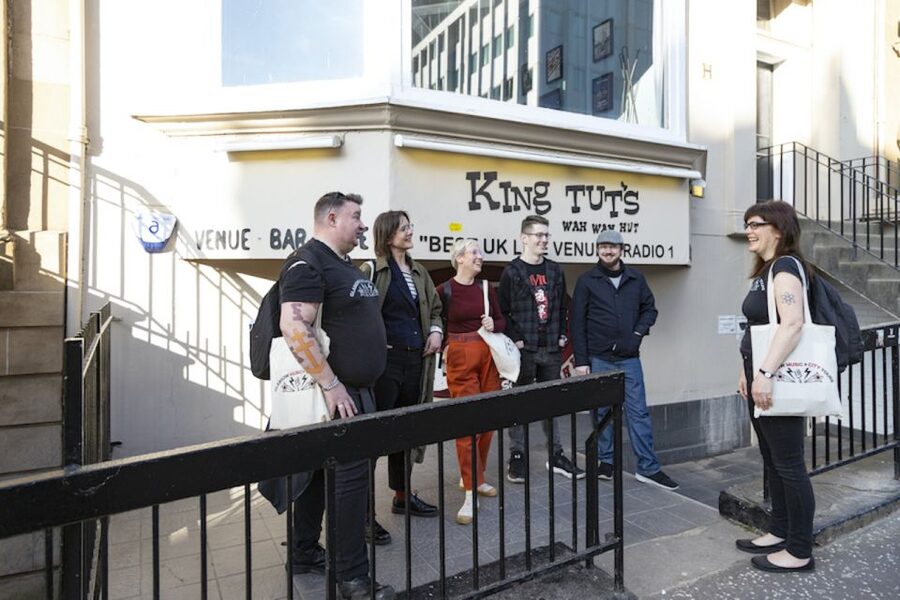
This is a compact walking tour, not an all-day music pilgrimage. The phrase whistle-stop is accurate. You cover several locations and hear a lot of stories, but you will not spend a long time inside each venue.
That format suits you if you want an overview before choosing evening concerts or exploring Glasgow’s music scene on your own. It also works well for a short city break, since the tour takes only two hours and remains in the city center.
You should arrive ready to listen while walking. The guide’s stories are the main experience, not recorded audio or a printed guide. The atmosphere depends on the personality of the person leading the group, and Fiona and Phil have both been praised for bringing humor and energy to the route.
A Scottish accent may be difficult for some people, especially when the guide is speaking quickly or telling a story in a noisy street. One German participant specifically found the accent challenging at times. If you miss a name or date, ask the guide to repeat it. That is more useful than trying to fill in the gaps later.
The route is suitable from age 14 because of licensing laws. It is not described as a family attraction for younger children, and the pub element may be less appealing to them anyway.
Is $26 a fair price?
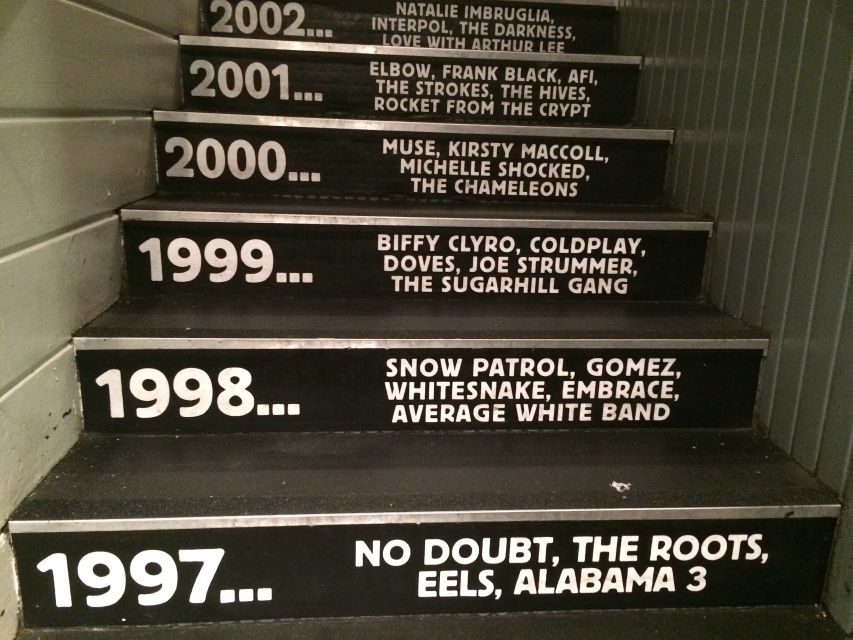
At $26 per person, the value is strongest for visitors who would otherwise walk past these places without knowing their role in Glasgow’s music story. You are paying for a two-hour guided route, local interpretation, a refreshment stop, and possible access to the King Tut’s stage.
The price is less compelling if you only want to visit famous venues independently. Several locations are in the center, and you can see some of them from outside without booking a tour. What you cannot easily recreate is the connected story linking the Apollo, Celtic Connections, the art institutions, Nice ‘n’ Sleazy, and King Tut’s.
A local music fan can also benefit. The route is not limited to first-time visitors, and it has enough background to make familiar streets feel different. Someone who already knows the venues may still enjoy revisiting them through stories about Glasgow’s wider music scene.
The drink at Nice ‘n’ Sleazy costs extra, as do any meals. Plan for that small addition rather than assuming the refreshment stop includes a beverage.
The booking terms add flexibility. You can cancel up to 24 hours before the tour for a full refund, and reserve now while paying later. Starting times vary, so check availability for the date you want.
Who should book this Glasgow music walk?
I would choose this tour for:
- First-time visitors who want a fast introduction to Glasgow’s music identity
- Rock and pop fans interested in the Apollo, Oasis, Blur, and King Tut’s
- People who want traditional music included alongside modern bands
- Glasgow locals who enjoy seeing familiar venues through a wider story
- Visitors planning to attend concerts and looking for context before the show
- Anyone who prefers a social walking tour to a formal museum visit
I would think twice if you dislike walking in wet weather, have difficulty with stairs or inclines, or want extended time inside every venue. The route is active and fairly quick, and stage access at King Tut’s cannot be promised.
Practical tips for a better experience
Wear comfortable, flat shoes. The route includes stairs and inclines, and the city’s weather can change quickly, so waterproof clothing is a smart addition.
Meet at the correct side of the Royal Concert Hall, on the Sauchiehall Street entrance steps. Look for the black Glasgow Music City Tours T-shirt with the company logo.
Bring enough money for a drink at Nice ‘n’ Sleazy and any food you may want before or after the walk. The tour includes the stop but not drinks or meals.
Keep your schedule slightly open after the tour if you want to spend more time around King Tut’s or explore other music venues mentioned along the way. The tour gives you names and context, but your own evening is where you can follow those leads.
Should you book Glasgow’s Music Mile Tour?
Book it if you want Glasgow’s music story presented as a connected walk rather than a set of isolated landmarks. The Apollo’s vanished stage, Celtic Connections, Nice ‘n’ Sleazy, and King Tut’s create a good balance of memory, tradition, working venues, and young bands.
At $26, it is a sensible buy for music fans and curious first-time visitors. Go in expecting a brisk English-language walk, not guaranteed stage access or a long indoor venue tour. With good shoes, a rain layer, and an interest in the stories behind the venues, this is one of the more enjoyable ways to understand why Glasgow earned its place as the UK’s first UNESCO City of Music.
FAQ
Where does Glasgow’s Music Mile Tour begin?
Meet on the steps of the Sauchiehall Street entrance to the Glasgow Royal Concert Hall.
How long does the tour last?
The guided walking tour lasts two hours.
What language is the tour conducted in?
The tour is conducted in English with a live guide.
How much does the tour cost?
The listed price is $26 per person.
Is a drink included at Nice ‘n’ Sleazy?
No. The refreshment stop is included, but drinks and meals are not included.
Can I go onstage at King Tut’s?
You may be able to stand under the lights and take a selfie on the stage, depending on access that day.
Is the tour suitable for children?
The minimum age is 14 because of licensing laws.
Should I wear special clothing or shoes?
Wear comfortable, flat shoes and waterproof clothing. The route includes stairs and inclines.
Can I cancel the booking?
You can cancel up to 24 hours in advance for a full refund.
Can I reserve now and pay later?
Yes. The tour offers a reserve-now, pay-later option.
Just added around Glasgow
- Private Harry Potter, Glenfinnan Viaduct, Highlands tour Glasgow★ 5.0 · 8 reviews
- Glasgow: Mountains, Glens & The Loch Ness Monster Day Tour★ 4.8 · 8 reviews
- From Glasgow: Castles, Clans & Outlander Day Tour★ 4.8 · 8 reviews
- Edinburgh Custom Private Walking Tour With A Guide (Private Tour)★ 4.5 · 8 reviews
- From Glasgow; Loch Lomond and Highlands Private Day Tour★ 5.0 · 9 reviews
- Loch Lomond, Inveraray and Argyll Private Tour from Glasgow★ 5.0 · 9 reviews
- Fun and Flexible Treasure Hunt Around Glasgow with Cryptic Clues★ 5.0 · 9 reviews
- Fun Glasgow City Centre Walking Tour Guided★ 5.0 · 9 reviews
Glasgow Tours, compared.




City Sightseeing Glasgow Hop-On Hop-Off Bus Tour
Read our review →
Glenfinnan, Fort William, and Glencoe Day Trip
Read our review →

Loch Ness, Glencoe and Highlands Tour with Cruise
Read our review →
Browse the lists this tour appears in