
Reviewed · CASTLE TOURS
Perth: The Black Watch Castle and Museum Entry Ticket
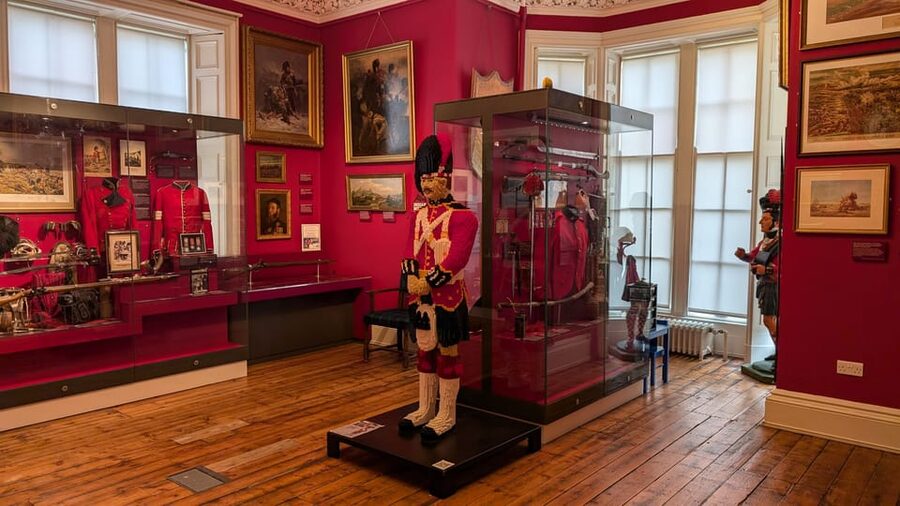
The Black Watch Castle and Museum takes you from the regiment’s formation in 1739 to its amalgamation in 2006, using uniforms, weapons, medals, and personal belongings to put real faces on military history. The setting inside Balhousie Castle gives the visit a strong sense of place.
I like the clear 12-gallery layout and the mix of major battles with small personal details from soldiers’ lives. I also like that your ticket includes the grounds, monument garden, parking, and Wi-Fi, making this an easy stop in Perth. The main drawback is that the basic ticket is self-guided, so you will need to read and explore at your own pace unless you pay extra for a guided tour.
Key points at a glance
- Three centuries in 12 galleries: Follow The Black Watch from 1739 through the regiment’s amalgamation in 2006.
- Personal objects, not just battle dates: See uniforms, medals, weapons, artefacts, and items connected to individual soldiers.
- A castle setting in Perth: Balhousie Castle gives the museum a fitting home and adds atmosphere to the visit.
- Time for quiet reflection: The monument garden and memorials offer a calmer counterpoint to the military displays.
- Useful all-day flexibility: Your ticket is valid for one day and includes parking, Wi-Fi, and all permanent and temporary galleries.
- Simple booking experience: Entry is checked at the Gift Shop Ticket Desk, with free cancellation up to 24 hours ahead.
Inside Balhousie Castle, where the story begins

The Black Watch Castle and Museum is in Perth and Kinross, at Balhousie Castle. You begin at the Gift Shop Ticket Desk inside the museum, where your booking is checked before you enter the galleries.
That first step matters. This is not a modern hall with a few military objects placed in glass cases. The castle setting gives the regiment’s story a more direct connection to Scotland. You are entering a place linked to the country’s military tradition, then moving through rooms that explain how The Black Watch developed over three centuries.
The regiment was formed in 1739 and later served in conflicts around the world. The displays take you through its role in the Napoleonic Wars, other major battles, and more recent peacekeeping work. The museum also follows the regiment to its amalgamation in 2006, giving the visit a clear beginning and endpoint.
I would start by picking up the complimentary self-guided tour map. It helps you understand the order of the galleries and lets you set your own pace. The museum offers guided tours for an additional charge, but the included map is enough to give an independent visit structure.
More castle tours in Scotland:
- Edinburgh Castle: Guided Walking Tour with Entry Ticket
★ 4.7 · 11,699 reviews - Edinburgh: Edinburgh Castle Guided History Tour with Tickets
★ 4.8 · 7,747 reviews - Edinburgh Castle: Guided Walking Tour with Entry Ticket
★ 5.0 · 5,540 reviews
The 12 galleries and the long route from 1739 to 2006

The heart of the experience is the set of 12 galleries. Together, they create a broad timeline rather than a single display about one famous battle.
You can expect the galleries to cover:
- The regiment’s formation in 1739
- Its development as Scotland’s oldest Highland regiment
- Service during the Napoleonic Wars
- Key battles in the regiment’s history
- Military life through uniforms, medals, and equipment
- Soldiers’ personal experiences
- The regiment’s role in modern peacekeeping
- Its amalgamation in 2006
This range is one of the ticket’s best features. A museum focused only on battle victories can feel distant. Here, the personal items help bring the story closer to everyday life. A uniform shows how soldiers were presented. A weapon points to the practical side of service. A private possession can suggest the person behind the military role.
The displays also help you see change over time. A regiment formed in the 18th century did not serve in the same way, wear the same clothing, or face the same technology as a unit involved in modern peacekeeping. The 12-gallery layout gives you room to notice those shifts.
Some sections will naturally appeal more to military-history fans than to casual sightseers. If you enjoy battles, regimental traditions, medals, or equipment, you could spend a long time examining individual objects. If you are less familiar with Scottish military history, the timeline and map should help you follow the main story without needing prior knowledge.
Uniforms, medals, weapons, and personal stories
The collection works best when you look beyond the largest objects. The uniforms and weapons catch your eye first, but the smaller personal items provide the human scale.
A medal is not just a decoration. It can point to a particular period of service or a specific conflict. A uniform can show how appearance, identity, and military discipline were tied together. Personal items can remind you that the regiment was made up of individuals with families, routines, fears, and ordinary lives outside battle.
The museum also uses interactive exhibits. These add a hands-on element and should help families and younger visitors stay involved. The experience is not limited to reading long panels in silence. Still, you should expect a museum visit rather than a theme-park attraction. The displays are built around objects, information, and stories.
The rules are strict in the usual museum ways. You cannot touch the exhibits, and flash photography is not allowed. Food and drinks are not permitted in the museum, and large bags or luggage are not allowed inside. Smoking, vaping, sprays, aerosols, weapons, and sharp objects are also prohibited.
Assistance dogs are allowed, but other pets are not. Unaccompanied minors cannot enter, and intoxication is not permitted. These limits are worth knowing before you arrive, particularly if you are visiting with children or carrying luggage between hotels and transport connections.
From Napoleonic campaigns to modern peacekeeping
The Black Watch story is not confined to one war or one century. The museum connects the regiment to the Napoleonic Wars, later conflicts, and modern peacekeeping missions.
That broad scope gives you a better sense of how a military unit changes with the times. The regiment’s story begins in an era of Highland identity and older military traditions, then moves through international warfare and into modern service. The final date, 2006, gives the galleries a contemporary edge rather than leaving the story in the distant past.
The treatment of key battles will likely be the main draw for anyone with a strong interest in military history. You can use the displays to place those battles within the larger story of the regiment instead of seeing them as isolated events.
For a general audience, the personal objects and interactive sections may be more accessible than the battle accounts. I would not try to memorize every date. Instead, look for the changes in uniforms, weapons, responsibilities, and the way soldiers’ experiences are presented.
The museum’s strength is its combination of national history and individual experience. Scotland’s military past can feel grand and remote when told only through campaigns. The artefacts make it more concrete.
More museums in Scotland:
- Hampden Park Stadium and Museum Tour
★ 5.0 · 482 reviews - Scottish Football Museum and Hampden Park Stadium Tour
★ 4.8 · 282 reviews - Hampden Park Stadium and Museum Tour
★ 5.0 · 111 reviews - Glasgow: Rangers Football Club Museum
★ 4.6 · 103 reviews
A self-guided visit with optional extra help
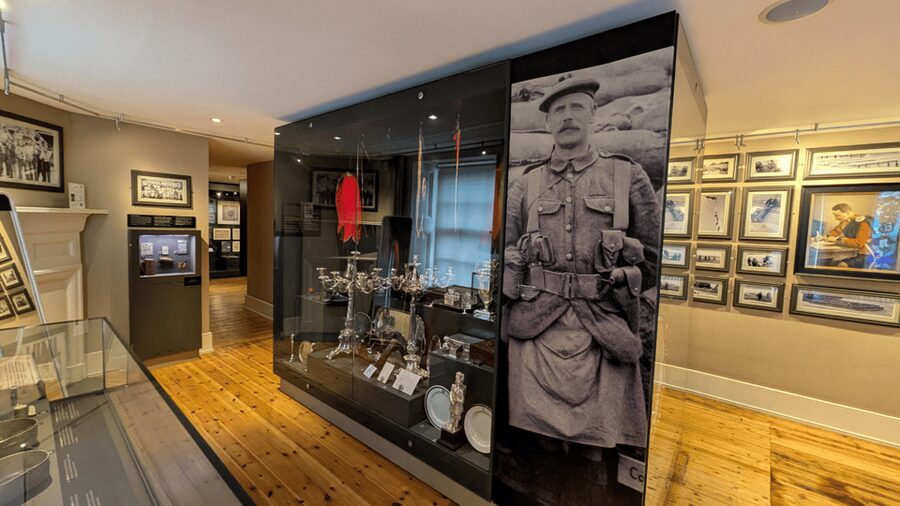
Your standard ticket is self-guided. The map provides a route, and the galleries let you stop when something catches your interest. You can move quickly through familiar material or take more time with a uniform, medal, or personal object that raises questions.
Guided tours are available at an additional cost. That option may suit you if you want more explanation as you go, have limited background in Scottish military history, or prefer to hear stories rather than read each display panel.
The supplied information does not name individual guides, so you should not expect a particular guide to be assigned to your visit. Staff are available to provide information and answer questions, but the basic entry ticket does not include a guided tour.
This makes the visit flexible, but it also places more responsibility on you. A self-guided museum rewards curiosity. If you are the kind of person who likes to linger over objects and make your own connections, the format works well. If you want a tightly narrated experience with a set route and running commentary, consider the extra-cost guided option.
The monument garden and memorials
Do not leave as soon as you finish the galleries. Entry also includes the museum grounds, including a monument garden and memorials.
These outdoor areas provide a change of pace after the indoor displays. Military museums can pack a lot of names, dates, and conflict into a small space. The garden and memorials give you somewhere to pause and think about the people represented inside.
I find this part especially useful for families or mixed groups. One person can spend more time in the galleries while another takes a quieter break outdoors. The grounds also make the ticket feel more like a full site visit than a quick collection of display rooms.
The information does not promise a large garden or extensive walking route, so do not plan the visit as a major outdoor attraction. Treat the grounds as a meaningful addition to the museum, not a separate day out.
How long should you allow?
The ticket is valid for one day, and you can check the available starting times when booking. That gives you useful flexibility if you are fitting the museum around other plans in Perth.
You might spend a shorter visit concentrating on the main galleries and then taking a brief look at the grounds. A history enthusiast could easily use much more of the day, especially if you read the panels closely and examine the smaller objects.
The exact visit length depends on your pace, so I would avoid scheduling another fixed activity immediately afterward. The 12 galleries cover 300 years, and the subject rewards attention. If you are visiting with children, the interactive displays may help keep the pace moving, while the map lets you skip or shorten sections that do not hold their interest.
The onsite bistro gives you a place to pause after the museum. Food and drinks are not included in the ticket and cannot be brought into the museum. The bistro is therefore useful for a break, but you should budget separately for anything you buy there.
Is the $17 price good value?
At $17 per person, the ticket is reasonably priced for a full museum day, particularly because it includes all museum galleries, permanent and temporary exhibits, interactive displays, the grounds, parking, and Wi-Fi.
The value depends on how you visit. If you spend only a brief time in two or three rooms, the price feels less attractive. If you follow the full 12-gallery story, look closely at the artefacts, and visit the memorial garden, the ticket gives you a substantial amount to see.
Free onsite parking is a real advantage if you are arriving by car. It removes one common extra cost and makes the museum easier to add to a driving route through Perth and Kinross. Free Wi-Fi is a small benefit, but useful for checking plans before or after your visit.
Food, drinks, souvenirs, and guided tours cost extra. The gift shop is also the place where you check in, so you will pass through it at the start. If you are trying to keep spending under control, the entry ticket itself covers the main experience without requiring any add-ons.
The option to reserve now and pay later is helpful if your route is still changing. You can also cancel up to 24 hours in advance for a full refund, which gives you some protection if your plans shift.
Accessibility and practical rules
The museum is wheelchair accessible. That makes the visit more workable for people with mobility needs, though the supplied information does not give detailed information about individual gallery layouts or facilities. If you need a specific arrangement, contact the museum before arrival.
Plan to enter with only what you need. Large bags and luggage are not allowed, and food and drinks must stay outside the museum. Flash photography is prohibited, as are weapons, sharp objects, sprays, and aerosols.
The no-touching rule is important in a museum built around fragile uniforms, medals, documents, and personal items. Children can enjoy the interactive sections, but they must be accompanied by an adult. Assistance dogs are permitted.
The check-in process is simple: go to the Gift Shop Ticket Desk inside The Black Watch Castle and Museum. Two recent bookings described the purchase and entry process as easy, with the visitor’s name already available at arrival. That is useful if you prefer a straightforward start with no complicated redemption process.
Who will enjoy this museum most?
I would recommend this experience to anyone interested in Scottish history, Highland regiments, military campaigns, uniforms, medals, or personal wartime stories. It also suits families who want an indoor cultural stop with interactive sections and room to move at their own pace.
It is a good choice for a rainy day in Perth, especially since the museum offers parking and an onsite bistro. The castle setting adds atmosphere without requiring a separate castle tour.
You should think twice if you dislike museums built around military subjects. The displays focus on The Black Watch and its service, so this is not a broad survey of every part of Scottish history. You may also find the self-guided format less satisfying if you want constant spoken explanation.
For most people, I would allow enough time for all 12 galleries rather than treating the museum as a quick photo stop. The collection works through accumulation: one uniform, medal, personal item, and battle account after another. The full route gives you a clearer sense of how the regiment changed from 1739 to 2006.
Should you book The Black Watch Castle and Museum?
Book it if you want a focused look at Scotland’s military past in a historic setting, especially if you value original objects and personal stories over staged entertainment. The $17 price is fair for access to 12 galleries, interactive displays, the grounds, parking, and a full day of flexibility.
Choose the optional guided tour if you want more explanation. Stick with the standard ticket if you enjoy exploring independently and reading at your own pace.
The strongest reason to visit is the connection between the grand story of The Black Watch and the ordinary items carried or worn by its soldiers. The main caution is simple: this is a serious military museum, and the basic experience asks you to guide yourself. For the right audience, that makes it a thoughtful and worthwhile stop in Perth.
FAQ
How much does entry to The Black Watch Castle and Museum cost?
The entry ticket costs $17 per person.
How long is the ticket valid?
The ticket is valid for one day. Available starting times can be checked when booking.
Is a guided tour included?
No. Entry includes a complimentary self-guided tour map, while guided tours are available for an additional cost.
What does the ticket include?
The ticket includes entry to The Black Watch Castle and Museum, all permanent and temporary galleries, interactive exhibits, the museum grounds, free onsite parking, and free Wi-Fi.
Is the museum wheelchair accessible?
Yes. The Black Watch Castle and Museum is wheelchair accessible.
Can I cancel my booking?
Yes. You can cancel up to 24 hours in advance for a full refund. You can also reserve now and pay later.
Just added around Scotland
- Private Stirling Day Guided Tour in the Premier Classic LEVC TXE★ 4.5 · 3 reviews
- Shore Excursion: Private Braveheart & Whisky country from Edinburgh★ 5.0 · 3 reviews
- Edinburgh New Town: City Walking Tour & Exploration Game★ 3.4 · 3 reviews
- A History of Witchcraft in Edinburgh: A Self-Guided Audio Tour★ 5.0 · 3 reviews
- Private Scottish Highlands and Loch Ness Tour from Edinburgh★ 5.0 · 3 reviews
- Edinburgh: Harry Potter Wizarding Walking Tour (Private)★ 3.2 · 3 reviews
- Five Outlander locations , Outlander film locations tour★ 4.5 · 3 reviews
- Private South Queensferry Town Walking Tour★ 5.0 · 3 reviews
Castle Tours, compared.

Edinburgh Castle: Guided Walking Tour with Entry Ticket
Read our review →
Edinburgh Castle Guided History Tour with Tickets
Read our review →Edinburgh Castle: Guided Walking Tour with Entry Ticket
Read our review →
Edinburgh Castle Guided Walking Tour in English
Read our review →
Isle of Skye and Eilean Donan Castle Day Trip
Read our review →
Edinburgh Castle: 120-Minute In-Depth Tour with Expert Guide
Read our review →
Edinburgh Castle: Guided Tour with Tickets Included
Read our review →Browse the lists this tour appears in