
Reviewed · ABERDEEN TOURS
Aberdeen’s Ancient Heritage and Folklore
The best part of this tour is its focus on Pictish Aberdeenshire, far from the usual city sights. You move from hillforts and carved stones to a recumbent stone circle, with local folklore tying the pieces together. I like the access to quiet, lesser-visited places, and I like that Jacqueline can shape the day around your interests when the group is small.
The main consideration is the walking. Barra Hill and Dunnideer require uphill sections, and some slopes are steep. Lunch is also your responsibility, and seven and a half hours in the countryside calls for sensible shoes, outdoor clothing, and a little planning.
Key points at a glance
- Pictish strongholds: Visit Barra Hill, Dunnideer Hillfort, and the Rhynie area, where ancient settlements and carved stones tell different parts of northeast Scotland’s story.
- Rare stone circles: See Dunnideer Stone Circle and Tomnaverie, a recumbent stone circle type found only in northeastern Scotland.
- Very small groups: The tour carries no more than seven people, making conversation and personal requests much easier.
- A guide-led history lesson: Jacqueline explains Pictish symbols, early communities, folklore, and the political changes that reshaped Scotland.
- Flexible country touring: The day can sometimes be adjusted to suit interests, as one solo booking showed, with extra stops such as a sea cliff, brewery, or castle.
- Practical outing: Onboard WiFi is included, but lunch is not. Bring food or buy it in Insch or Bellabeg.
Why Pictish Aberdeenshire is worth your day
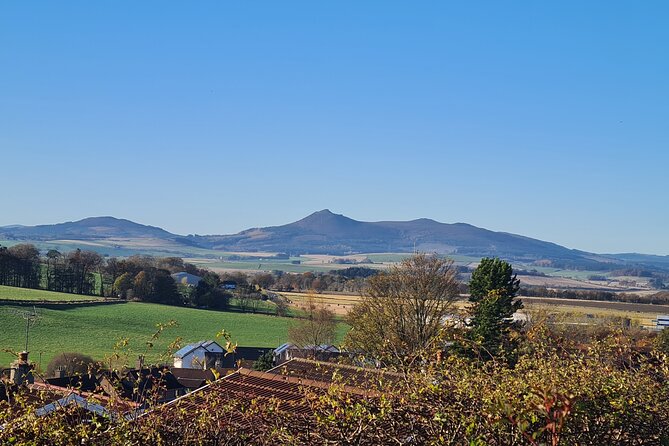
Aberdeen is known for its granite buildings and North Sea setting, but the older story begins well outside the city. The Picts left no written account in their own voice, so their world is pieced together through carved symbols, hilltop defenses, burial monuments, and later accounts shaped by changing kingdoms.
That makes this a good tour for curious visitors. You are not simply looking at a ruined wall and moving on. At each stop, Jacqueline connects the site to questions about settlement, trade, belief, power, and the eventual rise of Alba, the medieval kingdom associated with the Scots.
I especially like the way the day mixes different kinds of evidence. A hillfort gives you a sense of defense and daily life. A standing stone raises questions about symbols and ceremony. A stone circle brings you back thousands of years before the Picts. The result is not one narrow history lesson, but a long view of northeast Scotland.
The small maximum of seven people matters here. At a crowded attraction, you may get a set speech and little chance to ask about a symbol or local tale. With Jacqueline, the format allows more conversation, and the day can be more personal. That flexibility is particularly useful if you have a strong interest in archaeology, folklore, castles, old religion, or rural Scotland.
More history tours in Aberdeen:
- Aberdeenshire Private Half Day Castle & Historic Building Tour
★ 5.0 · 18 reviews - Aberdeen Historical Walking Tour
★ 5.0 · 13 reviews - Aberdeen’s Ancient Heritage and Folklore Tour
★ 5.0 · 8 reviews
Starting at the William Wallace Statue
The tour begins at 9:00 a.m. at the William Wallace Statue on Union Terrace in Aberdeen. It returns to the same meeting point after roughly seven and a half hours, so plan it as a full day rather than a quick morning excursion.
Starting in central Aberdeen is practical if you are staying in the city or arriving by public transport. The experience includes a mobile ticket and WiFi onboard, which removes some common day-trip hassles. Still, keep your phone charged and have the meeting details ready before setting out.
The schedule includes several outdoor sites, and Scottish weather can shift quickly. Wear shoes with a firm grip and bring layers. If you own walking poles, bring them for the hill sections. Some poles may be available to borrow, but it is better not to rely on that.
Barra Hill and the first look at early settlements
Barra Hill is a useful opening stop because it introduces the basic idea of a hillfort. These sites were placed on higher ground and could include wooden or stone enclosures around communities where people lived and worked.
What remains today is often subtle. You may see foundations, banks, ditches, and the shape of a fortified area rather than a complete wall or dramatic tower. That is part of the lesson. Archaeology often works from traces, and the guide’s explanation helps you picture a settlement that has largely vanished.
Barra is also one of the more accessible hillforts in the area, although it still involves walking uphill. The climb gives the site its meaning: from a raised position, you can understand why early communities selected such ground.
I would not choose this tour expecting intact ruins at every stop. You are visiting places where time, weather, farming, and later building have reduced much of the original material. The reward is learning how to read the ground, not collecting postcard views of complete monuments.
Dunnideer Hillfort, castle ruins, and stone circle
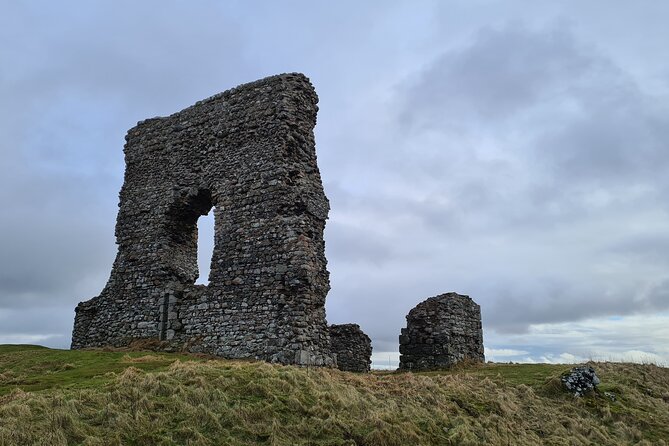
Dunnideer adds several periods of Scottish history in one compact visit. A short walk up the hill takes you toward the ruins of Dunnideer Castle, a tower house built around 1260. Parts of the castle used remains from the older vitrified hillfort on the same spot.
The hillfort is made up of at least five rings of defenses. From below and from the top, the banks and ditches are easier to understand than they may sound on paper. Look for the way the ground rises and folds around the hill. The defenses are not just a collection of stones. They show how people shaped a site to protect a settlement.
The castle ruins add a later chapter. The Pictish fort and the medieval tower house are separated by centuries, yet they occupy the same useful high ground. That overlap gives you a clear reminder that people repeatedly returned to places with strategic value.
Nearby, the remaining stones of Dunnideer Stone Circle add another layer. The visit is brief, at about 30 minutes, but the setting links defense, residence, later power, and prehistoric monument building. If you enjoy comparing different periods in one location, this is one of the day’s most rewarding stops.
Expect another uphill walk here. The route is not presented as suitable for people with mobility problems, and the tour advises a moderate level of fitness. If you need adjustments, contact the operator before booking. The information provided says you are not required to take part in every walk, and some changes may be possible.
A few more Aberdeen days to weigh up
- Loch Ness and the Highlands 1-Day Tour from Aberdeen
★ 4.8 · 340 reviews - From Aberdeen: Dunnottar Castle and Cairngorms Day Trip
★ 4.8 · 329 reviews - From Aberdeen: Balmoral Estate & Royal Deeside Tour
★ 4.9 · 243 reviews - Aberdeen City Centre Walking Tour (2pm)
★ 5.0 · 217 reviews
Rhynie and the scale of Pictish power
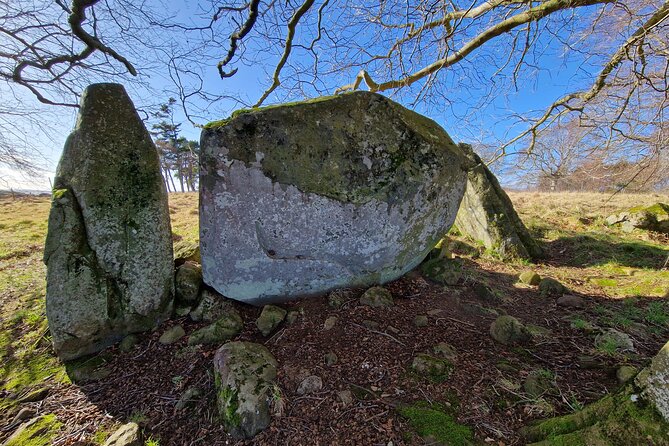
Rhynie is likely to be the intellectual center of the day. The area was a Pictish stronghold, and the nearby Tap O’ Noth is described as Scotland’s largest hillfort. At its height, the settlement may have housed more than 5,000 people, a striking figure for a site often imagined as remote and isolated.
That possible scale changes how you think about the Picts. They were not simply scattered groups living at the edge of Europe. The evidence points to organized communities, trade, status, and links that reached beyond the immediate area.
You will also see a group of Pictish carved stones and learn about their symbols. The carvings are famous for their mystery, but the useful approach is to separate what is visible from what remains uncertain. A guide can explain the recurring designs and the main ideas about their meaning without pretending that every symbol has a settled answer.
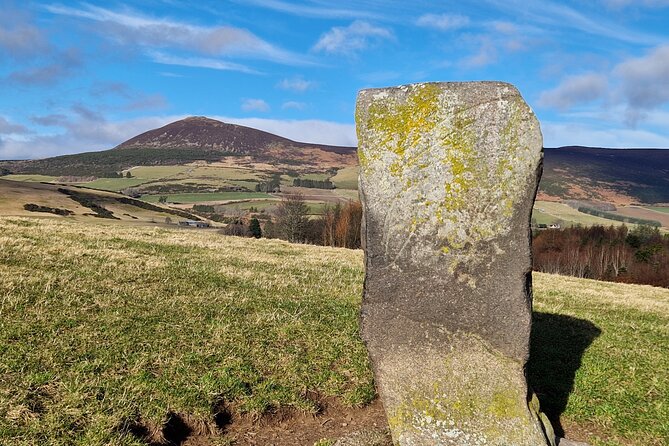
The Crawstane is a lone standing stone that was once at the center of a settlement. The area is associated with trade reaching the Mediterranean and with considerable wealth. That detail is important because it places Rhynie in a wider network. The Picts were part of a connected world, not a closed society with no contact beyond the hills.
This stop also covers the rise of the King of the Scots and the changes that altered Scotland’s cultural and political direction. You will hear how those shifts contributed to the decline of Pictish power and the formation of the People of Alba.
The stop lasts about an hour, giving you time to look at the stones and ask questions. If you want a tour that treats carved stones as more than mysterious curiosities, Rhynie is a strong reason to book.
Lunch at Bellabeg and the Doune of Invernochty
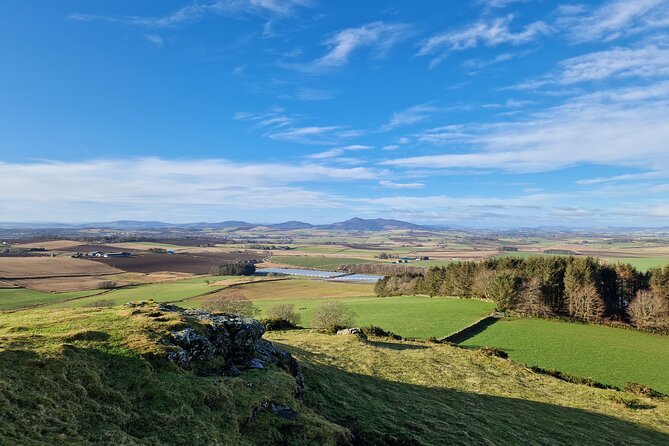
The lunch break takes place at Lost, near the foot of the Doune of Invernochty motte and bailey castle. The small village lies in Cairngorm National Park, and the break is designed to slow the pace after the morning’s hills and archaeology.
You can buy lunch in Insch or Bellabeg, or bring a picnic. A cooler is provided, which is a useful touch if you are carrying food during a full day in the countryside. The break lasts around 45 minutes, so do not expect a long restaurant meal unless you have planned it carefully.
I like the picnic option because it fits the character of the tour. You can eat by the river or take a short stroll through the country lanes rather than spending the midday hour indoors. On the other hand, lunch is not included in the $135.49 price, so add food to your budget.
The setting also gives you a chance to reset. This is not a rushed sequence of photo stops. A quiet lunch helps the afternoon feel like part of a country outing, though it means you should arrive prepared.
Tomnaverie and the meaning of a recumbent circle
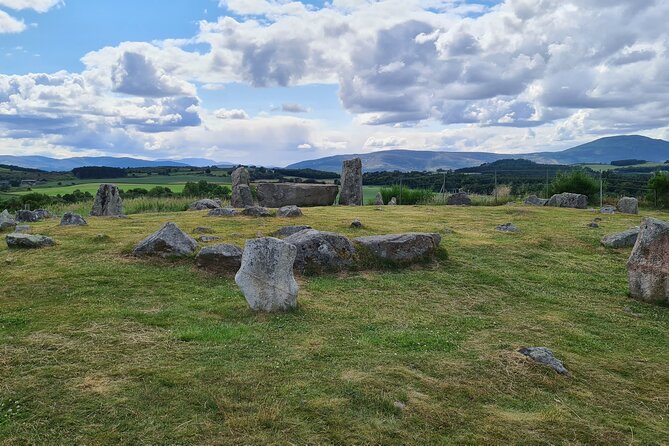
Tomnaverie Stone Circle closes the historical journey with a monument dating to a much earlier time. It is a recumbent stone circle, a form found only in northeastern Scotland.
Its defining feature is a large stone laid on its side, flanked by two upright stones. Other standing stones complete the circle. Close by is a burial cairn dating to about 4,500 years ago, giving you a sense of how long people have marked this place.
No single explanation fully settles why these monuments were built. You will hear several theories, which is more honest and more interesting than being handed a neat answer. The site invites you to think about burial, ceremony, astronomy, community, and the way ancient people organized sacred space.
The views are another part of the appeal. Tomnaverie sits in an open position, and the setting helps you understand why stone circles are often experienced as places as much as objects. Bring a camera, but give yourself time to look beyond the stones.
The scheduled visit is about 30 minutes. That is enough for an introduction and a walk around, though anyone wanting a long archaeological study of the monument may find the stop short.
Jacqueline’s guiding style and the small-group difference
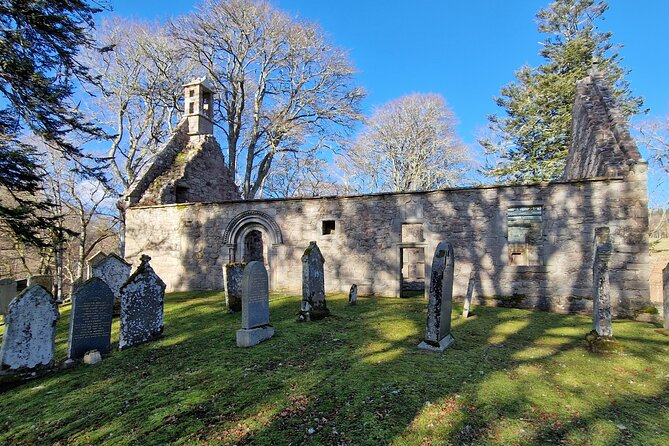
Jacqueline is central to the character of this experience. Her role is not just to drive you between points. She explains the Picts, carved symbols, forts, castles, and folklore, then adjusts the conversation as your interests become clear.
A solo booking was shaped around the person’s interests, and extra stops included a sea cliff with seabirds, a whiskey brewery, and a castle. Those additions should not be treated as guaranteed parts of every tour, but they show what the small format can allow when timing and conditions cooperate.
The strongest feature here is the personal feel. You can ask why a carved symbol matters, how a hillfort may have worked, or how folklore survived into modern storytelling. That kind of exchange is harder to achieve on a large coach tour.
The tradeoff is that the experience depends heavily on the guide’s approach and on the group. With a maximum of seven people, the day is intimate, but the interests of the other participants can still shape the pace. The available feedback is uniformly positive, with particular emphasis on Jacqueline’s flexibility, local knowledge, and ability to make the day exciting and personal.
Price, timing, and who gets good value
At $135.49 per person, this is not the cheapest way to see the Aberdeen area. Yet the price includes approximately 7 hours and 30 minutes of guiding, transport between several rural sites, onboard WiFi, and a group capped at seven.
The value is strongest if you want more than transport. You are paying for interpretation and access to places that are awkward to connect by public transport in one day. You also avoid having to plan a route through scattered parts of Aberdeenshire.
The tour is booked an average of 64 days ahead, so reserve early if your dates are fixed. Free cancellation is available up to 24 hours before the start time. If poor weather forces cancellation, you are offered another date or a full refund.
This is a weather-dependent day. That is not a minor detail when the main attractions are hillforts, standing stones, and open countryside. Good weather will make the walking and views far more enjoyable, while wet or windy conditions can make the exposed sites tiring.
Walking, access, and what to bring
You should have moderate physical fitness for the hills. Barra Hill and Dunnideer include uphill sections, and walking poles are recommended for steep parts. The tour is not recommended for people with mobility issues, though adjustments may be possible and you are not expected to join every walk.
Service animals are allowed, and the meeting point is near public transportation. Since lunch is not provided, bring food or plan to purchase it in Insch or Bellabeg.
My practical packing list would be simple:
- Firm walking shoes
- Waterproof layers and warm clothing
- Walking poles if you use them
- A packed lunch or money to buy one
- Water
- A fully charged phone for the mobile ticket
- Extra time and patience for outdoor conditions
Should you book Aberdeen’s Ancient Heritage and Folklore?
Book this tour if you want Pictish sites, local stories, and quiet countryside rather than a standard Aberdeen sightseeing circuit. It suits people who enjoy archaeology, standing stones, folklore, medieval ruins, and thoughtful guiding. The small group and Jacqueline’s willingness to tailor the day are major advantages.
Think twice if you dislike uphill walking, need a fully accessible route, or want a tour with lunch and admission fees bundled into the price. You should also keep your expectations realistic: several sites are marked by banks, stones, foundations, and open ground rather than restored buildings.
For the right visitor, this is a memorable way to see a side of Aberdeenshire that is easy to miss. You leave with a better sense of how the Picts lived, traded, defended themselves, and lost their political identity, while also hearing the older folklore that still clings to these places.
FAQ
Where does the tour start?
It starts at the William Wallace Statue on Union Terrace, Aberdeen AB10 1NP, at 9:00 a.m.
Where does the tour finish?
The activity finishes back at the William Wallace Statue meeting point in Aberdeen.
How long does the experience last?
The tour lasts approximately 7 hours and 30 minutes.
How many people can join the tour?
The maximum group size is seven travelers.
Is lunch included?
No. You can buy lunch in Insch or Bellabeg, or bring a picnic. A cooler is provided.
Is transportation included?
The tour travels between the listed Aberdeenshire stops, and onboard WiFi is included. The provided information does not list a separate transportation fee.
What fitness level is needed?
A moderate level of physical fitness is recommended. The tour includes uphill walks, including some steep sections.
Is the tour suitable for people with mobility issues?
It is not recommended for travelers with mobility issues. Some adjustments may be possible, and guests are not expected to take part in every walk. Contact the operator before booking if you have concerns.
What happens if the weather is poor?
The experience requires good weather. If it is canceled because of poor weather, you will be offered a different date or a full refund. You can also cancel for a full refund up to 24 hours before the start time.
Just added around Aberdeen
- Elgin: Witch Trials Tour★ 5.0 · 3 reviews
- City of Aberdeen Distillery: Gin School Experience★ 5.0 · 3 reviews
- Speyside: Cragganmore Whisky Distillery Tour and Tasting★ 5.0 · 3 reviews
- Private Balmoral Glamis Dunnottar Castles Tour from Aberdeen★ 5.0 · 3 reviews
- Best Scottish Whisky Distilleries Private Tasting Trip plus optional Castle Tour★ 5.0 · 4 reviews
- Aberdeenshire and Royal Deeside Private Half-day Castle Tour★ 5.0 · 4 reviews
- Elgin: High Street Graveyard Walking Tour★ 5.0 · 4 reviews
- Private Aberdeen City Walking Tour★ 5.0 · 6 reviews
Aberdeen Tours, compared.
Loch Ness and the Highlands 1-Day Tour from Aberdeen
Read our review →
Dunnottar Castle and Royal Deeside Small-Group Tour from Aberdeen
Read our review →
Loch Ness and the Highlands Small-Group Day Tour from Aberdeen
Read our review →

Browse the lists this tour appears in