
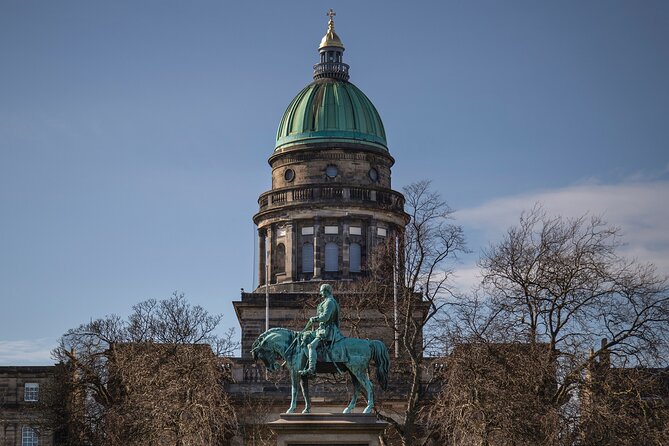
Reviewed · EDINBURGH TOURS
Edinburgh: Dean Village & New Town Walking Tour
Edinburgh’s best contrast comes in one walk: quiet Dean Village, once a working mill district, followed by the broad streets and grand squares of the New Town. You’ll move from medieval stone lanes to Georgian order, with stops for castle views, writers, scientists, colonial history, and the city’s famous architecture.
I like the way the tour goes beyond pretty buildings to explain the Scottish Enlightenment and the people who shaped Edinburgh, including David Hume, Adam Smith, and Arthur Conan Doyle. I also like the practical route: Princes Street Gardens, the Scott Monument, George Street, and St Andrew Square give you a clear feel for central Edinburgh without spending the whole time in the Old Town.
The main consideration is walking comfort. The tour lasts about 2 hours and 15 minutes, and the route includes several neighborhoods and outdoor stops. It also depends on good weather, so keep a little flexibility in your schedule.
Key points to know before you book
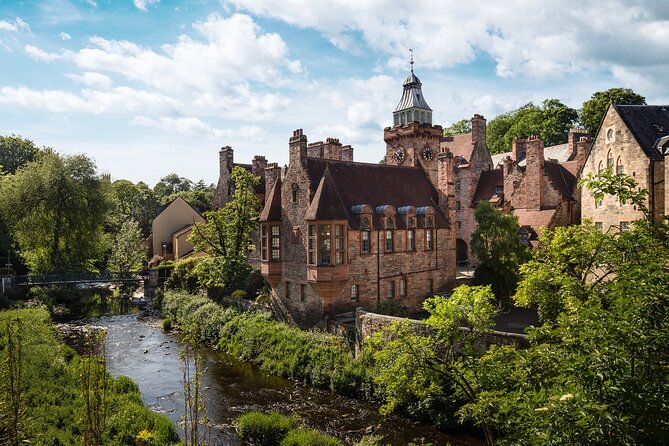
- Dean Village begins the story: See a peaceful former industrial area with mill stones and bread-and-pie plaques.
- The New Town explains Edinburgh’s grand side: Learn how Georgian planning and the Scottish Enlightenment earned the city its Athens of the North nickname.
- Guide Irene receives special praise: Her friendly style, local tips, and clear storytelling suit visitors who want history without a dry lecture.
- You get repeated castle views: Castle Street and Princes Street Gardens offer some of the tour’s best photo stops.
- Colonial history is included: The Melville Monument provides a chance to examine how empire helped Edinburgh grow.
- The group is capped at 20: That keeps the walk smaller than a large city sightseeing crowd, though it is not a private tour.
Why Dean Village is the right place to begin
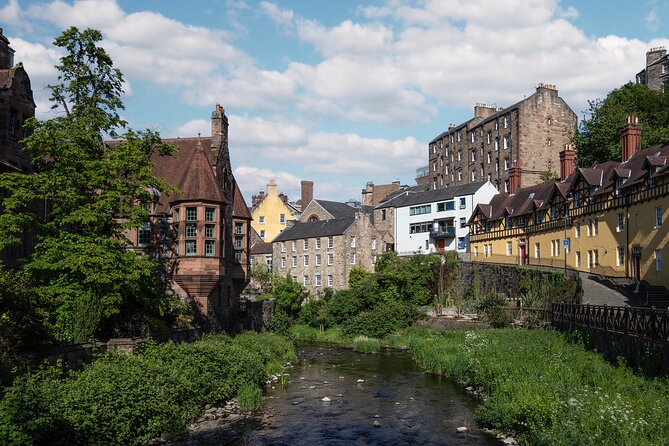
The tour starts at 2 to 4 Hope Street, near the west side of central Edinburgh. From there, the route heads toward Dean Village, only a short distance from Princes Street but noticeably quieter in character.
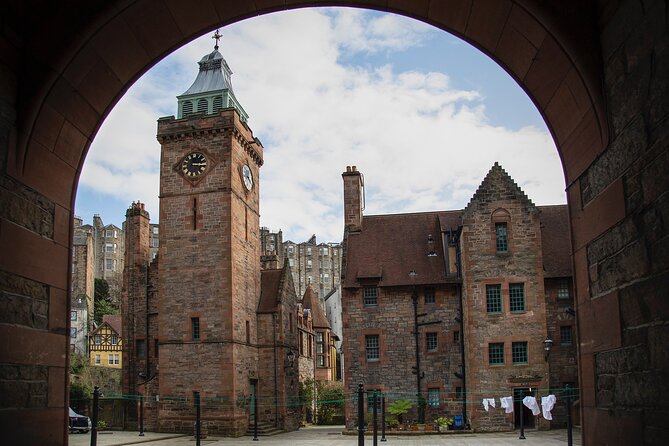
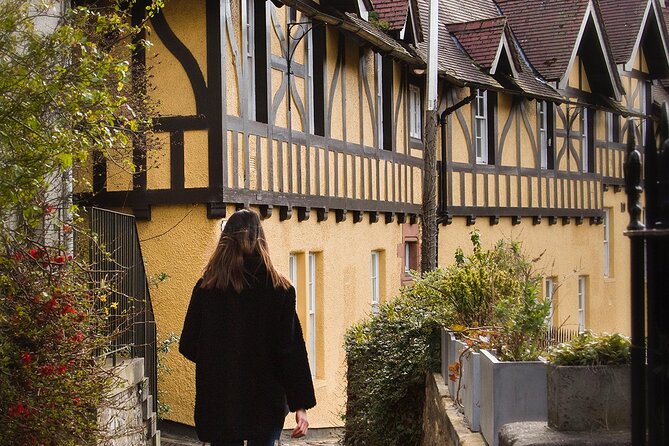
This is the first useful lesson of the walk: Edinburgh is not just a city of royal avenues and medieval closes. Dean Village was once a medieval industrial hub, with water mills, bakers, and weavers using the Water of Leith. Its working past is still hinted at by mill stones and stone plaques decorated with baked bread and pies.
You can expect about 30 minutes here. That is enough time to look around and hear how the village functioned, while also taking in its picturesque stone buildings and narrow lanes. I like this opening because it gives the tour a sense of place before the grand architecture begins.
Dean Village is also a strong reason to book this walk if you have already seen the Royal Mile. The Old Town shows Edinburgh at its most crowded and dramatic. Dean Village offers a quieter neighborhood view, one that feels more like a former village folded into the modern city.
Do not expect a long independent exploration. This is a guided visit within a larger walking route, and the village stop lasts around half an hour. If you want extended time for photography or a separate walk along the Water of Leith, plan to return on your own.
More Walking Tours in Edinburgh
- Edinburgh: Harry Potter Magical Guided Walking Tour
★ 4.8 · 11,944 reviews - Edinburgh Castle: Guided Walking Tour with Entry Ticket
★ 4.7 · 11,699 reviews - Underground Vaults Walking Tour in Edinburgh Old Town
★ 4.5 · 8,506 reviews
Charlotte Square and the city’s Georgian ambitions
After Dean Village, the walk turns toward the New Town and Charlotte Square. The change is striking. Instead of medieval lanes shaped by hills, streams, and old property lines, you encounter planned streets, open spaces, and Neoclassical buildings.
Charlotte Square helps explain why Edinburgh became known as the Athens of the North. The title refers to the city’s intellectual life and its classical architectural ideals, not simply its appearance. Here, your guide connects the design of the New Town with the Scottish Enlightenment, the period when Edinburgh became a major center for philosophy, economics, science, and literature.
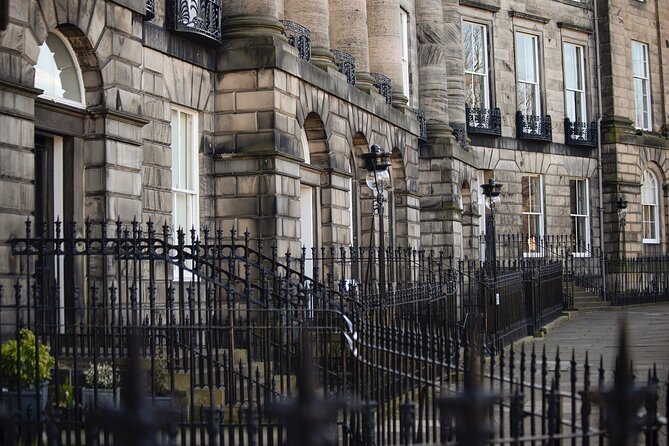
The square stop lasts about 10 minutes, followed by another 10 minutes outside the Georgian House. The Georgian House is one of the New Town’s most recognizable mansions, and the discussion focuses on what high society life was like in the 18th and 19th centuries.
You will not receive admission to the Georgian House as part of this tour. The stop is outside, so think of it as an architectural and social-history explanation rather than a house museum visit. That distinction matters if you specifically want to see Georgian interiors, servants’ quarters, or period furnishings.
Still, the exterior stop has real value. A guide can point out how the building fits into the New Town plan and help you picture the social order behind those elegant façades. The New Town was not just a pleasant place to stroll. It represented a planned response to the crowded medieval city and a new vision of urban life.
Rose Street and the New Town’s less respectable side
From Charlotte Square, you enter the New Town grid and walk along Rose Street. Today, Rose Street is known for pubs, which makes it a lively place to connect architecture with everyday city life.
The unusual subject here is the history of secret bars in the New Town. The tour explains why these hidden drinking places were established, adding a human wrinkle to the polished Georgian setting. This is the kind of detail that keeps the walk from becoming a string of dates and building names.
The Rose Street stop takes about 10 minutes. It is short, but it gives you a chance to see how the New Town works at street level. The grand squares and formal avenues were designed to project order and respectability, yet the area also developed its own private and informal spaces.
From there, the route turns onto Castle Street. This is one of the better view stops, with a clear look toward Edinburgh Castle and Castle Rock. The view helps you understand the city’s geography: the New Town sits below and beside the volcanic rock that dominates the older part of Edinburgh.
Princes Street Gardens and the Scott Monument
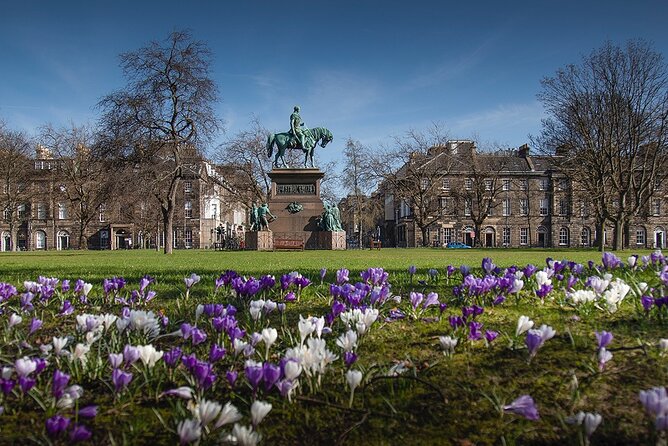
The tour crosses Princes Street and enters Princes Street Gardens for about 15 minutes. This is a welcome change after several blocks of architecture. The gardens offer open space, public art, and another strong view of the castle and Castle Rock.
I like this part because it brings together several layers of Edinburgh in one frame. You can look from a planned Georgian setting toward the medieval Old Town and the castle above it. The guide also discusses examples of public art, so the stop is not only about taking pictures.
Weather matters here. The gardens are outdoors, and the tour can be canceled in poor conditions. Even in good weather, Scottish skies can change quickly, so a waterproof layer and comfortable shoes make sense. The tour does not list special equipment, but ordinary preparation will make the walk easier.
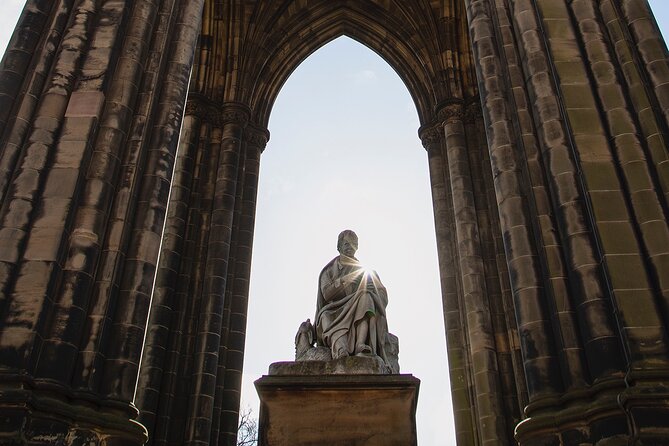
Next comes the Scott Monument, one of Edinburgh’s most recognizable landmarks. The stop lasts about 15 minutes and covers the monument’s history and architecture. You will also learn that it is the largest monument in the world dedicated to a writer.
That detail gives the monument a useful place in the wider story. Edinburgh’s identity is closely tied to literature, and the route has already touched figures such as Arthur Conan Doyle. The Scott Monument turns that literary tradition into stone and height.
You should not expect a climb up the monument on this tour. The stop is for exterior viewing and explanation. If you want to visit the monument separately, check its own opening arrangements, since that is outside the stated tour program.
Same country, a completely different kind of day out:
- Edinburgh: Loch Ness, Glencoe & the Scottish Highlands Tour
★ 4.6 · 17,446 reviews - Edinburgh: Underground Vaults Tour
★ 4.6 · 11,758 reviews - From Edinburgh: Loch Ness, Glencoe & Scottish Highlands Tour
★ 4.7 · 11,381 reviews - The World Famous Underground Ghost Tour
★ 4.5 · 9,272 reviews
George Street, the Dome, and grand urban design
The route returns to the New Town grid and continues along the eastern part of George Street. This section takes about 10 minutes and brings you past cafés, restaurants, and statues dedicated to figures including King George IV and James Clerk Maxwell.
This is a good stretch for understanding how the New Town functions today. The buildings remain formal, but the street is also part of modern Edinburgh’s dining and shopping center. You get a sense of how an 18th-century plan continues to shape daily life.
Around the corner, the tour reaches the Dome on George Street. The stop is brief, about five minutes, but the building gives you another clear example of Neoclassical design. Its scale and decoration make it easy to see why this part of Edinburgh is prized for architecture.
Because the stop is short, you may want to pay attention before the guide begins speaking. The route contains many buildings, statues, and views in a relatively compact period. If you prefer slow photography or long museum visits, this walk may feel brisk.
On the other hand, the pace works well if you want a broad introduction. You leave with a mental map of the New Town rather than spending the entire afternoon on one square.
Melville Monument and the difficult side of Edinburgh’s wealth
The final part of the walk moves toward St Andrew Square and the Melville Monument. This imposing column sits near the end of Princes Street, and the stop lasts around 10 minutes.
The monument opens a more difficult subject: the connection between Edinburgh’s growth and British colonial power. That discussion is important because the New Town’s elegance did not appear in isolation. Wealth, politics, trade, and empire helped shape the city’s expansion, and the tour makes room for that context.
I appreciate this inclusion. A walk through polished Georgian streets can easily become a celebration of architecture without asking who paid for it or who benefited from the system behind it. The Melville Monument provides a specific place to consider those questions.
The route ends outside Dundas House, across from the Melville Monument in St Andrew Square. Dundas House was inspired by the work of Italian Renaissance architect Andrea Palladio, and the guide explains how Palladian ideas influenced its design.
If the building is open, the group may enter. The information does not promise interior access, so treat that as a possibility rather than a feature to count on. Either way, Dundas House gives the tour a fitting final stop: one more example of how European architectural ideas were adapted in Edinburgh.
The ending is practical, too. St Andrew Square is close to central transport links, restaurants, shops, and the Christmas market area mentioned by one past participant. You can continue sightseeing from here without needing to retrace the route.
What the $27.37 price delivers
At $27.37 per person, this is a reasonably priced guided city walk. You are paying for a local guide and roughly 2 hours and 15 minutes of organized interpretation, not for attraction admission or transport.
That makes the value depend on how much context you want. You can walk through Dean Village, Charlotte Square, Princes Street Gardens, and the New Town on your own for free. The fee earns its keep when the guide explains why the neighborhoods look the way they do, links architecture to the Scottish Enlightenment, and brings in less obvious subjects such as secret bars and colonial wealth.
The route covers a lot of ground, so the value is also practical. In one outing, you see the quiet village district, the New Town’s major architectural landmarks, the Scott Monument, public gardens, and several castle viewpoints. It is a useful orientation walk early in a visit.
The group maximum is 20 people. That is small enough for a more personal feel than a large coach tour, but it does not guarantee private attention at every stop. The strongest praise focuses on guides who make the walk friendly and engaging, with Irene named specifically and praised for restaurant suggestions as well as clear explanations.
The tour is often booked about 118 days ahead. That suggests you should reserve early if your dates are fixed, especially during busy periods. Free cancellation is available until 24 hours before the start time, giving you some room to adjust plans. If bad weather or too few bookings cancel the tour, you are offered another date or a full refund.
Who will get the most from this walk
I would choose this tour if you have already visited the Old Town and want a different side of Edinburgh. It is also a good first-day option if you want to understand the city’s layout before exploring on your own.
The walk suits:
- First-time visitors who want a clear introduction to the New Town
- Architecture fans interested in Georgian and Neoclassical design
- Readers and history lovers drawn to Hume, Smith, Doyle, and Scott
- People who prefer local neighborhoods to a checklist of major attractions
- Visitors who want practical restaurant suggestions from a guide
- Anyone looking for castle views without booking a castle admission
It may be less suitable if you have limited walking ability, want indoor attractions, or prefer to move at your own photography pace. Most people can participate, service animals are allowed, and the tour is near public transportation, but the experience is still an outdoor walking route lasting more than two hours.
My booking advice
Book this tour if Dean Village, Georgian architecture, and Edinburgh’s intellectual story interest you more than another pass through the Royal Mile. The strongest feature is the contrast between the former mill village and the carefully planned New Town, with the castle views tying both parts of the city together.
I would especially consider it after an Old Town tour. The two areas show very different versions of Edinburgh, and the New Town and Dean Village route helps you see the city as a whole rather than as one medieval center.
Skip it if you want admission to the Georgian House, a climb of the Scott Monument, or a long visit inside each landmark. Those are not included. But for $27.37, a small-group walk with a guide such as Irene offers a useful mix of architecture, local stories, practical orientation, and harder questions about how Edinburgh became wealthy. That is a fair price for a thoughtful introduction to a less obvious side of the city.
FAQ
How long does the Edinburgh Dean Village and New Town tour last?
The tour lasts approximately 2 hours and 15 minutes.
How much does the tour cost?
The listed price is $27.37 per person.
Where does the tour start?
The meeting point is 2 to 4 Hope Street, Edinburgh EH2 4DB, UK.
Where does the tour finish?
The walk ends outside Dundas House in St Andrew Square, Edinburgh EH2 2YB.
Is admission to the attractions included?
The tour includes a local guide, and all listed stops have free admission. The Georgian House stop is outside, and entry to the Scott Monument is not listed as part of the experience. The group may enter Dundas House if it is open.
How large is the tour group?
The activity has a maximum of 20 participants.
Can I cancel the tour for a refund?
You can cancel up to 24 hours before the start time for a full refund. The tour may also be rescheduled or refunded if poor weather or an insufficient number of participants causes cancellation.
Just added around Edinburgh
- Falkirk Wheel, Doune Castle, Stirling Castle Private Tour★ 5.0 · 8 reviews
- Edinburgh Private Transfer from Edinburgh city centre to Edinburgh Airport★ 4.0 · 8 reviews
- Private tour: History and Mystery in Edinburgh’s Old Town★ 5.0 · 8 reviews
- Edinburgh: Harry Potter, Glenfinnan Viaduct & Highland Tour★ 5.0 · 8 reviews
- Edinburgh: Harry Potter Walking Tour and Beer Tasting★ 4.9 · 8 reviews
- Watch Building Experience – Edinburgh★ 4.5 · 8 reviews
- Ghost Tour in Edinburgh★ 5.0 · 8 reviews
- From Edinburgh: The Kelpies, Glencoe & Loch Lomond Day Tour★ 5.0 · 8 reviews
Edinburgh Tours, compared.

Loch Ness, Glencoe & the Scottish Highlands Tour
Read our review →

Edinburgh Castle: Guided Walking Tour with Entry Ticket
Read our review →
Loch Ness, Glencoe & Scottish Highlands Tour
Read our review →
Underground Vaults Walking Tour in Edinburgh Old Town
Read our review →
Edinburgh Castle Guided History Tour with Tickets
Read our review →Browse the lists this tour appears in