
Reviewed · GLASGOW TOURS
Fun Glasgow City Centre Walking Tour Guided
Glasgow reveals itself through stories of protest, education, faith, and civic pride, and this two-hour walking tour puts those themes together in a compact route. You begin at the Donald Dewar Statue and finish near Glasgow Cathedral, with George Square, the Gallery of Modern Art, the University of Strathclyde, and the Necropolis along the way.
I like the strong city orientation and the mix of famous sights with local character. I also like that guides such as Connor bring humor and practical suggestions, rather than simply reciting dates. The main consideration is pace: two hours is enough for an overview, but not enough for long visits inside every attraction.
Key points at a glance
- Starts beside Buchanan Street: Meet at the Donald Dewar Statue, a central and easy-to-reach point near public transportation.
- Covers Glasgow’s public life: George Square and Nelson Mandela Place add politics, protest, and modern Scottish identity to the route.
- Includes two major cultural stops: The University of Strathclyde and Gallery of Modern Art broaden the tour beyond old buildings.
- Ends at Glasgow Cathedral and the Necropolis: Admission to both is included, with time for stories, photographs, and further exploring.
- Small-group feel: The maximum is 20 people, with smaller groups currently used to give you more attention.
- Useful after-tour advice: Your guide offers recommendations for the rest of your day, including nearby food and sights.
Why this Glasgow walk works as a first introduction
Glasgow can seem less obvious than Edinburgh at first. Its grand streets, public statues, modern shops, old churches, and working-city energy do not always explain themselves. A good walking tour helps you connect the pieces.
This experience is built around that connection. It does not focus on one narrow subject, such as architecture or royal history. Instead, it moves through places that help explain how Glasgow developed and how the city sees itself today.
You get politics at Nelson Mandela Place, public protest at George Square, education at Strathclyde, art at the Gallery of Modern Art, and religious and civic history around the Cathedral and Necropolis. That broad range is useful if you are in Glasgow for a short stay and want a clear first picture before choosing what to explore in greater depth.
The tour lasts about two hours to two hours and ten minutes. Since the stops are spread across the city centre, part of that time is spent walking between them. You should think of this as an orientation walk with stories and viewpoints, not a series of long indoor visits.
The guide is a key part of the experience. Gallus Pedals describes its guides as characterful and friendly, and Connor is specifically praised for combining Glasgow’s history, culture, architecture, and practical orientation. Your guide may also share myths and suggest places to visit later, which is especially useful early in a trip.
More Walking Tours in Glasgow
- Glasgow City Centre Walking Tour with Local Guide
★ 5.0 · 1,326 reviews - Glasgow: Ghouls, Ghosts & Gruesome Tales Guided Walking Tour
★ 4.9 · 887 reviews - Glasgow: City Center Guided Walking Tour
★ 4.7 · 759 reviews
Meeting at the Donald Dewar Statue
The tour begins at the Donald Dewar Statue on Buchanan Street. This is a sensible starting point because Buchanan Street is central, well known, and close to public transportation.
The opening stop introduces contemporary Scotland through Donald Dewar, a major figure in modern Scottish public life. You will spend around 10 minutes here, with no admission charge.
I like this beginning because it avoids dropping you straight into a medieval story without context. Glasgow is not only a city of old stone buildings. It is also a place shaped by modern Scottish politics and changing ideas about national identity.
Arrive with enough time to find the statue and settle in. The tour is conducted in English, and confirmation is provided when you book. Since the meeting point is outdoors, sensible walking clothes and shoes matter more than anything fancy.
Nelson Mandela Place and the city’s political voice
The next stop is Nelson Mandela Place, where the guide explains the social and historical meaning of the site. The visit lasts about 10 minutes and is another free stop.
This is one of the more distinctive parts of the route. A city square or street name can look ordinary until you know why it matters. Here, the guide uses the place to discuss Glasgow’s social character and its links to wider political events.
You should expect explanation rather than a formal attraction visit. There is no ticketed entry, and the value comes from the story attached to the setting. This makes the stop a good example of what a walking tour can do well: point out meaning that you might otherwise pass without noticing.
The short timing also keeps the route moving. If you prefer long pauses at each location, this may feel quick. If you want a broad city introduction, the 10-minute format gives you useful context without using up half your morning in one place.
George Square, civic buildings, and public protest
George Square receives about 15 minutes. Your guide covers the square’s history, its role in radical movements, and its place in present-day Glasgow.
This is an important stop because it links architecture with public life. George Square is not simply a place for photographs. It has been a setting for civic gatherings and political action, so the guide can use it to explain how Glasgow’s people have made their voices heard.
You also get an overview of contemporary Glasgow here. That keeps the tour from treating the city as a museum frozen in the past. The contrast between older civic architecture and modern urban life is part of what makes this section worthwhile.
There is also time for a strong photograph of one of the city’s notable architectural treasures. The exact timing of this photo stop is not separately specified, so it is best to see it as part of the moving route rather than a formal photography session.
If you are keen on detailed architectural study, 15 minutes will only give you the basics. Still, it is enough to mark the buildings you want to revisit later with your own camera.
Same country, a completely different kind of day out:
- Glasgow: Celtic Park Stadium Tour
★ 4.9 · 3,336 reviews - Guided Celtic Park Stadium Tour
★ 5.0 · 3,136 reviews - Glasgow: City Sightseeing Hop-On Hop-Off Bus Tour
★ 4.5 · 3,095 reviews - From Glasgow: Oban, Glencoe, Highland Lochs & Castles Tour
★ 4.9 · 2,123 reviews
Strathclyde and Scotland’s tradition of education
The University of Strathclyde is given around 15 minutes. Here, the discussion turns to Scotland’s tradition of free education and the contribution of Glasgow’s educational institutions to the wider world.
This stop adds a useful social theme. You are not only looking at buildings. You are hearing how education fits into Scottish public life and how Glasgow’s institutions have helped shape the city’s identity.
The stop is also a reminder that Glasgow’s importance is not limited to trade, industry, or architecture. Its universities and schools are part of the city’s story, and they help explain the large student and academic presence you may notice during your stay.
There is no admission fee listed for this stop. The tour appears to focus on the exterior setting and the guide’s explanation rather than a full university visit. If you want to explore the institution in detail, you would need to return independently.
Gallery of Modern Art and Glasgow character
The Gallery of Modern Art is another 15-minute stop. The guide explains the building’s history and uses it to discuss the character of Glasgow and Glaswegians.
This is a welcome change of mood after the political and educational sections. The gallery adds art and humor to the route, while the building itself offers another chance to look at Glasgow’s public architecture.
The attraction is included in the route, but the supplied timing does not promise a full gallery visit or a long look at exhibitions. Plan on an exterior explanation and an introduction to the place unless your guide says otherwise.
I like this stop because it helps you read Glasgow through its personality. The aim is not only to identify a building, but to connect it with the city’s humor, confidence, and way of presenting itself. That kind of local framing can make later independent sightseeing more rewarding.
You can also use this point to note places you might want to visit after the walk. Your guide offers personal recommendations, and food and drink suggestions are available on request, though neither is included in the tour price.
Glasgow Cathedral, where the walk reaches its historic heart
The route then takes you to Glasgow Cathedral, where the tour ends. About 15 minutes is allocated here, and admission is included.
The Cathedral gives the walk a different kind of setting. After the modern political and cultural stops, you reach one of Glasgow’s major religious and historic buildings. Your guide connects the earlier discussion of the city with this older part of Glasgow.
Because the Cathedral is the official end point, you have a useful choice. You can remain to explore it on your own, continue to nearby attractions, or walk back toward George Square with the guide. That flexibility is valuable if you are still finding your way around.
Do not assume that 15 minutes is enough to see everything. It is better viewed as an introduction, followed by independent time if the building interests you. The end point is on Castle Street, at Glasgow Cathedral, rather than back at the Donald Dewar Statue.
This matters when planning your day. If you have a timed booking elsewhere immediately after the tour, allow extra time for the walk back or for staying at the Cathedral. The tour does not include transportation between the start and finish.
The Necropolis and stories among the graves
The Necropolis is included as a final major stop, with about 15 minutes set aside for it. The guide adds life to the stories of people buried there and presents the cemetery as more than a place of gravestones.
This is likely to be one of the most memorable parts of the route. Cemeteries can reveal a city’s values, wealth, conflicts, and ambitions in ways that official buildings sometimes cannot. The Necropolis also gives the tour a strong visual finish, with old monuments and a sense of Glasgow’s past gathered in one place.
The order in the supplied route places the Cathedral and Necropolis at the end, while the Cathedral is named as the tour’s finishing point. In practice, you should confirm the precise walking order with the guide on the day, especially if the timing matters to you. The important point is that both places are part of the experience and admission is included.
The 15-minute allocation keeps the tour within its two-hour window. If you enjoy graveyard history or want time for photographs, you may wish to stay after the guided portion. The route is designed to introduce the site, not replace a longer self-guided visit.
What the $41.15 price really buys you
At $41.15 per person, this is not the cheapest way to take a walk around Glasgow. You are paying for a guide, a planned route, local interpretation, and advice that can help shape the rest of your day.
There are no separate admission charges for most stops, and entry to Glasgow Cathedral and the Necropolis is included. Food, drinks, transport, personal purchases, and gratuities are extra. Since the walk covers several central sights in roughly two hours, the price is easiest to justify if you value context and want to avoid spending your first day figuring out the city alone.
The value is less convincing if you mainly want a quick list of buildings or prefer to explore at your own speed. You could walk through many of these areas independently, but you would miss the connections between modern Scotland, public protest, education, art, religion, and the stories of the Necropolis.
The group maximum is 20 people. That is still large enough to feel like a proper group tour, but smaller groups are currently being used to give the guide more time to engage with each person. The actual group size can affect how easy it is to hear and ask questions, so this is worth keeping in mind when comparing options.
The tour is often booked around 81 days ahead on average. That does not guarantee that every date sells out, but it is a useful sign that you should not leave a preferred date until the last minute, particularly if your Glasgow visit is fixed.
Who should book this walk
I would choose this tour for a first day in Glasgow, especially if you want both a historical framework and a sense of modern Scottish identity. It suits solo visitors, couples, families, and small groups who like walking, short explanations, and the freedom to continue exploring after the guide leaves.
It also suits you if you enjoy hearing myths and local stories rather than only collecting dates. The guide’s personal suggestions can help you decide where to eat or what to see next, although you will need to ask for those recommendations during the walk.
The tour may be less suitable if you have limited mobility, although most people can participate and service animals are allowed. The route involves walking between several city-centre stops, and there is no transportation included. Anyone who needs long seated breaks or extended indoor time should check the route directly before booking.
Architecture fans may want a more specialized tour. This experience includes architectural photo stops and discussion, but it gives equal weight to politics, education, culture, and social history. That variety is its strength, but it also means no single subject receives a detailed treatment.
Practical planning for your Glasgow day
Wear comfortable shoes and allow the full two hours to two hours and ten minutes. The advertised duration includes movement between stops, so a relaxed pace is more realistic than trying to linger at every site.
Plan your day around the end point at Glasgow Cathedral. You can stay there, continue to the local attractions, or walk back toward George Square with the guide. If you want to visit the Gallery of Modern Art or Cathedral interiors at length, schedule separate time instead of trying to fit everything into the guided walk.
Bring a phone or camera for the photo stops. The tour promises good opportunities for photographs, but it is still a walking experience, not a dedicated photography tour. Food and drinks are not included, though the guide can recommend nearby places.
Free cancellation is available if you cancel at least 24 hours before the local start time. Changes made within that 24-hour window are not accepted, and no refund is provided for a late cancellation. The experience also requires a minimum number of people, so a cancellation by the operator would lead to another date or experience being offered, or a full refund.
Should you book the Glasgow City Centre Walking Tour?
Book it if you want a lively introduction to Glasgow that combines city orientation with local stories. The route covers more than the standard postcard sights, and the balance of George Square, Strathclyde, the Gallery of Modern Art, the Cathedral, and the Necropolis gives you a useful first understanding of the city.
I would especially recommend it at the start of your stay. You can use the guide’s suggestions to plan the rest of your time, then return to the Cathedral, gallery, or Necropolis for a slower visit.
Skip it if you want deep access to each attraction, a specialist architecture tour, or a completely private experience. For most first-time visitors who enjoy a brisk walk and an engaging English-speaking guide, $41.15 is a fair price for two hours of context, humor, photographs, and practical direction.
FAQ
How long does the Glasgow city walking tour last?
The tour lasts approximately two hours to two hours and ten minutes.
Where does the tour begin?
It begins at the Donald Dewar Statue on Buchanan Street, Glasgow, G1 2NG.
Where does the tour end?
The tour ends at Glasgow Cathedral on Castle Street, Glasgow, G4 0QZ. You can continue exploring from there or walk back toward George Square with the guide.
Is admission to Glasgow Cathedral included?
Yes. Admission to Glasgow Cathedral is included in the tour.
Is the Necropolis included?
Yes. The Necropolis is part of the route, and admission is included.
What is the maximum group size?
The tour has a maximum of 20 people. Smaller groups are currently being used to give you more attention from the guide.
Just added around Glasgow
- Private Harry Potter, Glenfinnan Viaduct, Highlands tour Glasgow★ 5.0 · 8 reviews
- Glasgow: Mountains, Glens & The Loch Ness Monster Day Tour★ 4.8 · 8 reviews
- From Glasgow: Castles, Clans & Outlander Day Tour★ 4.8 · 8 reviews
- Edinburgh Custom Private Walking Tour With A Guide (Private Tour)★ 4.5 · 8 reviews
- From Glasgow; Loch Lomond and Highlands Private Day Tour★ 5.0 · 9 reviews
- Loch Lomond, Inveraray and Argyll Private Tour from Glasgow★ 5.0 · 9 reviews
- Fun and Flexible Treasure Hunt Around Glasgow with Cryptic Clues★ 5.0 · 9 reviews
- Glasgow: Scottish Rogue Whisky Pub Crawl★ 5.0 · 9 reviews
Glasgow Tours, compared.

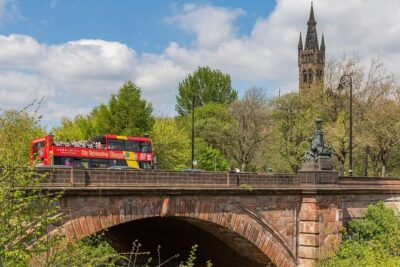
City Sightseeing Glasgow Hop-On Hop-Off Bus Tour
Read our review →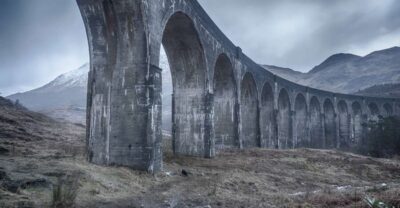
Glenfinnan, Fort William, and Glencoe Day Trip
Read our review →

Loch Ness, Glencoe and Highlands Tour with Cruise
Read our review →
Browse the lists this tour appears in