
Reviewed · GLASGOW TOURS
Glasgow: The Magnificent and Mysterious History of Glasgow
Glasgow’s story is written in grand stone, narrow courts, old market streets, and bold murals. This 2.5-hour walking tour connects the city’s 6th-century beginnings with its industrial rise, merchant fortunes, working people, and modern arts scene. I like the way it shows you both famous sights, such as the City Chambers, and easily missed places, including the Britannia Panopticon and Ramshorn Church.
I especially like the mix of big civic architecture and small human stories, from tobacco merchants and pioneers to performers and workers. Guides such as Bruce and Henry also bring plenty of Scottish humor and practical warmth. The catch is simple: you walk for roughly 4 km in changeable weather, and there is little shelter, so comfortable shoes and rain gear matter.
Key points to know before you go
- Saint Mungo to modern Glasgow: Follow the city’s story from its early Christian origins to its present-day arts and culture.
- A strong mix of sights: See George Square, the City Chambers, Merchant City, Glasgow Green’s edge, street murals, and Glasgow Cathedral.
- Small details matter: Tobacco Merchant’s House, Virginia Court, Mercat Cross, and old police features reveal how the city worked.
- Guides make the difference: Bruce, Henry, James, and other English-speaking guides are praised for clear storytelling, humor, and helpful local tips.
- Plan for about 4 km on foot: The pace includes regular stops, but this is still a full city walk in rain or shine.
- Good value at $18: For two and a half hours of guided context, the price is modest, especially on a first visit.
Glasgow’s story begins around George Square
Meet just outside the main entrance to Costa Coffee on the north side of George Square. This is a practical starting point because you are placed right in the civic heart of Glasgow, surrounded by monuments, transport links, and some of the city’s most impressive stone buildings.
The opening section gives you the broad story. Glasgow began as a small settlement connected with Saint Mungo, then grew through trade, shipping, manufacturing, and the work of merchants and laborers. The guide links the early city with the wealthy 19th century, when Glasgow earned the title Second City of the Empire.
That wide time span is one of the tour’s strongest features. You are not simply shown old buildings one by one. You are given a reason for their existence and a sense of how money, power, religion, commerce, and ordinary work shaped the streets around you.
More history tours in Glasgow:
- Glasgow: Historical Walking Tour: Guided by a local actor
★ 4.5 · 198 reviews - Glasgow: Pubs & History Walking Tour with Beer Tasting
★ 5.0 · 81 reviews - Glasgow: Pubs & History Guided Walking Tour with Beer
★ 4.9 · 74 reviews
City Chambers and the public face of power
The Glasgow City Chambers gets a proper stop, with about 12 minutes for guided sightseeing and photographs. This is one of the tour’s main architectural moments. Its scale helps explain the confidence of a city that had grown wealthy through trade and industry.
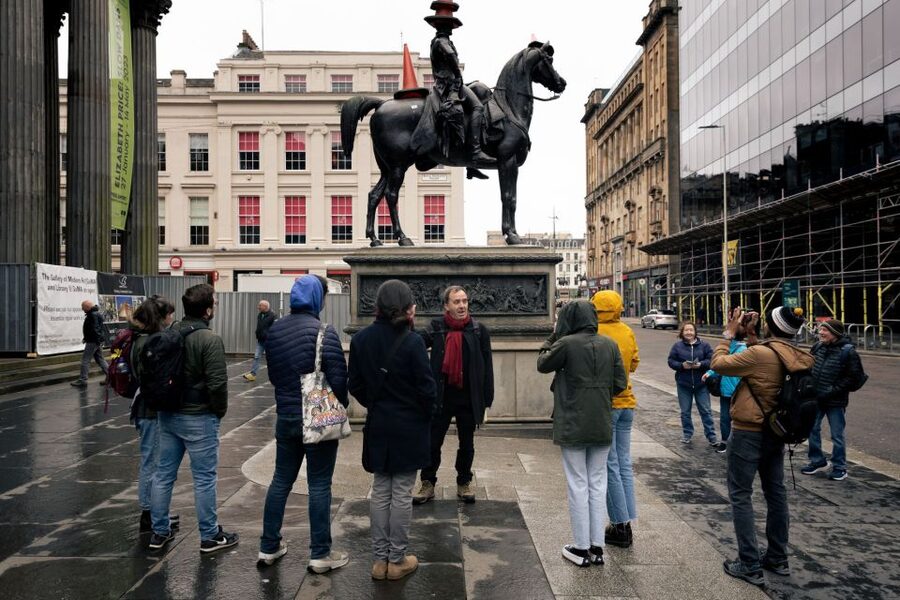
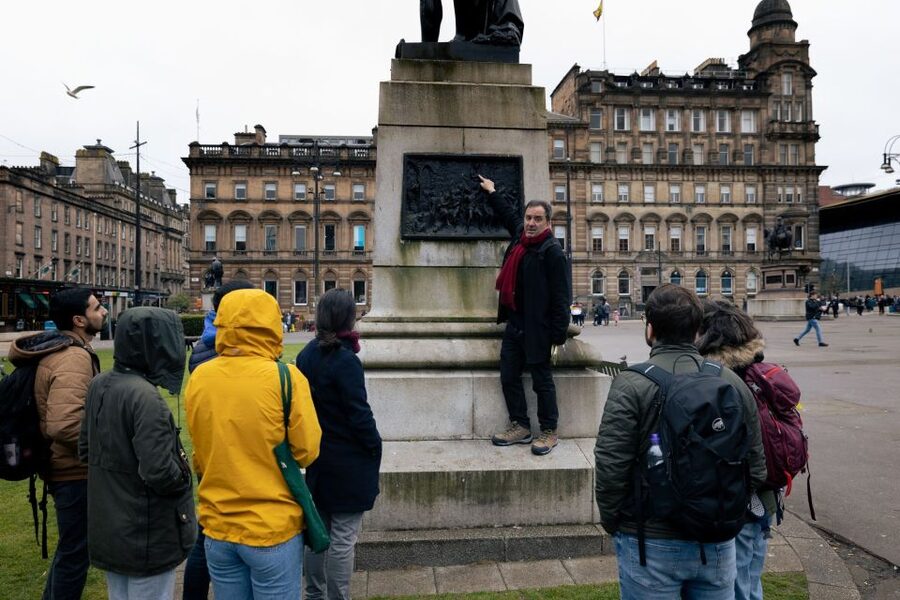
The Cenotaph follows, along with the Walter Scott Monument and the monument to Robert Burns. These short stops keep the walk moving while adding layers to George Square’s public symbolism. You see how Scotland’s writers, soldiers, and national figures were placed into the city’s civic setting.
At 155 Queen Street, the guide continues the architectural story. Georgian, Victorian, and Edwardian buildings are not treated as background scenery. Their materials, ornament, and scale show how Glasgow wanted to present itself during its period of great prosperity.
I find this opening useful if you are new to the city. It gives you a framework for later sights, and it helps you notice the contrast between formal public buildings and the tighter streets of Merchant City.
Merchant City reveals wealth, trade, and old addresses
The route turns toward Paesano Pizza and the Tobacco Merchant’s House, then continues through Virginia Court and around the Merchant City Inn. Here the emphasis shifts from civic Glasgow to commercial Glasgow.
The Tobacco Merchant’s House is especially useful for understanding the city’s trading past. Glasgow’s merchants made fortunes through overseas commerce, and their homes and business addresses help explain why this part of town contains such handsome old buildings. The tour also keeps the focus on the workers and networks that made those fortunes possible, rather than presenting wealth as a story without human cost.
Virginia Court gives you a closer look at the older street pattern. Courts and lanes can be easy to walk past without noticing, especially when you are heading between major attractions. A guide points out the details that help you picture how these spaces once functioned.
The stop at Jacobean corsetry adds one of the tour’s more unusual touches. It is not a grand monument, but that is the point. Glasgow’s past survives in odd corners, old trades, businesses, and fragments of built history. The route does not limit itself to the sights that appear on every postcard.
Scandals, police posts, and Glasgow’s darker side
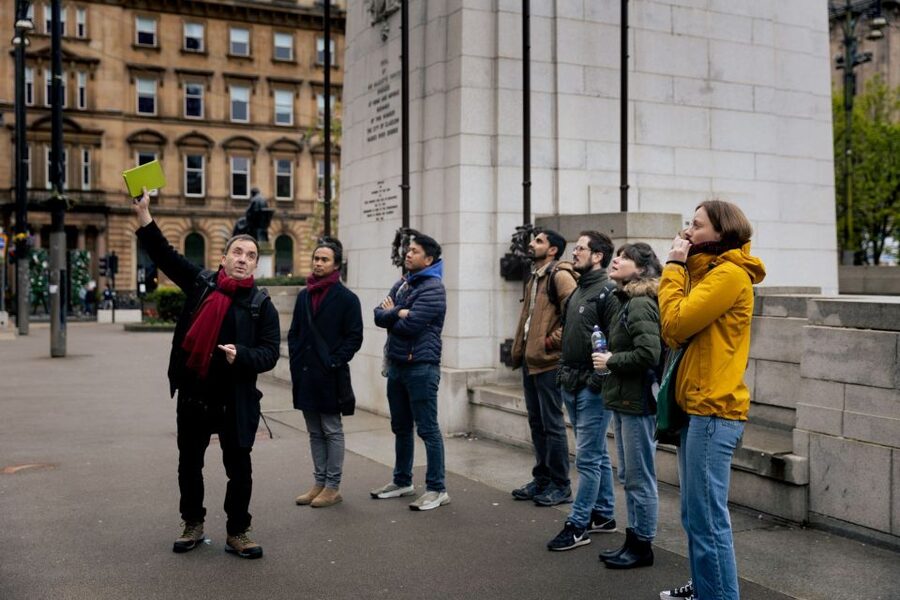
At the Old Police Post, Rab Ha’s Hotel, and 1802 at Hutchesons Hall, the tour moves into stories about memorable characters, scandals, and less polished parts of the city’s past. The exact appeal here depends on your guide, but this is where the walk gains its personality.
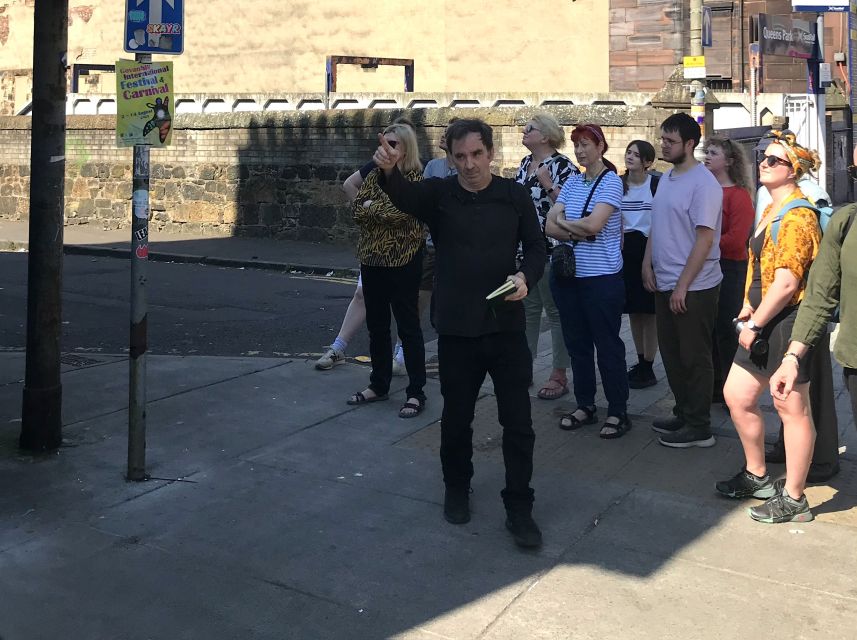
Bruce is particularly associated with a humorous, story-led style. He has been praised for bringing Saint Mungo and Glasgow’s characters to life, while Henry is noted for explaining the social, political, and cultural setting behind events. James also leads the tour, so the delivery can vary, but the format clearly depends on a guide who can connect facts with people.
The route is not a dry roll call of dates. You hear why a place mattered and what kind of city Glasgow was becoming. That approach is helpful because the old streets can otherwise seem like a collection of handsome façades with no obvious connection.
At Hutchesons Hall, you get another look at the city’s civic and charitable traditions. The tour’s strength is its range: architecture, religion, business, entertainment, public memory, and social change all appear within the same walk.
A few more Glasgow days to weigh up
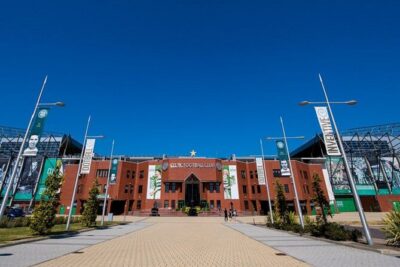
- Glasgow: Celtic Park Stadium Tour
★ 4.9 · 3,336 reviews - Guided Celtic Park Stadium Tour
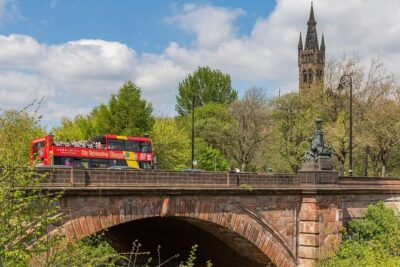
★ 5.0 · 3,136 reviews - Glasgow: City Sightseeing Hop-On Hop-Off Bus Tour
★ 4.5 · 3,095 reviews - From Glasgow: Oban, Glencoe, Highland Lochs & Castles Tour
★ 4.9 · 2,123 reviews
Murals and performance spaces bring the city forward
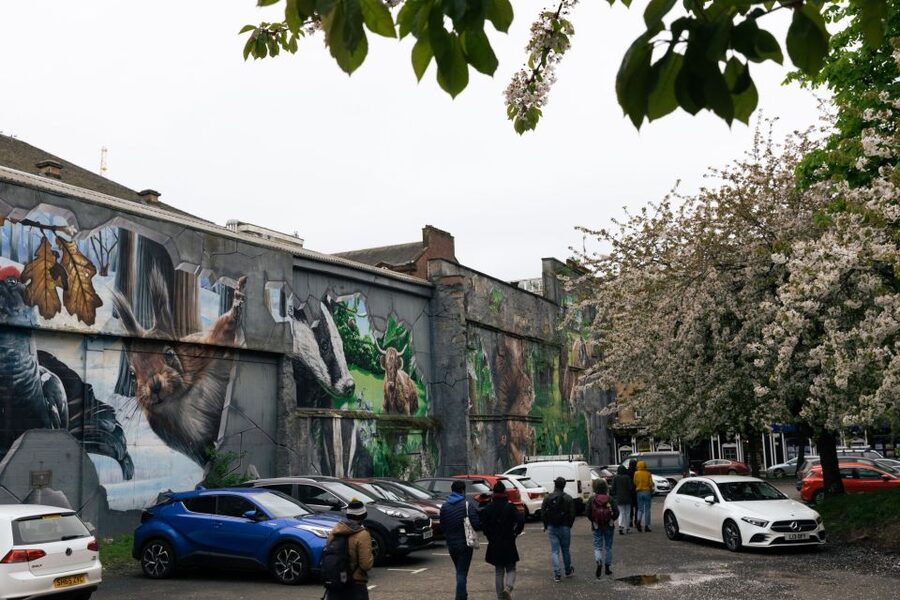
The mural titled Bow Down, Honour the Roots marks a clear change in mood. Glasgow’s street art is now an important part of its public identity, and this route places modern murals beside older buildings rather than treating them as separate attractions.
The City Halls and Old Fruitmarket, Candleriggs, and Tron Theatre continue the story of commerce, public gathering, and culture. The old fruit market is a reminder of how the city once handled food and trade, while the theatre points toward Glasgow’s continuing creative life.
Sharmanka Kinetic Theatre offers another unusual stop. It is a small, distinctive cultural attraction rather than a major landmark. You may not have found it by simply following a standard sightseeing route, which makes this part valuable for visitors who want something beyond the obvious monuments.
The Britannia Panopticon is one of the highlights. It is described as the world’s oldest surviving music hall, and its presence adds a strong entertainment chapter to the walk. The guide explains how Glasgow’s working population also needed places for music, comedy, spectacle, and escape.
This is one reason I would choose the tour early in a Glasgow visit. It gives you several ideas for places to return to, instead of using all your time on a single polished attraction.
Billy Connolly, the Briggait, and the River Clyde connection
The Billy Connolly mural adds a modern Glasgow figure to the route. It fits the tour’s larger theme: the city’s identity comes from famous builders and merchants, but also from performers, workers, artists, and local characters.
The Briggait and Saltmarket bring the walk back to commerce and movement. You see how the old center connected markets, transport, trade, and daily life. Bare Bones Chocolate is only a brief stop, but small businesses and food places help keep the route tied to present-day Glasgow.
The guide may also offer food suggestions at the end. One guide directed people toward a good pizza dinner, a useful bonus when you are still finding your way around town. Treat this as local orientation rather than a formal food tour. The focus remains history and sightseeing.
Mercat Cross and High Street lead toward old Glasgow
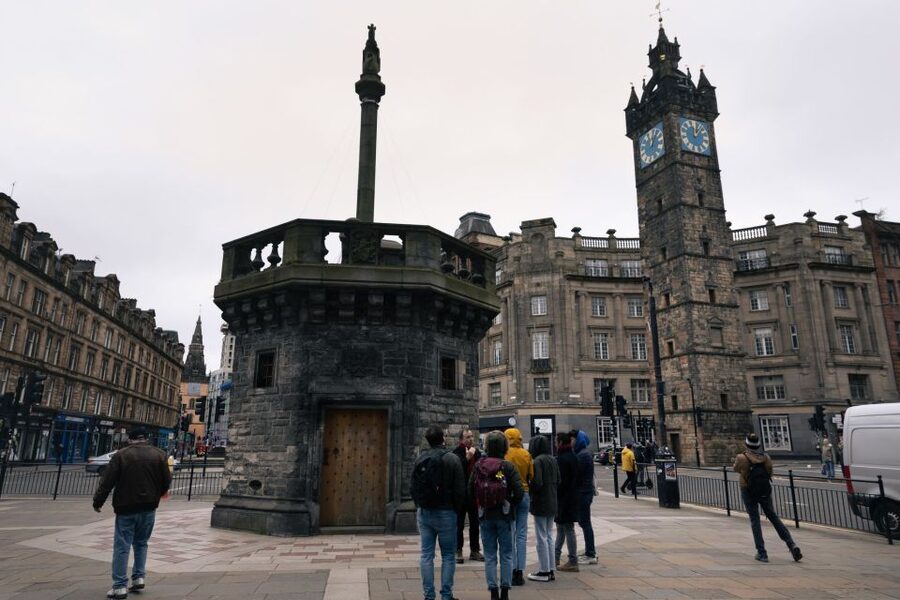
Mercat Cross and High Street provide some of the clearest links to Glasgow’s medieval past. A mercat cross was a place of trade and public life, and the guide uses these streets to explain how the old city was organized.
This section may feel less grand than George Square, but I think it is more revealing. High Street shows the older shape of Glasgow, while the surrounding lanes make it easier to imagine a city before wide civic streets and monumental commercial buildings took over.
Babbity Bowster adds another characterful stop, followed by the Fellow Glasgow Residents mural. The route keeps alternating between old stone and contemporary art. That pattern prevents the tour from becoming too focused on one period.
The guide’s commentary is especially useful here because many of the best details are easy to miss. You might notice a façade, a court, or a mural, but without context you may not understand why it belongs in Glasgow’s story.
Ramshorn Church and the finish near Glasgow Cathedral
The final stop is the Ramshorn Church, and the walk finishes at Glasgow Cathedral. That ending makes historical sense. After beginning with the city’s civic center, you finish near one of its major religious landmarks and close to the area tied to Saint Mungo.
You should not expect a full interior visit to every building. This is a guided outdoor walk with photo stops, commentary, and short pauses. The City Chambers receives the longest listed stop, while many other places take only a few minutes.
That pacing works well for a 2.5-hour introduction. You walk for a few minutes, stop to look and listen, then move on. The route covers a lot, but it does not ask you to stand in one place for long stretches.
The downside is that the final destination is not the same as the meeting point. You finish near Glasgow Cathedral, close to George Square and the original starting area, but you should allow time to orient yourself afterward.
What the pace and weather are really like
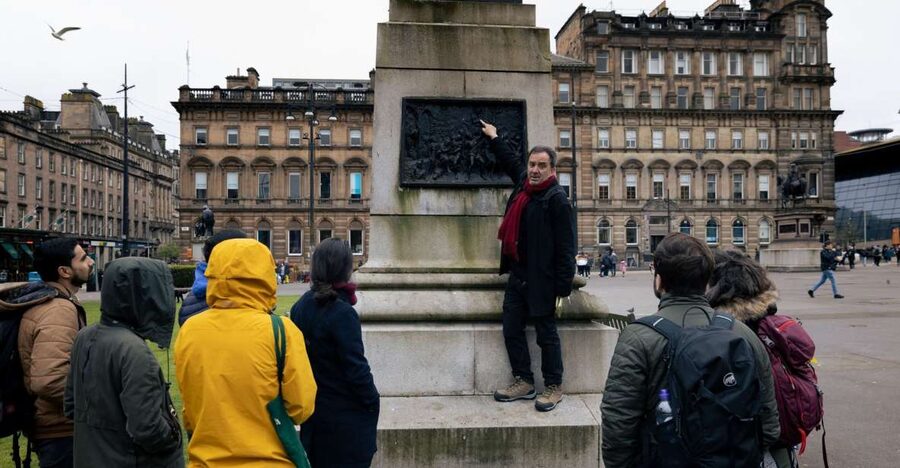
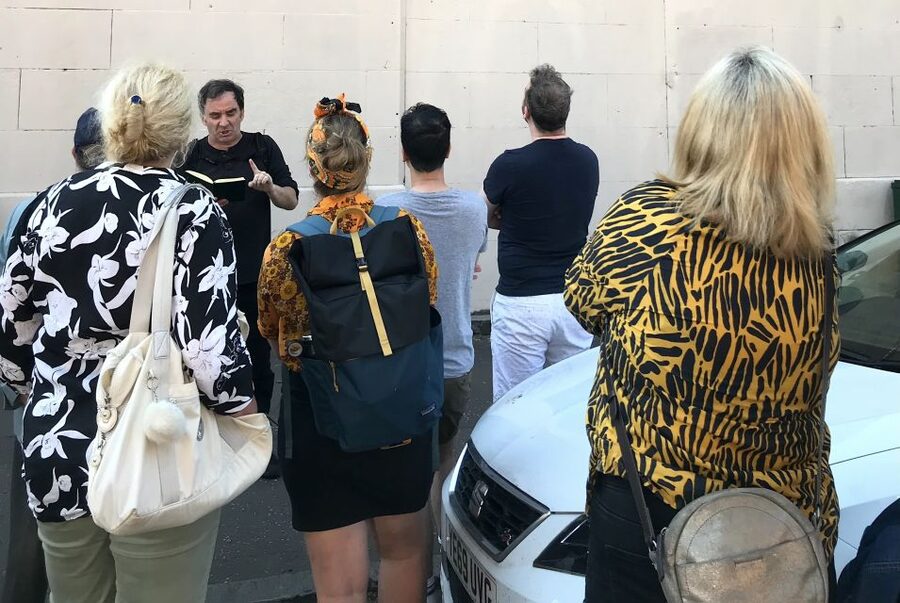
This is a city walk, not a gentle indoor tour. The total distance is about 4 km according to one detailed account, spread across many short segments. A reasonable level of fitness is needed, and the experience is not designed for people with mobility impairments or a low level of fitness.
The tour runs rain or shine. Glasgow weather can change quickly, so bring a waterproof layer, comfortable shoes, and clothing suited to the forecast. Do not bring luggage or a large bag, since crowded streets and frequent stops make bulky belongings awkward.
The pace is generally manageable because the guide stops often. Still, standing outdoors for two and a half hours can feel tiring in cold rain. If the forecast is poor, dress for the worst part of the day rather than the moment you leave your hotel.
The supplied conditions say the tour is not suitable for children under 10. One local family did manage the walk with a toddler, baby, and pram, but that is an individual example rather than a standard promise. For planning purposes, follow the stated age and mobility guidance.
The guides are a major part of the value
The strongest praise centers on the guides’ storytelling, humor, clarity, and affection for Glasgow. Bruce appears often, and his style is described as witty, warm, energetic, and full of Scottish humor. He also adapts to questions and has helped people with practical suggestions after the walk.
Henry is another frequently named guide. His approach includes social and political context, clear speech, animated delivery, and attention to the needs of people unfamiliar with Scottish accents. That clarity matters on a history tour, since a missed name or place can make the next story harder to follow.
The tour has also been led by James. You cannot choose a particular guide from the information provided, so book for the route and format rather than assuming a specific personality. Still, the repeated emphasis on guide quality is important: this experience is carried by the person leading it.
A score of 4.9 from 302 ratings suggests a strong record, but I would still keep expectations realistic. The content is delivered outdoors, weather can be rough, and the exact humor and emphasis will vary by guide and group.
Is $18 a fair price for this Glasgow walk?
At $18 per person, the tour offers good value if you want an informed first look at central Glasgow. You get two and a half hours with an experienced live guide, a broad route, and context for more than two dozen places.
You are not paying for admission to a series of interiors. The value lies in the connections: merchants to architecture, markets to working life, old churches to modern murals, and Saint Mungo to the city Glasgow is today.
I would especially recommend it for a short stay, a first morning in town, or a visit before exploring museums and attractions on your own. It can help you decide which places deserve a longer return visit.
You can cancel up to 24 hours before the start for a full refund, and the reserve-now, pay-later option keeps your plans flexible. Check the available start times when booking, since the precise schedule is not fixed here.
Who should book this experience?
Book it if you like city history told through streets rather than screens. It suits adults, older children who meet the age requirement, solo visitors, couples, and small groups who want a useful orientation without paying for a private guide.
It is also a good choice for people who already know central Glasgow. One local resident who had lived in the city for 10 years still found new details, which says something about the route’s attention to overlooked corners.
You may prefer a different activity if you want a slower pace, indoor visits, extended time inside the City Chambers, or a tour built around food. This walk moves across a large central area and covers many stops from the outside.
Should you book the Glasgow history walking tour?
Yes, if you want an affordable and lively introduction to Glasgow’s past and present. The best reasons to book are the wide historical range, the mix of famous and less obvious places, and guides such as Bruce and Henry who turn facts into memorable stories.
Think twice only if rain, four kilometers of walking, or outdoor standing will make the day unpleasant. For most reasonably fit visitors with good shoes and a waterproof jacket, this is a smart first activity in Glasgow and a useful way to see the city with sharper eyes.
FAQ
Where does the Glasgow walking tour begin?
It begins just outside the main entrance to Costa Coffee on the north side of George Square.
Where does the tour finish?
The tour finishes at Glasgow Cathedral, near George Square and the original starting area.
How long is the walking tour?
The tour lasts 2.5 hours.
What language is the tour in?
The tour is conducted in English with a live guide.
What sights are included?
The route includes Glasgow City Chambers, the Cenotaph, the Walter Scott Monument, the Robert Burns monument, Merchant City, Tobacco Merchant’s House, Virginia Court, the Britannia Panopticon, Glasgow murals, Mercat Cross, High Street, Ramshorn Church, and Glasgow Cathedral.
What should I bring?
Bring comfortable shoes, rain gear, and clothing suited to the weather. Glasgow weather is changeable, and the tour operates rain or shine.
Is the tour suitable for everyone?
The tour is not suitable for children under 10, people with mobility impairments, or people with a low level of fitness. Walkers need a reasonable level of fitness for the 2.5-hour route. Large bags and luggage are not allowed.
Just added around Glasgow
- Private Harry Potter, Glenfinnan Viaduct, Highlands tour Glasgow★ 5.0 · 8 reviews
- Glasgow: Mountains, Glens & The Loch Ness Monster Day Tour★ 4.8 · 8 reviews
- From Glasgow: Castles, Clans & Outlander Day Tour★ 4.8 · 8 reviews
- Edinburgh Custom Private Walking Tour With A Guide (Private Tour)★ 4.5 · 8 reviews
- From Glasgow; Loch Lomond and Highlands Private Day Tour★ 5.0 · 9 reviews
- Loch Lomond, Inveraray and Argyll Private Tour from Glasgow★ 5.0 · 9 reviews
- Fun and Flexible Treasure Hunt Around Glasgow with Cryptic Clues★ 5.0 · 9 reviews
- Fun Glasgow City Centre Walking Tour Guided★ 5.0 · 9 reviews
Glasgow Tours, compared.

City Sightseeing Glasgow Hop-On Hop-Off Bus Tour
Read our review →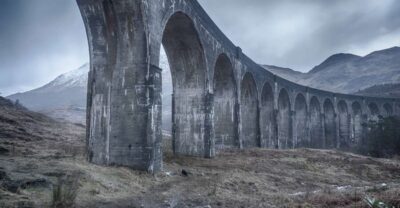
Glenfinnan, Fort William, and Glencoe Day Trip
Read our review →

Loch Ness, Glencoe and Highlands Tour with Cruise
Read our review →
Browse the lists this tour appears in