
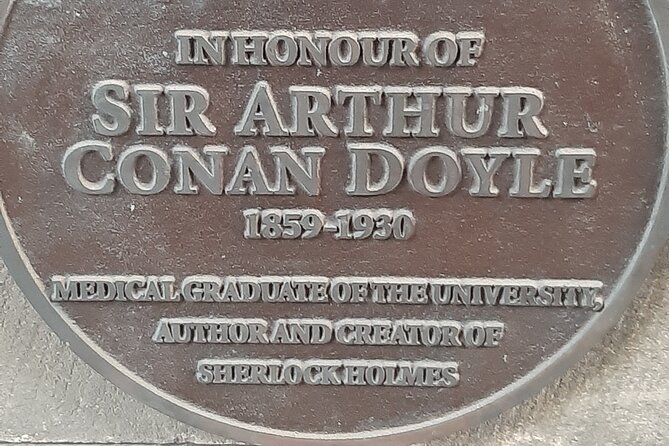
Reviewed · EDINBURGH TOURS
Medical and Surgical History of Edinburgh – Private Walking Tour
Edinburgh’s medical story is written into its closes, courtyards, hospitals, and university buildings. On this private walk, you trace that story from the Royal Mile to the former Royal Infirmary, learning how the city became a major centre for medicine and surgery.
I like the route’s sense of place. You are not simply hearing dates inside a museum. You are standing where Edinburgh’s first teaching hospital operated, passing the old Medical School, and seeing the former home of the Royal Infirmary. I also like the guide’s personal angle: Moray, also addressed as Dr. Grigor in one booking note, is a physician who connects medical history with real healthcare experience.
The main drawback is physical rather than intellectual. The walk covers about 2.5 miles over three to four hours, with Edinburgh’s usual slopes and uneven streets. It is not a good choice if you have chronic or painful musculoskeletal problems, and the café stop is not included in the price.
Key points to know before booking
- A physician-guide leads the walk: Moray brings a medical perspective to stories about doctors, students, hospitals, and surgery.
- The route crosses six historic areas: You walk from Hunter Square along the Royal Mile, through Cowgate, past Surgeons’ Hall and the old University of Edinburgh Medical School, then to Lauriston Place.
- The first teaching hospital is part of the story: Robertson’s Close was home to The Little House, an early teaching hospital, before the first Royal Infirmary.
- Women’s medical education gets proper attention: At Surgeons’ Hall, the tour covers the long struggle for women to enter Edinburgh’s Medical School.
- It is a private experience: Only your own group takes part, so the pace and conversation can suit your interests.
- Plan for a café stop, not a museum visit: Refreshments are paused for, but coffee, tea, and food cost extra, and admission to a medical history museum is not part of the walk.
Why this Edinburgh medical walk feels different
Many city tours use famous buildings as a backdrop for general history. This one uses the buildings as evidence. The route shows how hospitals, teaching rooms, universities, and professional bodies grew together over centuries.
That makes the tour especially useful if you work in healthcare, study medicine, or simply enjoy social history. You hear about professional training, hospital care, surgery, student life, and the fight over who could enter the profession. The subject is serious, but the guide’s style is intended to keep the walk lively, with Scottish facts and personal medical insight mixed into the storytelling.
The private format matters here. Medical history can lead to questions about ethics, education, public health, and changing treatment. With only your group present, you can stop to ask about a particular period or compare Edinburgh’s past with your own healthcare system.
The tour is priced at $130.44 per person. That is not a cheap casual stroll, but the guiding and commentary are included, and the experience lasts roughly three to four hours. For a small private group with a strong interest in medicine, the price can make sense. If you want a broad introduction to Edinburgh’s main sights, you will get better value elsewhere.
More History Tours in Edinburgh
- Edinburgh: Edinburgh Castle Guided History Tour with Tickets
★ 4.8 · 7,747 reviews - Edinburgh: Whisky Tasting with History and Storytelling
★ 4.9 · 2,451 reviews - Edinburgh: Old Town History and Tales Walking Tour
★ 4.8 · 2,361 reviews
Starting at Hunter Square and walking the Royal Mile
The tour begins at Hunter Square, a practical starting point near Edinburgh’s Old Town. From there, you walk down the Royal Mile, Edinburgh’s oldest main street, while learning how medicine and surgery developed in the city.
The opening section lasts about 45 minutes. It focuses on the origins of Edinburgh medicine and the alleyway connected with the city’s College of Physicians. This is a good introduction because the Royal Mile is already one of the city’s busiest sightseeing routes, yet the medical story can be easy to miss if you are only looking at churches, shops, and grand facades.
Here, the value comes from reading the street in a new way. A close or narrow passage is no longer just a shortcut. It becomes part of the story of medical organisation and professional identity.
Admission is free at this stop, as it is throughout the listed route. You are paying for the guide’s interpretation rather than entry to a paid attraction.
Cowgate, Robertson’s Close, and Edinburgh’s first hospitals
After the Royal Mile, the walk heads toward Cowgate. This section lasts about an hour and is one of the most important parts of the route.
Just off the Cowgate, you locate Robertson’s Close, the site of The Little House, described as Edinburgh’s first teaching hospital. You then explore the area connected with the first Royal Infirmary of Edinburgh.
This is where the tour moves from professional origins to practical medical education. A teaching hospital is not just a place where patients receive care. It is also where students watch, learn, and train under experienced practitioners. Standing near these former hospital sites helps you understand how Edinburgh built its reputation through the close link between treatment and teaching.
The Cowgate section also gives the walk a useful change of mood. The Royal Mile can feel formal and monumental. The Cowgate and its closes show a more cramped, working part of the Old Town. That contrast helps you picture how medical institutions functioned within the dense medieval and early modern city.
Expect a good deal of standing and walking here. The stop itself is free, but the history is layered, so you may want to keep the pace relaxed and ask questions as you go.
Surgeons’ Hall and the long fight over women in medicine
Surgeons’ Hall is the central pause point. The tour spends about 45 minutes here, including a refreshment break.
This is the historic home of the surgical profession, so it gives the route a clear focal point. You hear more about surgery as a profession and about Edinburgh’s place in medical training. The discussion also covers the years-long battle for women to be admitted to the Medical School.
That topic adds important balance. A story about medical achievement can easily become a parade of famous male doctors. This tour also addresses the barriers faced by women who wanted medical education and professional careers. For many people, that social history will be as interesting as the surgical milestones.
The break is practical. Three or four hours is a long time to spend on foot, and a café stop gives you a chance to sit down and continue the conversation. Coffee, tea, and food are not included, so carry a payment method and allow a little extra for refreshments.
One important point: this experience does not include a visit to a medical history museum. You may be near Surgeons’ Hall Museums, but the supplied details describe the tour as an outdoor walking experience with commentary, not a museum admission package. If you want time inside museum galleries, plan that separately.
More Walking Tours in Edinburgh
- Edinburgh: Harry Potter Magical Guided Walking Tour
★ 4.8 · 11,944 reviews - Edinburgh Castle: Guided Walking Tour with Entry Ticket
★ 4.7 · 11,699 reviews - Underground Vaults Walking Tour in Edinburgh Old Town
★ 4.5 · 8,506 reviews - Edinburgh Castle: Guided Walking Tour with Entry Ticket
★ 5.0 · 5,540 reviews
The old University of Edinburgh Medical School
The next stop is the former home of the University of Edinburgh Medical School. The planned visit lasts about 20 minutes.
Here, the focus shifts to Edinburgh’s growing importance as a medical centre and to the daily life of medical students. That human detail is welcome. Medical history can become a string of institutions and dates, but student life shows the effort behind those achievements.
You hear about the work, routine, and rewards of training in medicine. The stories of drudgery and compensations give the subject a more personal scale. This is also a useful point to ask Moray about his own experience in healthcare, since his background as a physician adds a direct professional perspective.
The stop is shorter than the hospital sections, but it connects them. Hospitals needed students, students needed teachers and clinical settings, and the university gave the profession a lasting base.
Bristo Place, Charles Darwin, and the 1880s Medical School
The walk continues through Bristo Place, passing the site of Charles Darwin’s former student lodgings. Darwin’s name adds a familiar face to the route, but the stop is not presented as a general Darwin tour. His connection here is that of a former medical student living in Edinburgh.
From there, you reach the imposing 1880s Medical School and graduation hall. The planned time in this area is about 25 minutes.
This part of the route shows the expanding scale and confidence of Edinburgh’s medical education. Earlier stops focus on small teaching spaces and early institutions. The later Medical School and graduation hall reflect a more formal system, with dedicated buildings for education and professional ceremony.
I find this progression one of the strongest features of the walk. You can follow the shift from informal or limited teaching arrangements to a larger institution built around a recognised medical curriculum.
Finishing at Lauriston Place and the former Royal Infirmary
The final 15-minute section takes you to Lauriston Place. The tour ends in the grand front courtyard of the former Royal Infirmary of Edinburgh, now associated with Edinburgh Futures Institute at the University of Edinburgh.
This is a fitting finish. After hearing about early teaching hospitals, medical students, professional organisations, and major doctors, you arrive at the entrance plaza of one of Edinburgh’s most important former medical institutions.
The guide shares stories of notable doctors and surgeons connected with the Royal Infirmary. The short final stop works more as a closing chapter than a full visit. You finish outside, not inside the building, so do not expect a hospital tour or museum entry.
The endpoint is at 1 Lauriston Place, Edinburgh EH3 9EF. Since the tour does not return to Hunter Square, think about what comes next. You may want to continue sightseeing nearby, arrange transport, or leave time before another booking.
Pace, distance, and the private format
The advertised duration is three to four hours, though one tour account describes a walk lasting more than four hours. That difference is worth noting. A private tour can stretch when questions and conversation take over, which may be welcome if you are fascinated by the subject. It can also affect afternoon plans.
The route is about 2.5 miles. That distance is manageable for many people, but Edinburgh’s Old Town includes slopes, steps, and uneven pavement. The tour requires a moderate level of physical fitness. If walking for several hours causes pain, this is not the right activity.
The private setup is a major advantage for families and small groups. You are not trying to hear a guide over a crowd, and the discussion can move toward healthcare, Scottish history, or medical education according to your interests. Group discounts are available, so check the total cost for your party rather than looking only at the individual rate.
The tour is offered in English. Service animals are allowed, and the route is near public transportation.
Who will get the most from this tour?
I would recommend it most strongly to:
- People with a professional or academic interest in medicine, surgery, nursing, or medical education
- Visitors who enjoy social history more than standard sightseeing
- Families with older children or adults who can manage a 2.5-mile urban walk
- Private groups who want time for questions and conversation
- Repeat visitors to Edinburgh looking for a subject-specific route
It may be less suitable if you want to enter historic buildings, see museum collections, or cover Edinburgh’s general highlights. It also may not suit anyone with painful mobility conditions.
You do not need to be medically trained. The route covers healthcare, hospitals, surgery, students, and professional change in an accessible way. Still, the subject is specialised, and you will get more from it if those themes genuinely interest you.
Booking, weather, and what to bring
The tour is often booked about 75 days ahead, so reserve early if your dates are fixed. Confirmation is sent within 48 hours, subject to availability.
Bring comfortable shoes and clothing suited to Edinburgh weather. The experience requires good weather, and if poor conditions force cancellation, you are offered another date or a full refund. You can cancel for a full refund up to 24 hours before the start time. Changes or cancellations inside that window are not accepted, and the amount paid is not refunded.
Because refreshments are not included, budget separately for the café stop. The tour price covers guiding and commentary, not food, drink, or museum admission.
Should you book the Medical and Surgical History of Edinburgh tour?
Book it if you want Edinburgh to explain itself through hospitals, doctors, students, and professional change. The route has real physical locations behind it, and Moray’s medical background gives the commentary a personal edge. The strongest parts are the early teaching hospital sites, the discussion of women entering medicine, and the gradual move from small Old Town settings to the grand former Royal Infirmary.
Skip it if you want a quick overview of the city or a museum-based experience. At $130.44 per person, this is a specialised private walk, not a bargain introduction. But for the right audience, especially a private group with medical or social-history interests, it offers three to four hours of focused Edinburgh storytelling that standard sightseeing tours rarely provide.
FAQ
Where does the tour begin?
The tour begins at Hunter Square in Edinburgh’s Old Town.
Where does the tour end?
It ends at Edinburgh Futures Institute, 1 Lauriston Place, the former Royal Infirmary of Edinburgh.
How long does the tour last?
The listed duration is approximately three to four hours. One account describes a tour lasting more than four hours, so allow some flexibility.
How far do you walk?
The route covers approximately 2.5 miles.
Is this a private tour?
Yes. Only your own group participates in the activity.
Is museum admission included?
No museum admission is listed. The tour includes guiding and commentary, and it passes historic medical locations. A visit to a medical history museum is not part of the experience.
Are refreshments included?
No. The tour includes a café refreshment stop, but coffee, tea, and food are not included.
What language is the tour offered in?
The tour is offered in English.
Can I cancel for a full refund?
Yes. You can cancel at least 24 hours before the start time for a full refund. Cancellations or changes made less than 24 hours before the start time are not accepted, and poor-weather cancellations offer either another date or a full refund.
Just added around Edinburgh
- Private tour: History and Mystery in Edinburgh’s Old Town★ 5.0 · 8 reviews
- Falkirk Wheel, Doune Castle, Stirling Castle Private Tour★ 5.0 · 8 reviews
- Edinburgh Private Transfer from Edinburgh city centre to Edinburgh Airport★ 4.0 · 8 reviews
- Edinburgh: Harry Potter, Glenfinnan Viaduct & Highland Tour★ 5.0 · 8 reviews
- Edinburgh: Dean Village & New Town Walking Tour★ 5.0 · 8 reviews
- Edinburgh: Harry Potter Walking Tour and Beer Tasting★ 4.9 · 8 reviews
- Watch Building Experience – Edinburgh★ 4.5 · 8 reviews
- Ghost Tour in Edinburgh★ 5.0 · 8 reviews
Edinburgh Tours, compared.

Loch Ness, Glencoe & the Scottish Highlands Tour
Read our review →

Edinburgh Castle: Guided Walking Tour with Entry Ticket
Read our review →
Loch Ness, Glencoe & Scottish Highlands Tour
Read our review →
Underground Vaults Walking Tour in Edinburgh Old Town
Read our review →
Edinburgh Castle Guided History Tour with Tickets
Read our review →Browse the lists this tour appears in