
Reviewed · EDINBURGH TOURS
Royal Mile and Old Town Walking Tour
Edinburgh’s Old Town is best understood on foot, where a narrow close, crooked tenement, or weathered pub sign can reveal more than a grand viewpoint. This three-hour walk links the castle, Grassmarket, Royal Mile, St Giles’ Cathedral, Waverley Station, and Scott Monument, while guides such as Fiona, Craig, Stuart Usher, Alison, and David Forsyth bring the city’s darker and more colorful stories to life.
I like the small maximum group of 12, which gives you a fair chance to ask questions and hear the guide. I also like the way the tour covers more than headline sights, including Milne’s Court, Riddle’s Court, Deacon Brodie’s Tavern, and old lanes where Edinburgh’s past feels close at hand.
The main drawback is that this is a proper three-hour walk over uneven ground, with some stairs and hills. Castle and cathedral admission are not included, and most stops are viewed from outside, so you should treat this as an excellent introduction rather than a full attraction tour.
Key Points Before You Book

- The route connects Edinburgh’s essential sights: You move from Usher Hall and the castle to Grassmarket, the Royal Mile, Waverley Station, and the Scott Monument.
- The stories are a major part of the value: Expect Scottish Wars of Independence, the Stuart dynasty, the Reformation, the Scottish Enlightenment, crime, folklore, and local characters.
- Small groups make the walk personal: The group limit is 12, and guides often ask what you already know and what interests you.
- The tour is especially good on your first day: It gives you a useful map of the Old Town and points out places to return to later.
- Wear sensible shoes: Edinburgh’s old streets are uneven, and the walk includes some stairs and changes in level.
- You pay for guiding, not attraction entry: Castle and St Giles’ Cathedral admission are not included, although the Writers’ Museum is free to enter.
Why This Walk Works as an Edinburgh Introduction

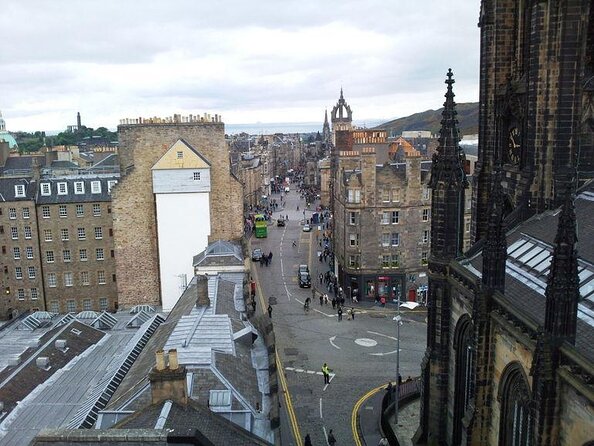
The best thing about this experience is its sense of connection. Instead of looking at isolated monuments, you follow the city’s spine from the west side of the Old Town toward Princes Street. Each stop adds another piece: royal power at the castle, trade and punishment at the Grassmarket, crowded urban life in the closes, religion at St Giles’, and literary pride around the Royal Mile.
The professional guides are the heart of the walk. Fiona is praised for giving enough history without burying you in dates, while still tailoring the conversation to the group. Dr Alison Duncan brings academic training but uses it in a friendly, story-led way. David Forsyth has worked as a museum curator, and Stuart Usher draws on long family connections with Edinburgh, including the Usher Hall’s link to his relative Andrew Usher.
You should not expect the same script delivered in exactly the same way by every guide. That is a strength here. The experience can shift toward architecture, Scottish politics, literary figures, or personal family connections. One participant was shown the former home linked with ancestor Jenny Geddes, whose actions in St Giles’ Cathedral helped spark major religious and political conflict in 1637.
More Walking Tours in Edinburgh
- Edinburgh: Harry Potter Magical Guided Walking Tour
★ 4.8 · 11,944 reviews - Edinburgh Castle: Guided Walking Tour with Entry Ticket
★ 4.7 · 11,699 reviews - Underground Vaults Walking Tour in Edinburgh Old Town
★ 4.5 · 8,506 reviews
Usher Hall to Edinburgh Castle
The walk begins outside Usher Hall on Lothian Road. The building is a handsome Beaux Arts and Baroque-style concert hall, donated to Edinburgh by Andrew Usher. You spend about ten minutes here, enough to understand why it matters without turning the opening into an architectural lecture.
From there, the route heads toward Edinburgh Castle. The castle is viewed from outside, with time to see its bulk from different angles and hear how the rock, fortress, monarchy, and warfare shaped the city below.
This is one of the most useful parts of the walk for a first visit. Edinburgh Castle can look like one solid block from a distance, but the guide helps place it in the story of the Scottish Wars of Independence, the Stuart dynasty, and the Union of the Crowns. You also hear about the less polished chapters of Edinburgh’s past, including conflict, power struggles, and violence.
Remember that castle entry is not included. That is not a problem if you plan to visit separately, since the exterior discussion gives you context before you go inside. If you have only one day in Edinburgh, you will need to decide how much time to reserve for the castle after the walk.
Grassmarket and the View Toward George Heriot’s School
The Grassmarket gives the tour a change of mood. Once a medieval marketplace, it is one of the Old Town’s best-known open spaces, with the castle rising above it. You spend about 15 minutes here, learning how this area worked as part of medieval Edinburgh.
The guide also points toward George Heriot’s School, often linked with the visual inspiration for Hogwarts. The value is not just the comparison. This stop shows how Edinburgh’s architecture can feed the city’s stories, whether those stories concern school life, old markets, public punishment, or modern fiction.
The Grassmarket is also a practical orientation point. You can return here later for food or a drink, though the tour itself does not include refreshments. The open space offers a useful pause after the first section of walking before the route turns into narrower lanes and courts.
Milne’s Court and James Court

At Milne’s Court, the focus shifts from famous landmarks to daily life. You spend around ten minutes hearing how people lived in the 17th and 18th centuries. These older courts help you picture the crowded, layered structure of the Old Town, where homes, work, commerce, and public life were packed close together.
That is where a walking guide earns the fee. A street can look like a simple passage if you walk through it alone. With explanation, the same space becomes evidence of how Edinburgh grew upward and inward around the ridge.
Near James Court, you see classic Old Town tenement buildings and the Jolly Judge pub. The pub is a small but memorable detail, giving the walk a touch of local character after the heavier material about war and politics.
You should not expect long interior visits at every location. Much of the experience is about reading the exterior fabric of the city, then listening as the guide explains what it once meant.
More Royal Mile walks:
- Royal Mile and Edinburgh Castle – Small Group Walking Tour
★ 5.0 · 1,523 reviews - Edinburgh Castle & Royal Mile Walking Tour – Ticket Included
★ 5.0 · 894 reviews - Edinburgh Castle & Royal Mile Walking Tour – Ticket Included
★ 4.8 · 525 reviews - Edinburgh: Dark History Royal Mile Walking Tour
★ 4.9 · 197 reviews
The Writers’ Museum and Riddle’s Court
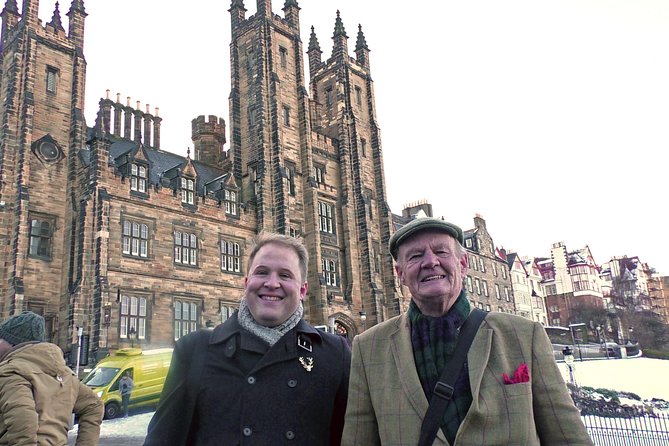
The Writers’ Museum is one of the route’s most appealing stops for anyone interested in Scottish literature. The museum focuses on Scotland’s literary figures, past and present, and you may visit inside if you wish. The stop lasts about 20 minutes, but the overall pace means you should not assume there will be time for a full museum visit.
If you care about literary history, plan to return after the tour. The walk gives you a useful introduction, while a separate visit lets you spend more time with the displays.
Riddle’s Court adds another layer. You see the exterior of the former home associated with David Hume, the Scottish philosopher often called the Father of the Scottish Enlightenment. The guide also connects the court with other Scottish figures, helping you see the Royal Mile as more than a route between the castle and palace.
This section works especially well when the guide asks what interests you. Fiona and Alison are both praised for finding out what the group already knows and shaping the discussion around that. You can ask about philosophy, literature, architecture, or the social life of the Old Town rather than simply receiving a fixed stream of facts.
Deacon Brodie and St Giles’ Cathedral

Deacon Brodie’s Tavern introduces one of Edinburgh’s most famous characters. William Brodie was a respectable cabinetmaker and civic figure who also lived a secret life as a criminal. His double identity helped inspire the familiar Jekyll and Hyde theme.
The stop lasts about 20 minutes, giving the guide room to tell the story rather than simply point at a sign. This is the sort of episode that makes the city’s past easier to remember. You are not asked to memorize a timeline. You get a person, a setting, and a moral twist.
St Giles’ Cathedral is viewed from the outside for about 20 minutes. Its importance reaches into the Middle Ages and the Reformation, and the guide explains how it became central to Scotland’s religious and political story.
Admission is not included. The exterior stop still has value, especially if your schedule does not allow an interior visit. If you want to go inside, ask the guide about timing during the walk, since the group cannot pause indefinitely for every optional visit.
This is also the place where Jenny Geddes enters the story. Her protest inside St Giles’ in 1637 became an important spark in the unrest that followed. Details like this show why Edinburgh rewards a guide who can connect buildings with individual lives.
City Chambers, Mercat Cross, and the Royal Mile
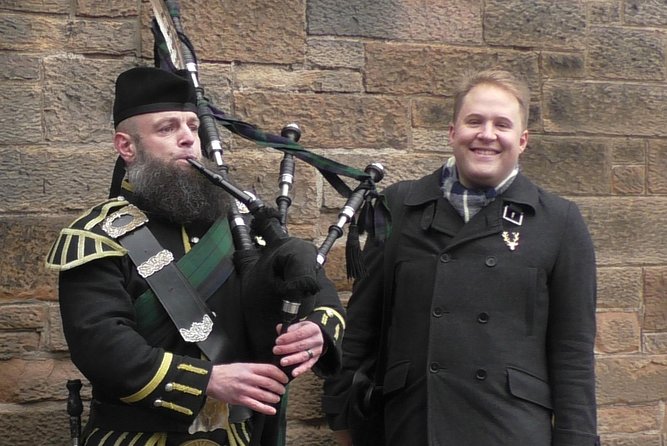
The Royal Mile section brings together several of the city’s main civic landmarks. At Edinburgh City Chambers, you see the busy heart of the route and learn how the area functioned as a center of public life.
Mercat Cross is another important point. The stop is brief, about ten minutes, but it helps explain how announcements, markets, and public events once gathered around the Royal Mile. This part of the walk can feel crowded and active, so stay close to the guide and listen for meeting instructions.
The Royal Mile is not a single straight street in the simple modern sense. It is a chain of streets, closes, courts, and changing viewpoints. A guide helps you notice the side passages that you might otherwise ignore. That is one reason I would take this tour early in a visit, then return later to explore the lanes and museums that caught your attention.
Waverley Station and the Scott Monument
The route continues toward Edinburgh Waverley Station and one of the early bridges linking the Old and New Towns. From here, you move toward Princes Street Gardens, where the character of Edinburgh changes again.
The final stop is the Scott Monument in East Princes Street Gardens. This dramatic Gothic memorial to Sir Walter Scott marks the divide between the Old and New Towns, both UNESCO World Heritage areas. The tour ends here rather than back at Usher Hall, which is useful if you want to continue along Princes Street or reach the New Town.
The ending point is practical, but plan your onward route. You finish at the Scott Monument in East Princes Street Gardens, not at the original starting point. That is convenient for many sightseeing plans, but less convenient if you left luggage or need to return to a hotel near Lothian Road.
What Three Hours and Twelve People Mean
The advertised duration is about three hours. That is long enough for a real orientation but short enough to fit into a morning or afternoon. You cover a lot of ground, and the time can pass quickly when the guide uses stories instead of a dry list of dates.
The group maximum is 12 people. That number matters on a walking tour because narrow closes and busy streets make a large crowd hard to manage. A small group also makes it easier to ask questions and hear the guide.
Several guides receive especially strong praise for humor and personal style. Alastair Sim is described as clear and well informed, Douglas Graham as entertaining and full of answers, and Stuart Usher as a seasoned guide with long experience of Edinburgh’s streets. You may be assigned a different guide, but the pattern is clear: the experience depends heavily on the person leading it.
The physical effort is moderate rather than extreme, but do not confuse that with an easy pavement stroll. The Old Town has uneven surfaces, some stairs, and changes in level. Comfortable shoes are essential. Guides can work around problems and avoid the steepest shortcuts, but you should still be ready to walk for three hours.
Price, Weather, and Practical Value
At $48.54 per person, this is not the cheapest way to see Edinburgh from the outside. The price makes more sense if you value interpretation, questions, and a small group rather than simply checking off monuments.
You are paying for a professional guide, local stories, and a route that joins major sights with less obvious courts and closes. For a first-time visit, that can save you from spending half a day wandering without understanding what you are seeing. It can also help you choose which places deserve a later, longer visit.
Children under 12 are free, while children aged 12 to 16 pay 75 percent of the adult price. The tour is offered in English and uses a mobile ticket. Service animals are allowed, and the starting and ending points are near public transportation.
Edinburgh weather deserves serious attention. The experience requires good weather and can be canceled for poor conditions, with a different date or a full refund offered. Bring weather protection even on a clear morning, since the walk has little promise of shelter. One guide handled awful weather by taking the group to the National Museum so the history could continue indoors, but you should not assume that every tour will follow that exact plan.
Free cancellation is available up to 24 hours before the start time. Cancellations or changes made less than 24 hours ahead are not refunded or accepted.
Who Should Take This Tour?
I would recommend it most strongly to first-time visitors who want a useful overview before exploring Edinburgh alone. It is also a good fit if you enjoy history, architecture, literature, and stories about unusual local characters.
You will get the most from it if you ask questions. The guides are used to adjusting the discussion around the group’s interests, so tell them if you want more about the Stuarts, the Reformation, the Scottish Enlightenment, crime, or Edinburgh’s buildings.
Families can benefit from the mix of castles, battles, secret lives, and old streets. Older participants can manage the route if they have moderate fitness, though uneven ground and stairs should be considered before booking.
This is less suitable if you want long visits inside the castle, cathedral, or museum. It is also not the right choice if you dislike walking in changeable weather or prefer a short, fixed route with little historical commentary.
Should You Book the Royal Mile and Old Town Walking Tour?
Book it if you want Edinburgh to make sense quickly. The combination of a 12-person limit, a central route, strong storytelling, and lesser-known courts gives you more than a basic photo walk.
I especially like it as an early-visit activity. Take the tour, note the places you want to revisit, then return to the castle, Writers’ Museum, St Giles’ Cathedral, or the closes that caught your eye.
Skip it if your main goal is included entry to major attractions. Those admission fees are separate, and the experience is built around outdoor sightseeing and guided interpretation. For everyone else, the price is fair for three focused hours with a guide who can turn Edinburgh’s stones, pubs, and alleyways into a connected story.
FAQ
How long does the Royal Mile and Old Town Walking Tour last?
The tour lasts approximately three hours.
Where does the tour start?
It starts at Usher Hall, Lothian Road, Edinburgh EH1 2EA.
Where does the tour end?
It ends at the Scott Monument in East Princes Street Gardens, Edinburgh EH2 2EJ.
Is Edinburgh Castle admission included?
No. Edinburgh Castle is viewed from outside, and admission is not included.
Is St Giles’ Cathedral admission included?
No. The cathedral is viewed from outside, and admission is not included.
Can I visit the Writers’ Museum?
Yes. The Writers’ Museum is free to enter, and you may visit inside if you wish, subject to the time available during the tour.
How large is the group?
The tour has a maximum of 12 participants.
What language is the tour offered in?
The tour is offered in English.
Are children allowed on the tour?
Yes. Children under 12 are free, and children aged 12 to 16 pay 75 percent of the adult price.
How much walking is involved?
You should expect about three hours of walking on uneven Old Town streets, with some stairs and changes in level. A moderate level of physical fitness is advised, and comfortable shoes are important.
Just added around Edinburgh
- Falkirk Wheel, Doune Castle, Stirling Castle Private Tour★ 5.0 · 8 reviews
- Edinburgh Private Transfer from Edinburgh city centre to Edinburgh Airport★ 4.0 · 8 reviews
- Private tour: History and Mystery in Edinburgh’s Old Town★ 5.0 · 8 reviews
- Edinburgh: Harry Potter, Glenfinnan Viaduct & Highland Tour★ 5.0 · 8 reviews
- Edinburgh: Dean Village & New Town Walking Tour★ 5.0 · 8 reviews
- Edinburgh: Harry Potter Walking Tour and Beer Tasting★ 4.9 · 8 reviews
- Watch Building Experience – Edinburgh★ 4.5 · 8 reviews
- Ghost Tour in Edinburgh★ 5.0 · 8 reviews
Edinburgh Tours, compared.

Loch Ness, Glencoe & the Scottish Highlands Tour
Read our review →


Edinburgh Castle: Guided Walking Tour with Entry Ticket
Read our review →
Loch Ness, Glencoe & Scottish Highlands Tour
Read our review →
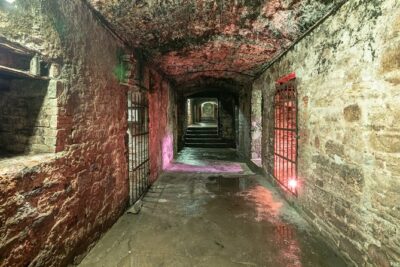
Underground Vaults Walking Tour in Edinburgh Old Town
Read our review →
Edinburgh Castle Guided History Tour with Tickets
Read our review →Browse the lists this tour appears in