
Reviewed · ST ANDREWS TOURS
St Andrews Old Course History Tour, for the Golfer
The best part of this St Andrews tour is the chance to connect the famous Old Course with the people and stories behind it. You walk from town history to the Links, then along key places near the 1st and 18th holes, finishing at the Road Hole and the Jigger Inn. When play allows, you may also step across part of the course itself.
I like the former caddie perspective and the professionally taken photos at Swilcan Bridge. I also like the price: at $25, this is an easy way to add meaning to a visit, even if you are not a serious golfer. The main caution is that the guide may speak quickly, and fluent English is essential.
Key things to know before you book
- Richard brings working caddie experience: His stories connect famous golfing moments with the practical details of the Old Course.
- You see the 1st and 18th holes together: The tour explains how the shared fairway, original tees, farmers, hotels, and putting green shaped the course.
- Swilcan Bridge is the photo stop: Photos are included, except on tournament days such as the Open and Dunhill events.
- The route covers more than golf: You start with St Andrews town history and the 1123 Links charter before turning to the game itself.
- The group is small: A maximum of 15 people gives you a better chance of hearing the guide and asking questions.
- It is a brisk outdoor walk: Wear warm layers and sensible shoes, and do not bring a stroller, mobility scooter, walking frame, or golf clubs.
Why this short St Andrews walk works
St Andrews can feel like two places at once. It is a university town with a long religious and civic past, and it is also the Home of Golf. This tour joins those two stories instead of treating the Old Course as an isolated attraction.
You begin outside Hotel du Vin on The Scores. The first few minutes set the scene with local history and the 1123 Links charter. That opening matters because it explains why the common land beside the town became central to St Andrews life long before modern golf tourism arrived.
From there, the walk shifts to the origins of the game. You hear about early stick-and-ball games in the Low Countries, the appearance of golf in Edinburgh in 1744, and the reasons St Andrews became so important. The guide is not simply pointing at greens and bunkers. He is showing you how rules, land, club life, and course design changed over time.
The tour lasts about 75 minutes. That is long enough to cover a surprising amount without turning into a half-day commitment. I would put it near the start of your St Andrews visit, since it gives you useful bearings for later walks around the Links.
More history tours in Scotland:
- Edinburgh: Edinburgh Castle Guided History Tour with Tickets
★ 4.8 · 7,747 reviews - Edinburgh: Whisky Tasting with History and Storytelling
★ 4.9 · 2,451 reviews - Edinburgh: Old Town History and Tales Walking Tour
★ 4.8 · 2,361 reviews
From Hotel du Vin to the first golf stories
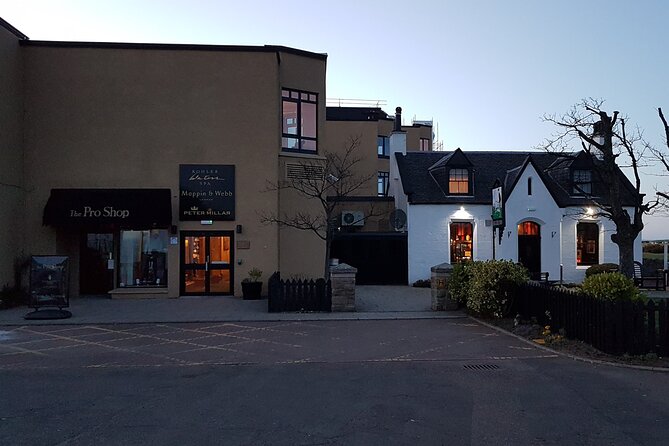
Meet Richard outside Hotel du Vin St Andrews at 40 The Scores. This is a shared tour, so arrive early. The group will not wait for late arrivals, and the walk begins promptly.
Richard is the guide most closely associated with the experience. His background as a retired Old Course caddie gives the tour a practical voice. He can explain not only what a famous hole looks like, but also how caddies, players, and course changes affected the way it was played.
The first stop is brief, about five minutes. Do not expect a full town walking tour. Instead, you get a quick historical foundation before heading toward the Links. This is helpful for anyone who knows the course but not St Andrews itself, and it also gives non-golfers a reason to pay attention from the start.
At The Links, the guide spends about ten minutes on the early development of golf. This is one of the better parts for a mixed group because the subject is bigger than tournament winners and club names. You learn how a rough coastal area became tied to the development of a worldwide sport.
The Royal and Ancient, fairways, and bunkers
The stop at the Royal and Ancient Golf Club lasts about 15 minutes. Here the focus turns to the way the Old Course helped shape golf as you know it today.
The talk includes the development of fairways and bunkers, golfing moments, Old Tom, and the old Caddie Shack. Those details give the place more character than a simple photo stop. You begin to see the course as something altered by use, habit, local work, and changing ideas about how golf should be played.
Richard’s storytelling is a major part of the experience. He has a humorous style and often ties legends to real places. His ability to answer golf questions is a real advantage for experienced players, though the pace can be quick. Some people found that he moved through his prepared material without leaving much room for questions.
That is the clearest weakness of this tour. If you need a slow, quiet explanation in simple English, this may not suit you. The operator says a fluent command of English is essential, and that translating or simply speaking slowly does not solve the problem. If you understand spoken English well, stay near the guide. In one account, earbuds helped the group hear him clearly, and the guide has used them on some tours.
Grannie Clark’s Wynd and the course that kept changing
At Grannie Clark’s Wynd, you spend about 15 minutes looking at the Old Course’s development and its major events. The story includes the Open Championship, the Dunhill Cup, and the changes from 12 holes to 10, then finally to 18.
This stop is useful because it corrects the idea that the Old Course appeared in its present form all at once. The layout evolved. Important sites around the 18 holes took shape over time, and the course’s identity grew along with the game.
For a golfer, this is where a familiar scorecard starts to make more sense. For a non-golfer, it helps explain why the Old Course has such unusual features and why certain spots carry so much weight.
The route is not a round of golf and does not provide playing access. You are walking around the public areas and course edges, with access across the fairway possible only when conditions and play permit. Marshals control movement when golfers are on the course, so you must follow their instructions.
A few more Scotland days to weigh up
- St Andrews Must-Sees Daily Walking Tour (11am & 2pm)
★ 5.0 · 478 reviews - St Andrews Tours: Town, Golf and Old Course History
★ 5.0 · 138 reviews - Private St. Andrews: Home of Golf Old Course Walking Tour
★ 5.0 · 69 reviews - St Andrews History Tours
★ 5.0 · 41 reviews
Rusacks, the shared fairway, and the original tees
The walk continues toward Rusacks St Andrews for about ten minutes. This section covers the 1st and 18th fairway, the role of local farmers, the Rusacks Hotel, the Mannings, and the original 1st tee and 18th hole.
The shared fairway is one of the Old Course’s most striking features. Players finish at the 18th while others begin at the 1st, often within the same broad space. The guide uses this setting to explain how the course functioned in earlier days and how people living and working around the Links influenced its shape.
You also hear the story of early caddies and ladies at the course, and how Old Tom created what is described as the world’s first putting green. That sort of detail is why I would choose this tour over simply walking around with a map. You get the human reasons behind the course’s oddities.
This is also a good point for photographs, though the central photo moment comes later. The setting around the 1st and 18th gives you a sense of the course as an active public place, not a museum display.
Swilcan Bridge, the tour’s defining moment
The Swilcan Bridge gets about ten minutes, and this is the most instantly recognizable stop. The bridge is one of golf’s great picture spots, linked with countless players and major championship moments.
A professional photographer takes your picture here, and that is included in the price. This is a small but valuable touch. You can concentrate on the setting instead of trying to organize a group selfie while other people wait.
Access to the bridge and fairway area can change on tournament days. The tour specifically excludes professionally taken bridge photos during events such as the Dunhill and the Open. If your dates overlap with a tournament, check what part of the photo stop will be available before booking.
When course activity allows, standing near the bridge while golfers use the 1st and 18th holes is memorable even if you never pick up a club. One person described sitting nearby and watching players begin and finish rounds side by side. That image captures why this place feels different from a standard golf museum.
The Road Hole and the Jigger Inn finish
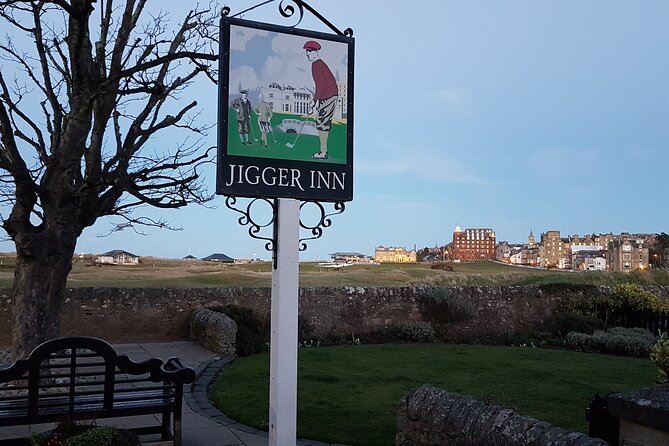
The final stop is near The Jigger Inn, by the Road Hole and the 17th green. You spend about ten minutes hearing stories about dramatic moments at one of the most famous holes on the Old Course.
The tour ends near the inn, not back at Hotel du Vin. That matters when planning your day. You can finish with food or drinks by the 17th fairway, but those purchases are not included.
The Jigger Inn is a sensible ending because it lets you keep the mood going without forcing an added activity into the tour. One guide helped a group find fish and chips there, but your meal is your own responsibility. Treat the stop as a useful recommendation, not part of the admission price.
What $25 buys you
At $25 per person, the tour is priced below many longer guided sightseeing activities in Scotland. The value comes from the guide rather than from paid entry to a building. There are no admission tickets at the stops, so you are paying for Richard’s time, course knowledge, stories, group leadership, and the bridge photographs.
That makes the tour a good buy for a golfer who wants context before trying to play or watch the Old Course. It is also reasonable for a partner or family member who wants to understand why the course matters without spending hours on golf instruction.
The small-group limit of 15 helps. A large crowd would make it harder to hear a guide outdoors, especially around the Links. Still, small does not mean private. If you want a fully tailored pace or a guide focused only on your group, a private St Andrews Old Course history tour is available separately.
The tour is booked an average of 61 days ahead, so do not assume you can leave it until the last morning. That booking pattern is a useful warning, especially if your St Andrews dates are fixed.
Who will enjoy it most
I would book this for:
- A golfer visiting St Andrews for the first time
- A couple with one keen golfer and one person who wants local history
- Anyone interested in how sports develop through land, rules, and custom
- Visitors who want a short outdoor activity with strong photo opportunities
- People staying in St Andrews who can reach The Scores easily
The tour can work very well for non-golfers. The town history, course stories, famous bridge, and views give you more than technical talk. Several parts of the route are about people and place, not just scores.
I would think twice if you have difficulty following fast spoken English. The guide may be friendly, funny, and well informed, but the delivery is not always slow. This is also not a good choice if you need a stroller, walking frame, crutches, mobility scooter, or somewhere to store bulky equipment. There is nowhere to leave those items, and golf clubs cannot be taken along as luggage for the walk.
The operator advises against the tour for people with a recent knee or hip replacement, a sprained ankle, or similar mobility problems. You need a moderate level of fitness. Children under five are not accepted, though service animals are allowed.
Weather, timing, and practical planning
This is an outdoor walk on exposed Links ground. Scottish weather can change quickly, so bring warm layers and prepare for cold wind or rain. One group found the weather turned sharply during the tour, which is a useful reminder not to dress only for the forecast at breakfast.
Wear shoes suited to walking. The route is not described as strenuous, but you will be outside and moving between several stops. You also need to keep up with the group and remain aware of golfers when you are near active play.
Public transport is nearby, and the starting point is central enough to fit into a day of exploring St Andrews. Since the tour finishes at The Jigger Inn, plan your next stop from the Road Hole rather than expecting a return walk with the group.
Free cancellation is available up to 24 hours before the local start time. Late cancellations and changes are not accepted for a refund. The tour can also be canceled for poor weather or if the minimum number is not reached, in which case you are offered another date or a full refund.
My call: book it for the stories, not course access
Book this tour if you want the Old Course to make sense. Richard’s caddie background, the stories about Old Tom and early caddies, the shared 1st and 18th fairway, and the Swilcan Bridge photo give you a clear sense of why St Andrews matters.
Do not book it expecting a private walk through every part of the course or a slow, question-led seminar. Access depends on play and tournament schedules, and the guide can speak rapidly. For $25, though, the tour offers a strong mix of history, local character, and iconic views in just over an hour.
For most golfers, it is an easy yes. For non-golfers, I would still choose it if you enjoy place-based history and want one memorable St Andrews experience without committing half a day.
FAQ
Where does the St Andrews Old Course History Tour begin?
It begins outside Hotel du Vin St Andrews at 40 The Scores, St Andrews, KY16 9AS.
Where does the tour finish?
The tour finishes near the Road Hole, the 17th green, by the Old Course Jigger Inn. Food and drinks at the inn are not included.
How long does the tour last?
The tour lasts approximately 1 hour and 15 minutes.
How much does the tour cost?
The listed price is $25 per person.
Is the tour offered in English?
Yes. A fluent command of English is essential for all participants because the guide may speak quickly. Translation or simply speaking slowly is not considered suitable for this experience.
How many people can join the tour?
The maximum group size is 15 people.
Are photos included?
Professionally taken photos at Swilcan Bridge are included, except on tournament days such as the Dunhill and the Open.
Can you walk across the Old Course fairway?
The tour offers a rare chance to walk across the fairway, but access depends on course activity. You must follow the instructions of course marshals and avoid interrupting play.
Can I cancel for a refund?
You can cancel for a full refund up to 24 hours before the experience start time. Cancellations or changes made less than 24 hours before the start are not accepted for a refund.
Just added around Scotland
- Private tour: History and Mystery in Edinburgh’s Old Town★ 5.0 · 8 reviews
- Edinburgh Private Transfer from Edinburgh city centre to Edinburgh Airport★ 4.0 · 8 reviews
- Falkirk Wheel, Doune Castle, Stirling Castle Private Tour★ 5.0 · 8 reviews
- loch Ness, Inverness and Outlander Sites From Invergordon Port★ 5.0 · 8 reviews
- Outlander Experience★ 5.0 · 8 reviews
- Edinburgh: Harry Potter, Glenfinnan Viaduct & Highland Tour★ 5.0 · 8 reviews
- Edinburgh: Dean Village & New Town Walking Tour★ 5.0 · 8 reviews
- Over The Sea to (secret) Skye★ 5.0 · 8 reviews
St Andrews Tours, compared.
St Andrews Must-Sees Daily Walking Tour (11am & 2pm)
Read our review →
St Andrews Tours: Town, Golf and Old Course History
Read our review →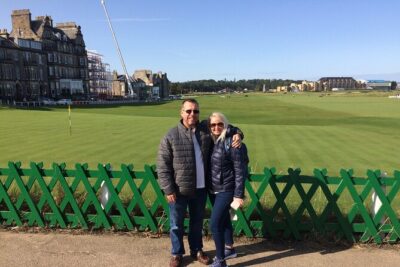


Browse the lists this tour appears in