
Reviewed · STIRLING TOURS
Stirling: Private Old Town & Castle Walking Tour
Stirling Castle is the star here, but the Old Town walk gives you the backstory that makes the fortress far more meaningful. In three hours, you follow streets tied to Mary Queen of Scots, William Wallace, and Robert the Bruce, then enter the castle with a private guide who can keep the pace suited to your group. I especially like the castle admission being included and the mix of royal drama with less polished tales of executions, markets, and grave robbing.
I also like the personal touch. Jane has led tours filled with humor and detailed stories, while Donnie has guided families with young children through the town and up to the castle. The main drawback is the price: $339 for up to two people is a serious outlay, so this makes the most sense if you value a private guide and plan to spend the day in Stirling.
Key details before you book
- The tour begins with 90 minutes in Stirling’s Old Town, not at the castle, so you get context before seeing the royal rooms.
- Stirling Castle entry is included, and the final 90 minutes are spent inside the castle with your guide.
- The route covers more than royal buildings, including the Old Town Jail, Mercat Cross, the Tolbooth, Mar’s Wark, Cowane’s Trust, and the Holy Rude.
- The experience is private, giving your group control over pace and questions rather than following a large public party.
- Jane and Donnie are named guides associated with recent tours, with Jane especially praised for humor, care, and detailed explanations.
- You finish at Stirling Castle, so arrange your onward plans from the castle rather than the starting point.
Why the Old Town first makes sense
Many visitors head straight for Stirling Castle, see the grand rooms, and leave with a general impression of kings, queens, and military power. This tour takes a better route for understanding the town. You begin below the castle, where streets, civic buildings, and old religious sites show how Stirling functioned as a royal center.
The first 90 minutes are on foot through the Old Town. That timing matters. It is long enough to connect the major sights without turning the morning into a lecture, and it leaves another 90 minutes for the castle itself. You can ask questions as you go, which is particularly useful when several famous names and centuries of Scottish politics start to run together.
The stories are not limited to noble families. You hear about executions, marketplaces, and grave robbers, alongside the better-known accounts of monarchs and battles. That wider view gives Stirling some texture. Royal history can become a parade of dates and portraits, but the darker and more ordinary stories help you picture the town as a working place, not just a stage for famous figures.
Your guide also points out modern life in Stirling. That link between old buildings and a living city is one of the better reasons to choose a walking tour instead of relying only on a castle audio guide.
More castle tours in Scotland:
- Edinburgh Castle: Guided Walking Tour with Entry Ticket
★ 4.7 · 11,699 reviews - Edinburgh: Edinburgh Castle Guided History Tour with Tickets
★ 4.8 · 7,747 reviews - Edinburgh Castle: Guided Walking Tour with Entry Ticket
★ 5.0 · 5,540 reviews
From the Old Town Jail to the Highland Hotel
The meeting point is outside Stirling Old Town Jail, just down the street from the jail itself. Look for a guide wearing an orange jacket or an orange lanyard. This is a useful detail in a busy historic area, especially if you arrive close to the start time.
The jail is a fitting place to begin because the tour deals with crime, punishment, and public life as well as royalty. The supplied route lists the jail as both the starting point and a sightseeing stop, so expect an opening look at the area before moving through the upper Old Town.
From there, the route includes the Stirling Highland Hotel. The hotel occupies a former school building, but the important point for this tour is its position in the Old Town and its connection to the historic streets around the castle. Your guide uses the walk between stops to build the story rather than treating each building as an isolated photo stop.
The pace should suit people who want explanation as they walk. Still, this is a three-hour route with a castle visit packed into the second half, so it is not designed for long independent pauses at every sight.
Darnley’s House and Mercat Cross
Darnley’s House brings you back to the royal figures who shaped Stirling’s place in Scottish history. The name connects the stop with Henry Stuart, Lord Darnley, the second husband of Mary Queen of Scots. The tour description specifically places you in the footsteps of Mary, so this is one of the points where personal stories and political history meet.
You do not need to arrive with a detailed understanding of the Stuart family. That is one benefit of having a private guide. You can stop the story when a name becomes confusing, ask for the short version, or request more detail if royal succession and family conflict are your thing.
Mercat Cross shifts the focus from palace life to commerce and public business. Market crosses were central places in Scottish towns, and this stop helps explain how people bought goods, heard announcements, and gathered in public. It also gives you a useful counterweight to the castle. Stirling was not only a royal stronghold. It was a town where trade and civic life mattered every day.
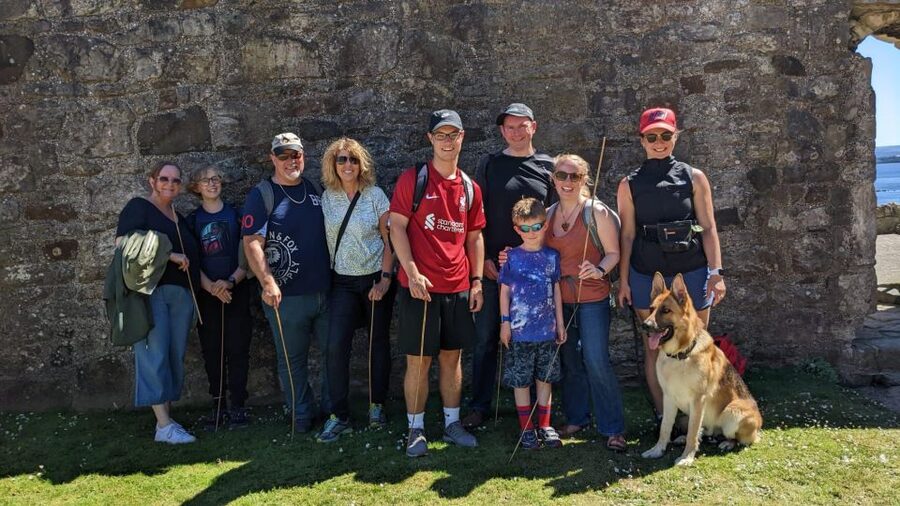
For families, this change of subject can help hold attention. The history includes action and odd details rather than a steady run of formal speeches. One family with young children found the route worked well before entering the castle, and the private format lets a guide adjust the explanation to the group.
The Tolbooth, Mar’s Wark, and Cowane’s Trust
The Tolbooth is another reminder that old Stirling had a civic system, not just royal residences. It is linked with administration, law, and punishment, which connects naturally to the stories of executions introduced earlier. This part of the walk helps you see how authority was exercised in the town, from official business to public justice.
Mar’s Wark offers a different kind of stop. Its ruined Renaissance frontage hints at the ambitions of the powerful Mar family, while its incomplete state gives the Old Town a more complicated feel than a row of perfectly preserved monuments. You get a sense of changing fortunes and unfinished plans, not just success stories.
Cowane’s Trust adds another layer of local history. The building was connected with a charitable trust founded by merchant John Cowane, and it reflects the money and civic responsibility of Stirling’s merchant class. It is a valuable stop because it widens the story beyond monarchs and battles. Wealthy townspeople also shaped the city’s buildings and institutions.
This sequence is strongest when you enjoy connections between architecture and social history. If you only want famous landmarks, some of these stops may feel less immediate than the castle. The guide is important here, since the meaning of a façade or civic building is not always obvious from a quick look.
More walking tours in Scotland:
- Edinburgh: Harry Potter Magical Guided Walking Tour
★ 4.8 · 11,944 reviews - Underground Vaults Walking Tour in Edinburgh Old Town
★ 4.5 · 8,506 reviews - Edinburgh Castle Guided Walking Tour in English
★ 5.0 · 5,214 reviews - Edinburgh Darkside Walking Tour: Mysteries, Murder and Legends
★ 5.0 · 3,862 reviews
Holy Rude and the cemetery viewpoint
The Church of the Holy Rude is one of the major stops on the route. Its name means Holy Cross, and the church is closely tied to Stirling’s royal past. It is particularly important in the story of James VI, who was crowned there as a child. The tour places the church before the castle, allowing you to understand the religious and ceremonial setting of the town before seeing the royal complex above it.
Expect the Holy Rude stop to bring a quieter note after tales of punishment and public markets. The church helps explain how religion, monarchy, and civic identity overlapped in historic Stirling. As with the other stops, the value comes from the guide’s explanation rather than from simply checking a building off a list.
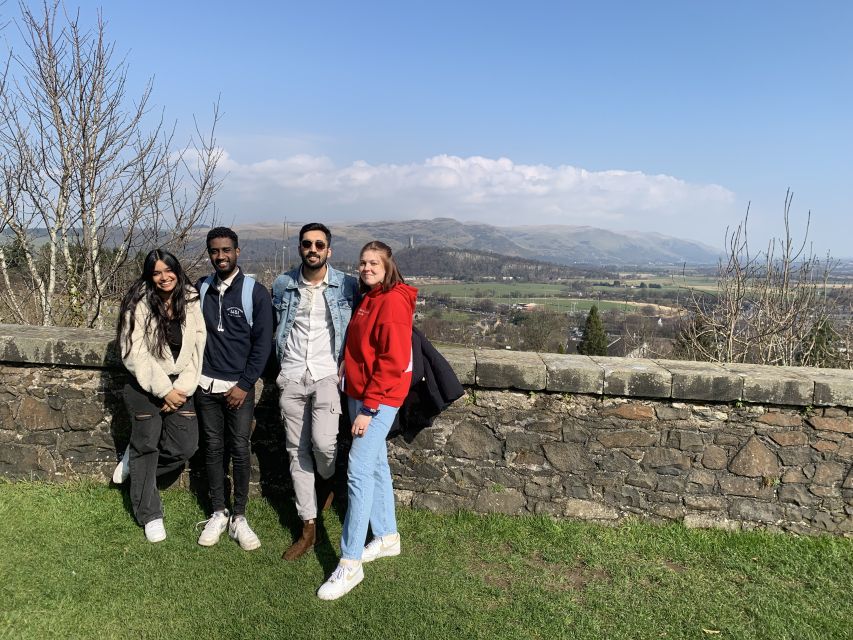
The cemetery viewpoint is a practical high point before the castle. It offers a chance to look across Stirling from the Old Town and get your bearings. The supplied information does not promise a specific panorama or name every view, so think of it as a viewpoint stop rather than a guaranteed photo spectacle.
This is also where sensible footwear matters. The tour takes place rain or shine, and the Old Town route includes historic streets and a walk uphill toward the castle. Wear shoes you can trust on wet surfaces, and bring clothing for Scottish weather rather than relying on a clear forecast.
The approach to Stirling Castle
The route continues to Stirling Castle Esplanade, the broad approach in front of the fortress. Reaching the castle after walking through the Old Town is a smart bit of staging. You have already heard about the people and institutions that made Stirling important, so the castle feels less like a detached monument.
The castle sits above the town, and the approach gives the guide a natural point to explain its power. The Esplanade is also where you shift from a public street walk to a formal historic attraction. Your guide then leads you inside for about 90 minutes.
Tickets are included in the tour price, and the experience includes skipping the ticket line. That saves a little time and removes one small decision from the day. It does not mean the castle will be empty, but it does mean you can concentrate on the visit rather than sorting out admission after the walking tour.
Because the tour ends inside the castle, you should not plan to return to the Old Town with your guide. If you arrive by train or have a hotel near the station, allow time for your own return journey after the final stop.
Inside the castle: the Great Hall
The Great Hall is one of the essential castle sights. It was built as a grand setting for royal ceremonies, feasts, and displays of power. Its scale helps you understand how rulers used architecture to impress visitors and reinforce their authority.
A guide can make the room more useful than a quick walk-through. Look for explanations of how the space worked, who used it, and why the castle needed such a large ceremonial hall. You are not simply seeing a big medieval room. You are seeing a political statement in stone.
The private format is particularly helpful in the castle because you can ask about details that interest your group. One couple may want royal succession explained in plain terms. Another may care more about construction, ceremonies, or the relationship between the castle and the town below.
The tradeoff is that 90 minutes passes quickly. Stirling Castle has several major areas, and this tour gives you a guided overview rather than unlimited time for every display. If you are the sort of person who reads every panel, you may want to return independently after the tour, though no return arrangement is included in the stated experience.
The Royal Apartments and Stirling Heads
The Royal Apartments provide the most direct look at court life. They show how the Stewart monarchy presented itself through rooms, decoration, portraits, and ceremony. This is where the stories of kings and queens become physical. You can connect names such as Mary Queen of Scots with the rooms and setting of royal power.
The Stirling Heads are among the castle’s most distinctive features. These carved wooden portraits once formed part of an impressive decorative scheme and depict important figures from Scottish and European history. They are easy to appreciate as art, but the guide can also explain how portraiture worked as political messaging.
Jane is especially well suited to this sort of visit if her recent guiding style continues. She has been praised for combining enthusiasm, humor, and a large store of historical detail, while still covering the castle thoroughly. One recent group felt they had seen almost every part of the castle with her. That suggests a full tour rather than a quick stop at the main rooms.
Donnie has also guided the castle portion after taking families through the town. If you are bringing children, the private setting may help because you can ask for stories and explanations that keep the visit moving. The tour is in English only, so make sure that works for everyone in your group.
What the $339 price really buys you
At $339 for a private group of up to two, this is not a budget way to see Stirling. The cost is easier to justify for a couple who wants personal attention, a set three-hour plan, and castle admission handled in advance. It is harder to justify if you are comfortable exploring on your own or mainly want a quick look at the fortress.
The value comes from the combination of three things:
- A local guide for the Old Town, where context is not always obvious
- A guided castle visit rather than an unstructured admission
- A private pace, with room for questions and adjustments
Castle tickets are included, so compare the total cost with the price of arranging admission and a separate walking tour. The exact value depends on your alternative plans, but the private format is the key benefit, not a low entry price.
The tour can also make sense as a day trip from Edinburgh. One group took the train from Edinburgh, spent the day in Stirling, and found the plan worthwhile. Since the tour begins in the Old Town and ends at the castle, check your train timing and leave enough space around the three-hour booking. No transport is included.
Who will enjoy this Stirling tour most
I would recommend this tour most strongly to a couple or small private party that wants history explained in person. It suits you if you want the castle, but also want to understand the streets below it. It is also a good fit if famous names such as Mary Queen of Scots, Wallace, and Bruce interest you but you do not want to prepare a stack of background reading first.
Families can benefit from the private setup. The route includes dramatic subjects such as battles, executions, and grave robbers, and the guide can keep the stories lively for younger listeners. Still, it remains a history-focused walk, not a children’s attraction, so the fit depends on your family’s interest and walking ability.
You should think twice if you dislike walking in poor weather or need a fully step-free experience. The tour runs rain or shine, asks you to bring comfortable shoes, and includes the Old Town route before the uphill approach to the castle. One guide took special care of a participant with walking difficulties on a rainy day, but that individual care should not be mistaken for a guarantee of specific accessibility arrangements.
Book at least seven days before the tour if you want the stated full-refund cancellation option. Starting times vary, so check availability for your date rather than assuming a morning departure.
Should you book the Old Town and Castle tour?
Book it if you want Stirling explained as a town, not just visited as a castle. The route gives you royal stories, civic buildings, darker local tales, and a guided look at the Great Hall, Royal Apartments, and Stirling Heads. The strongest guides appear to be Jane and Donnie, with Jane in particular bringing humor and careful attention to the group.
Skip it if $339 for two feels too high or if you prefer to wander alone. Stirling Castle can be visited without a private guide, and independent visitors may want more time inside individual rooms than this 90-minute guided section allows.
For the right pair, though, the price buys a well-shaped half day and a better sense of how the Old Town and castle fit together. I would choose it for a first visit, especially if you are coming from Edinburgh for the day and want someone else to connect the major pieces.
FAQ
How long does the Stirling Old Town and Castle tour last?
The tour lasts three hours. It includes about 90 minutes walking through Stirling’s Old Town and about 90 minutes inside Stirling Castle.
Are Stirling Castle tickets included?
Yes. Admission to Stirling Castle is included in the price, and the activity includes skipping the ticket line.
Where do I meet the guide?
Meet outside Stirling Old Town Jail, just down the street from the jail. The guide will wear an orange jacket or an orange lanyard.
Where does the tour finish?
The tour finishes at Stirling Castle. It does not finish back at the Old Town Jail.
Is the tour private?
Yes. It is a private group experience priced at $339 for a group of up to two people.
What language is the tour offered in?
The live tour is offered in English, with an English-speaking local guide.
What should I bring?
Bring comfortable shoes and clothing suited to the weather. The tour takes place rain or shine.
Just added around Scotland
- Private tour: History and Mystery in Edinburgh’s Old Town★ 5.0 · 8 reviews
- Edinburgh Private Transfer from Edinburgh city centre to Edinburgh Airport★ 4.0 · 8 reviews
- Falkirk Wheel, Doune Castle, Stirling Castle Private Tour★ 5.0 · 8 reviews
- loch Ness, Inverness and Outlander Sites From Invergordon Port★ 5.0 · 8 reviews
- Outlander Experience★ 5.0 · 8 reviews
- Edinburgh: Harry Potter, Glenfinnan Viaduct & Highland Tour★ 5.0 · 8 reviews
- Edinburgh: Dean Village & New Town Walking Tour★ 5.0 · 8 reviews
- Over The Sea to (secret) Skye★ 5.0 · 8 reviews
Stirling Tours, compared.
Stirling Old Town Daily Walking Tour (11am & 2pm)
Read our review →



Stirling Castle: Skip-the-Line Guided Tour in Spanish
Read our review →
3 Hour Private Tour of Stirling Old Town and Stirling Castle
Read our review →
Browse the lists this tour appears in