
Reviewed · STIRLING TOURS
Braveheart (Battle of Stirling Bridge) Tour
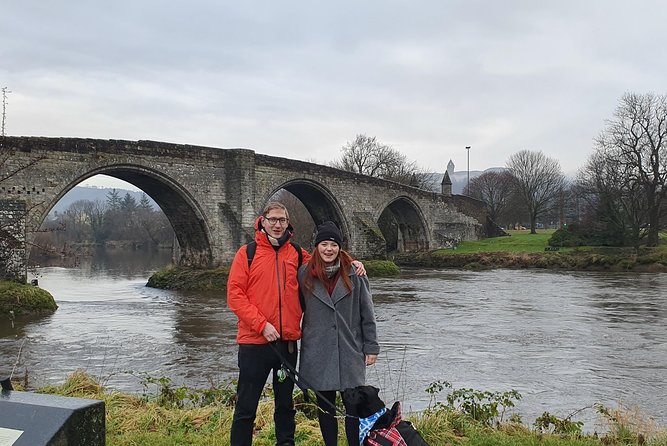
The most interesting part of this tour is also the part you could easily miss on your own: the original wooden bridge is gone. From the meeting point near Stirling Old Bridge, Steven uses a tablet and a model to show where the bridge may have stood, how it collapsed, and why the battle unfolded as it did.
I like two things here. First, the small group, capped at 15, gives you room to ask questions. Second, the tour cuts through the movie version of Scotland’s past and gives proper attention to Andrew De Moray, William Wallace’s less famous but vital ally. The main drawback is simple: this is a short outdoor talk, not a large museum or full-day battlefield visit.
Key points at a glance
- See the lost bridge site: You view the likely location of the wooden bridge used in the 1297 battle, although no bridge remains today.
- Meet Steven at the Old Bridge: The tour begins on Laurencecroft Road, beside Stirling Old Bridge and the River Forth.
- Learn beyond the film: Wallace, Andrew De Moray, the battle, their deaths, and their lasting place in Scottish history all enter the story.
- Small group setting: A maximum of 15 people keeps the talk personal and makes questions practical.
- Short but focused: Allow about one hour to one hour and 15 minutes, with the tour ending where it begins.
- Plan for Scottish weather: The activity needs good weather, and you will spend time standing outdoors.
Why Stirling Bridge matters more than the movie
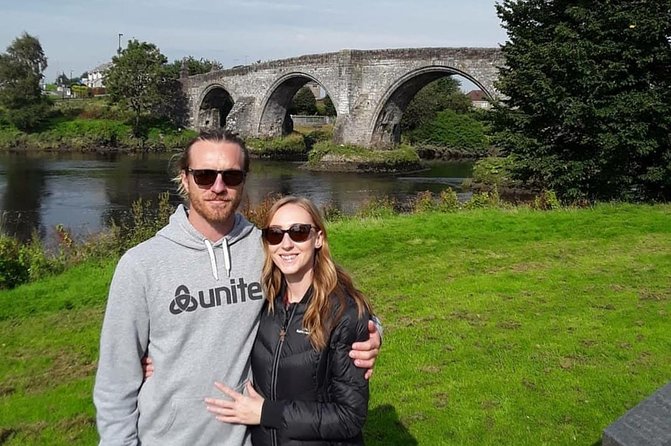
The Battle of Stirling Bridge, fought in 1297, was Scotland’s first major victory in the Wars of Independence. That sentence can sound dry on a page. It feels more real when you are standing beside the River Forth, looking toward the crossing that helped shape the battle.
The film Braveheart made William Wallace famous around the world, but its version of the battle is not a reliable guide to what happened. This tour uses the film as a starting point, then moves toward the people, places, and unanswered questions behind the legend.
You will hear about Wallace and Andrew De Moray from their early lives through the events that pushed them to the front of Scotland’s struggle. The story also follows their deaths and the legacy left behind. That wider arc matters. You do not get only a heroic battle scene. You get a sense of how victory, sacrifice, and memory became tied together.
I especially like that Andrew De Moray receives serious attention. He is often pushed into the background by Wallace’s fame, yet the tour presents him as a central figure in the victory. If your knowledge of the Wars of Independence begins and ends with a painted face and a shouted freedom speech, this gives you a useful correction.
A few more Scotland days to weigh up
- Stirling Old Town Daily Walking Tour (11am & 2pm)
★ 5.0 · 279 reviews - Stirling: Daily Guided Walking Tour (11am & 2pm)
★ 4.7 · 66 reviews - Bannockburn Battlefield Tour
★ 5.0 · 36 reviews
Meeting the story beside Stirling Old Bridge
Your meeting point is on Laurencecroft Road by Stirling Old Bridge, near the River Forth. The activity begins and ends at the same place, so you do not need to arrange a second pickup or find your way across town after the talk.
The location is useful because you are close to the actual setting of the story. You are not sitting in a distant lecture room and looking at a generic map. You can see the river and the modern bridge while the guide explains the older crossing and the ground around it.
There is not a great deal of walking. You should expect to stand for part of the tour, though, so comfortable shoes still make sense. If you prefer a fast-moving sightseeing walk with many stops, this may feel stationary. If you like to pause at one important place and understand it properly, the format works well.
Public transport is nearby, and most people can take part. Service animals are allowed. The tour is offered in English, and you receive a mobile ticket when booking.
Finding a bridge that no longer exists
The main stop is Stirling Bridge. The modern bridge does not show you the bridge used during the battle, and there is no clear physical trace of that old wooden crossing. That could make the location frustrating without a guide.
Steven solves the problem with visual aids. A tablet helps you see the proposed position and the shape of the original crossing. He has also built a model of the old bridge with his father, giving you a more concrete picture of what the site may have looked like.
The tour also addresses different theories about the bridge’s exact location. That is an important detail. You are not handed a tidy answer and told that every question has been settled. Instead, you get a sense of how new information and careful study can change the way people understand a battlefield.
The bridge’s disappearance is not simply a historical accident. The area is part of modern flood defences, which helps explain why you should not expect preserved medieval remains waiting beside the river. The modern setting is part of the experience. You are looking at a working place shaped by later needs, while trying to picture a wooden bridge from 1297.
This is where the tour earns its price. A solo walk might bring you to Stirling Old Bridge, but it would be hard to know where to look or how to judge the competing theories. The guide turns an ordinary view of the river into a historical puzzle.
Wallace, De Moray, and the battle itself
The battle story is the heart of the hour. You will follow Wallace and De Moray as they move from their early days into the conflict that made them important figures in Scottish history.
The key lesson is not just that Scotland won. You also learn how the bridge shaped the action and why the crossing mattered. The setting helps you connect military choices with the river and bridge rather than treating the battle as an abstract date.
The tour then moves beyond the victory. Wallace and De Moray’s deaths and the later meaning of their actions are part of the presentation. This gives the tour emotional weight without needing a grand monument or a long list of dates.
Steven’s style appears to be warm and personal. He aims to offer a welcome, answer questions, and make the story understandable even when the weather turns wet or cold. That friendliness is useful in a small group, where a formal lecture could become stiff. Here, you can ask about the film, the bridge, the commanders, or the evidence behind a particular claim.
The strongest part of the presentation is its willingness to challenge popular errors. You will hear where Braveheart simplifies or changes the story. That makes this a better choice for someone who wants the real history behind the cinema, rather than a tour designed only to repeat famous lines and familiar images.
Same country, a completely different kind of day out:
- Edinburgh: Loch Ness, Glencoe & the Scottish Highlands Tour
★ 4.6 · 17,446 reviews - Edinburgh: Harry Potter Magical Guided Walking Tour
★ 4.8 · 11,944 reviews - Edinburgh: Underground Vaults Tour
★ 4.6 · 11,758 reviews - Edinburgh Castle: Guided Walking Tour with Entry Ticket
★ 4.7 · 11,699 reviews
What the small group changes
The maximum group size is 15. That is small enough to keep the guide visible and the talk conversational, but it is not a private tour. Your experience will depend on the size of your particular booking.
A small group gives you a better chance to ask about details that interest you. One person might want to know about the old bridge, another about Wallace, and another about the film’s inaccuracies. With fewer people, those questions are more likely to fit into a 60 to 75 minute visit.
Some bookings may be much smaller than the limit. That can make the schedule feel flexible, and Steven may have more time for questions and extra historical detail. You should not book expecting a private tour, but the format leaves room for a personal welcome.
The friendly tone is part of the appeal. Steven’s replies show a strong sense of local pride and a fondness for welcoming people to Stirling. References to his family and dogs add a human touch, although that is not the reason to book. The real reason is his enthusiasm for the story and his ability to explain a site where very little remains.
Is $34.45 good value?
At $34.45 per person, this is not the cheapest way to spend an hour in Stirling. You can walk across the modern bridge and look along the river without paying for admission. The question is what you want from the visit.
If you already know the battle, understand the bridge theories, and enjoy researching sites on your own, you may find the price harder to justify. The activity is short, and there is no museum entry or major collection of objects included.
I think the value is better for first-time visitors, history fans, and anyone who wants context quickly. You pay for interpretation, not access to a building. The guide shows you where to look, explains what the river and bridge meant, and connects the site to Wallace, De Moray, and the larger Wars of Independence.
The price also makes sense if you are combining this with a visit to Stirling’s other historic sights. It does not consume half a day, and you return to the same meeting point. You can fit it into a wider day in the city rather than giving up a full morning or afternoon.
For the best value, arrive with a few questions. Ask about the original bridge, the evidence for its possible locations, and which parts of the movie are wrong. The more curious you are, the more useful this short tour becomes.
Weather, timing, and comfort
This is an outdoor activity, and good weather is required. Stirling can offer sunshine, rain, wind, or hail in the same general stretch of Scottish weather, so bring a waterproof layer even if the forecast looks kind.
You will not be walking for the full hour and 15 minutes, but you will stand outside. Wear shoes that are comfortable on pavement and bring something warm if the day feels cool. The tour is not described as strenuous, and most people can participate, but anyone who dislikes standing should take that into account.
The stated duration is approximately one hour to one hour and 15 minutes. Allow a little extra time around the edges so you are not rushing to another booking. Since the activity ends back at the meeting point, it is easy to continue exploring Stirling afterward.
If poor weather cancels the tour, you are offered another date or a full refund. For your own plans, the standard cancellation rule allows a full refund if you cancel at least 24 hours before the start time. Changes or cancellations inside that window are not accepted for a refund.
Who should book this tour?
I would choose this for you if you have a genuine interest in Scottish history, want to understand the Battle of Stirling Bridge, or feel that the movie left you with more legend than fact.
It suits couples, families with older children, and solo visitors who prefer a personal talk to a large city tour. The compact format also works well if you have limited time in Stirling but still want to connect the town with the Wars of Independence.
You may want something else if you are looking for a full battlefield walk, a long museum visit, or a tour with many separate stops. This activity focuses on one place. Its strength is concentration, not variety.
It is also best for people comfortable with an outdoor setting. The tour can be rewarding in poor but manageable weather, yet you should not expect an indoor alternative at the bridge itself.
Should you book the Battle of Stirling Bridge tour?
Book it if you want the story behind the famous name. The old bridge is no longer visible, and that makes Steven’s explanation especially useful. His tablet, bridge model, and discussion of possible locations help you picture a battlefield that modern flood defences and later construction have largely changed.
The strongest reasons to go are the clear focus on Wallace and Andrew De Moray, the chance to sort history from Braveheart fiction, and the small-group setting. The main caution is the short, outdoor format and the fact that you will not see preserved battle remains.
For $34.45, I see this as a worthwhile add-on to a day in Stirling, especially if you care about the Wars of Independence. It will not replace every historic attraction in the city, but it can give the river, bridge, and Wallace story a much firmer sense of place.
FAQ
How long does the Battle of Stirling Bridge tour last?
The tour lasts approximately one hour to one hour and 15 minutes.
Where does the tour begin?
It begins on Laurencecroft Road at Stirling Old Bridge, beside the River Forth in Stirling, Scotland.
Where does the tour finish?
The activity ends back at the meeting point.
Is the original wooden bridge still visible?
No. You can view the location where the old wooden bridge is thought to have stood, including the place associated with its collapse, but the bridge itself is gone.
Who leads the tour?
The tour is led by Steven. He uses visual material, including a tablet, to explain the original bridge and the battle setting.
How many people can join the tour?
The tour has a maximum capacity of 15 people.
What happens if the weather is poor?
The experience requires good weather. If it is canceled because of poor weather, you can choose another date or receive a full refund.
Just added around Scotland
- Private tour: History and Mystery in Edinburgh’s Old Town★ 5.0 · 8 reviews
- Edinburgh Private Transfer from Edinburgh city centre to Edinburgh Airport★ 4.0 · 8 reviews
- Falkirk Wheel, Doune Castle, Stirling Castle Private Tour★ 5.0 · 8 reviews
- loch Ness, Inverness and Outlander Sites From Invergordon Port★ 5.0 · 8 reviews
- Outlander Experience★ 5.0 · 8 reviews
- Edinburgh: Harry Potter, Glenfinnan Viaduct & Highland Tour★ 5.0 · 8 reviews
- Edinburgh: Dean Village & New Town Walking Tour★ 5.0 · 8 reviews
- Over The Sea to (secret) Skye★ 5.0 · 8 reviews
Stirling Tours, compared.
Stirling Old Town Daily Walking Tour (11am & 2pm)
Read our review →
Stirling Castle: Skip-the-Line Guided Tour in Spanish
Read our review →
3 Hour Private Tour of Stirling Old Town and Stirling Castle
Read our review →
Browse the lists this tour appears in