

Reviewed · STIRLING TOURS
Stirling Castle: Skip-the-Line Guided Tour in Spanish
Stirling Castle tells Scotland’s story through royal rooms, bloody sieges, and bold legends. In 90 minutes, a Spanish-speaking guide leads you from the esplanade into the palace and Great Hall, linking the stonework to William Wallace, Robert the Bruce, Mary Queen of Scots, and the castle’s long role as a royal home.
I like the small group of no more than 10 people, which gives the guide room to explain details without turning the walk into a crowd shuffle. I also like the lively storytelling, especially the odd tale of John Damian, a 16th-century courtier who tried to fly to France. The main consideration is time: Stirling Castle deserves a longer independent visit if you want to read every display and inspect every room at your own pace.
Key points
- Spanish guided visit: Hear the castle’s story in Spanish, with guides including Fernando and Alejandro.
- Skip-the-line entry: Avoid the ticket queue and use the 1.5-hour visit efficiently.
- Royal palace and Great Hall: See the first Renaissance palace in Britain and the setting for major royal feasts.
- Mary Queen of Scots: Learn about the castle where she lived and where she was crowned.
- Sieges and independence: Connect Stirling Castle to William Wallace, Robert the Bruce, and the Scottish Wars of Independence.
- Small, weather-ready group: The tour takes up to 10 people and adapts its route during rain or snow.
Why Stirling Castle Matters in Scottish History
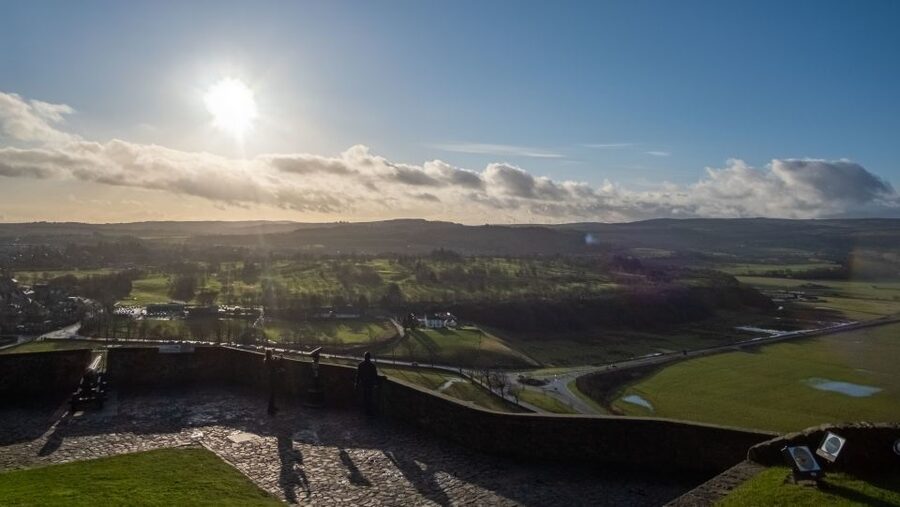
Stirling Castle occupies one of Scotland’s most important strongholds. Its position made it useful as a royal residence and as a military prize, so control of the castle mattered during the Scottish Wars of Independence in the 14th century.
That is the key to enjoying this visit. You are not simply walking through an old palace. You are seeing a place that changed hands, endured sieges, and helped shape the country’s future. Your guide begins on the esplanade, where the opening explanation gives you a sense of the castle’s origins and its defensive role.
I find this start helpful because Stirling Castle can feel like a collection of impressive buildings until you understand why it was built here. The approach, walls, and fortified setting make more sense once you hear how often this stronghold was tested.
The tour connects the castle to William Wallace and Robert the Bruce, two major figures in Scotland’s fight for independence. If you know the film about William Wallace, you may recognize the setting and the connection to the Battle of Stirling Bridge, though the tour focuses on the castle’s wider story rather than just one battle.
More Stirling Castle visits:
- From Edinburgh: Loch Lomond, Stirling Castle & Kelpies Tour
★ 4.6 · 2,360 reviews - From Glasgow: Loch Lomond, Trossachs & Stirling Castle Tour
★ 4.7 · 1,397 reviews - Loch Lomond, Kelpies & Stirling Castle Tour Including Admission
★ 4.5 · 1,305 reviews
The Esplanade Sets the Scene Before You Enter
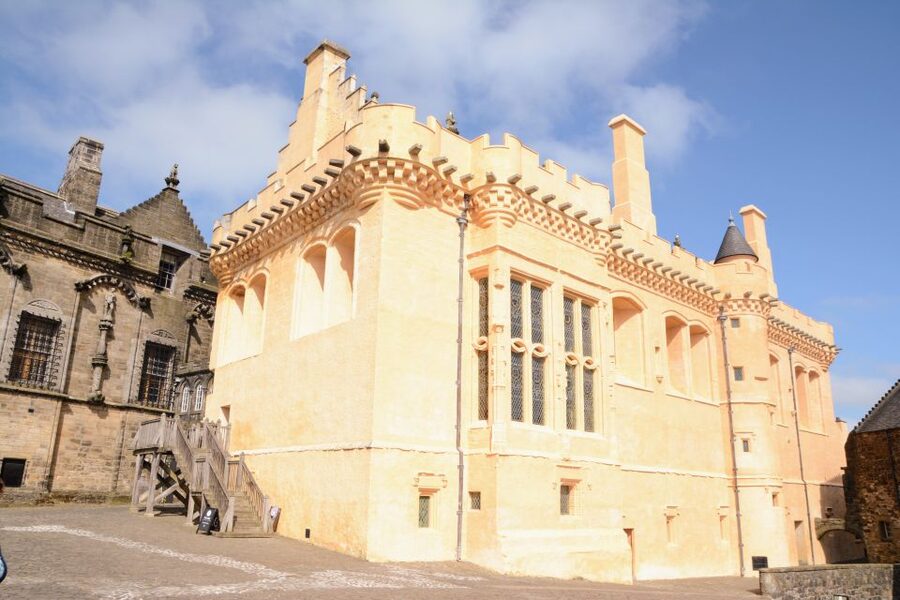
The meeting point is in front of The Portcullis Hotel. Look for the black umbrella and arrive at least 15 minutes before the scheduled start.
That extra time matters. The castle sits above the town, and the group needs to gather before moving toward the entrance. You will begin outside on the esplanade, listening to the guide explain the castle’s origins, defenses, and sieges.
This opening portion gives the visit some shape. Instead of entering cold and trying to work out which king used which room, you get a short introduction to the people and conflicts that shaped the site.
The outdoor section also means you should dress for Scottish weather. The tour operates in rain and snow unless conditions are severe enough for the castle itself to close. If the weather turns unpleasant, the route is adapted to reduce exposure, but you should still bring suitable outdoor clothing.
The Royal Palace Shows Scotland’s Renaissance Ambitions
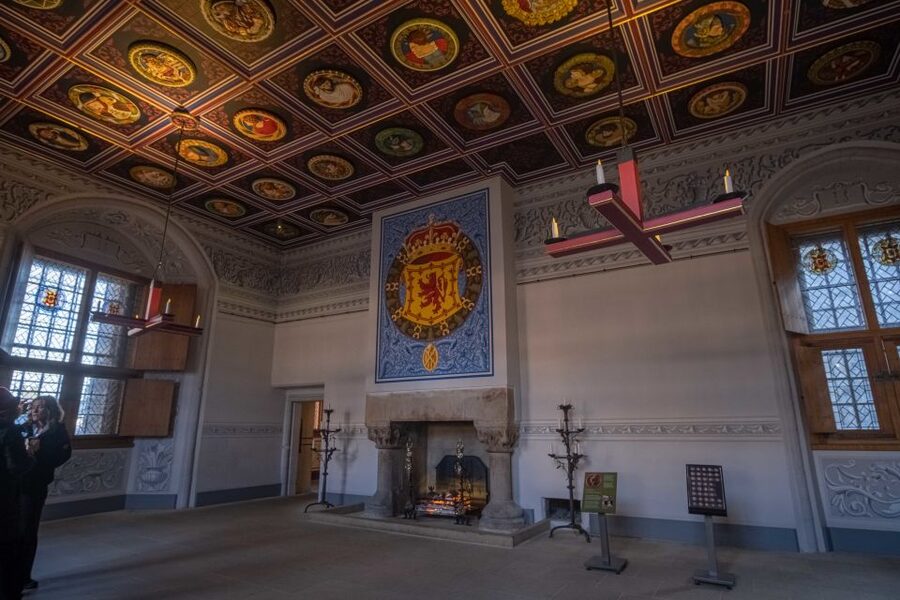
Inside the castle, the royal palace is the main architectural prize. It served as a home for kings and queens and is described as the first Renaissance palace in Britain.
That claim gives the building a special place in Scottish history. The palace was designed for royal display as well as daily life. Its purpose was not just to protect the monarch, but to show wealth, taste, and links with wider European culture.
Your guide helps turn the rooms into more than empty stone chambers. You will hear how the palace functioned as a royal residence and how Stirling became a favorite setting for Scottish monarchs.
Mary Queen of Scots is central to the palace story. She lived at Stirling Castle, and the castle is also linked to her coronation. Her presence gives the rooms a personal connection to one of Scotland’s most famous and troubled monarchs.
I like this part of the tour for readers who want more than battlefield history. Stirling Castle is also about court life, ceremony, family, and the image that Scottish royalty wanted to project.
The Great Hall Brings Court Life Into Focus
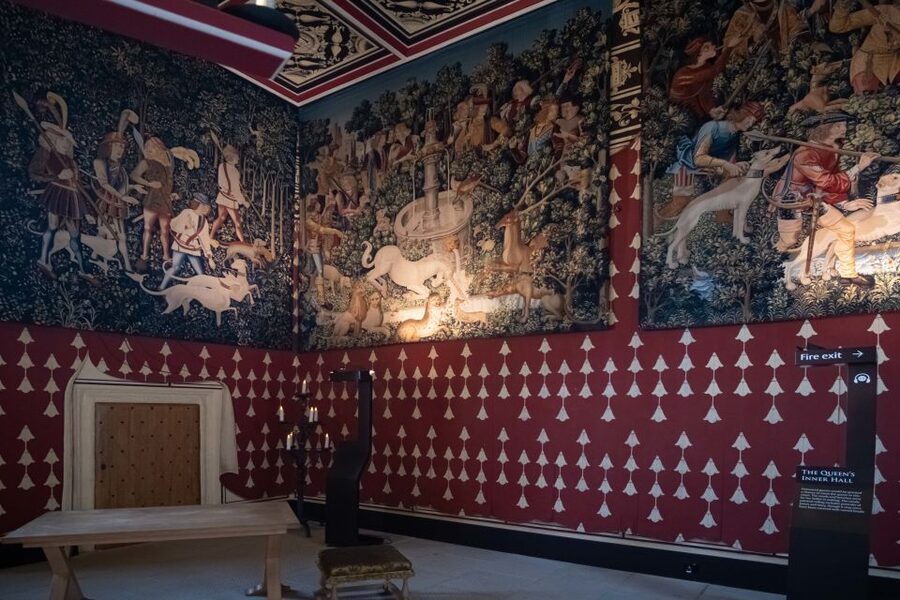
The 16th-century Great Hall is one of the most memorable stops. This was the place for major parties and feasts, including celebrations connected with the baptism of the future king of Scotland.
A grand hall can seem bare when it is not filled with people, food, music, and ceremony. The guide’s job here is to help you picture its original purpose. The scale of the room makes sense when you think of it as a setting for royal gatherings rather than as another historic interior.
The Great Hall is also a good example of why a guided visit adds value. You can admire the architecture on your own, but the story of the feasts and baptism gives the room a human use.
Expect the tour to keep moving. The guide covers the hall as part of a larger route through the castle, so you will not have unlimited time to study every feature. If you are interested in design, furnishings, or small details, plan to return after the guided portion if admission arrangements allow. The supplied tour details confirm the skip-the-line entry and guided visit, but they do not specify extra independent visiting time, so check the day’s admission conditions before counting on it.
More castle tours in Scotland:
- Edinburgh Castle: Guided Walking Tour with Entry Ticket
★ 4.7 · 11,699 reviews - Edinburgh: Edinburgh Castle Guided History Tour with Tickets
★ 4.8 · 7,747 reviews - Edinburgh Castle: Guided Walking Tour with Entry Ticket
★ 5.0 · 5,540 reviews - Edinburgh Castle Guided Walking Tour in English
★ 5.0 · 5,214 reviews
Mary Queen of Scots Adds a Personal Story
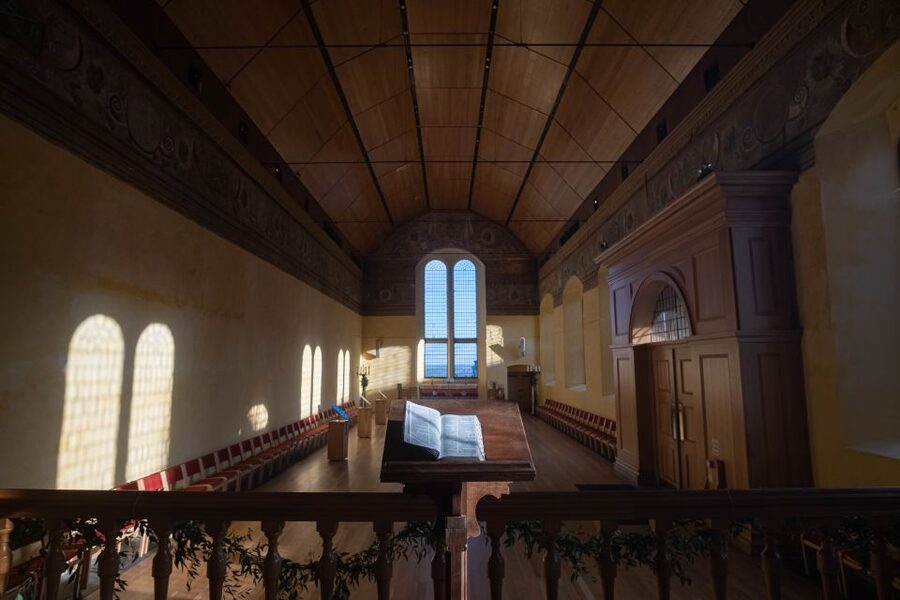
Mary Queen of Scots is one of the strongest reasons to visit Stirling Castle. The tour explains her connection with the royal palace, her time at Stirling, and the setting where she was crowned.
Her story gives the castle an emotional center. The building was not only a military prize or a royal stage. It was also a home connected with childhood, power, danger, and ceremony.
The Spanish-language format can be especially useful here. Royal names and political events become easier to follow when the guide can explain them naturally in your language. Fernando, one of the named guides, is praised for using historical recreation, jokes, and poems to hold the group’s attention. That style will suit you if you prefer a story-led tour rather than a dry list of dates.
Alejandro is another named guide associated with the experience. His approach is described as warm and clear, with explanations that are easy to follow. Guide style can vary, but the small group format gives either guide space to respond to questions and keep the presentation personal.
John Damian Supplies the Castle’s Oddest Tale

Not every story at Stirling Castle is about war or royalty. In the 16th century, John Damian became known as the bird-man of Stirling Castle.
He wanted to fly to France. His attempt was stopped by a few practical problems, which is a polite way of describing a plan that did not get far. This is the kind of detail that makes a historic site feel less formal and more human.
I like that the tour includes John Damian because it breaks up the military and royal material. You get a glimpse of curiosity, ambition, and strange court entertainment alongside the serious business of kingship.
The castle also carries stories of ghosts and other supernatural suggestions. These tales are presented as part of the fortress’s legends, not as a guarantee of a paranormal experience. If you enjoy historic places with a spooky edge, they add atmosphere. If you want only documented political history, treat them as colorful side stories.
King Arthur and the Knights of the Round Table
William of Worcester identified Stirling Castle as the home of King Arthur’s Knights of the Round Table. That claim belongs to the castle’s legendary layer rather than its military record, but it shows how people imagined Stirling long before modern tourism.
The Arthur connection gives the guide another way to explain the castle’s reputation. A fortress tied to kings, heroes, ceremonies, and imagined knights naturally gathers stories over time.
I would not choose this tour solely for the Arthurian material. The strongest content is the castle’s royal and military history. But the legend helps keep the visit lively, especially for families and anyone who enjoys the border between history and folklore.
What 90 Minutes Really Gives You
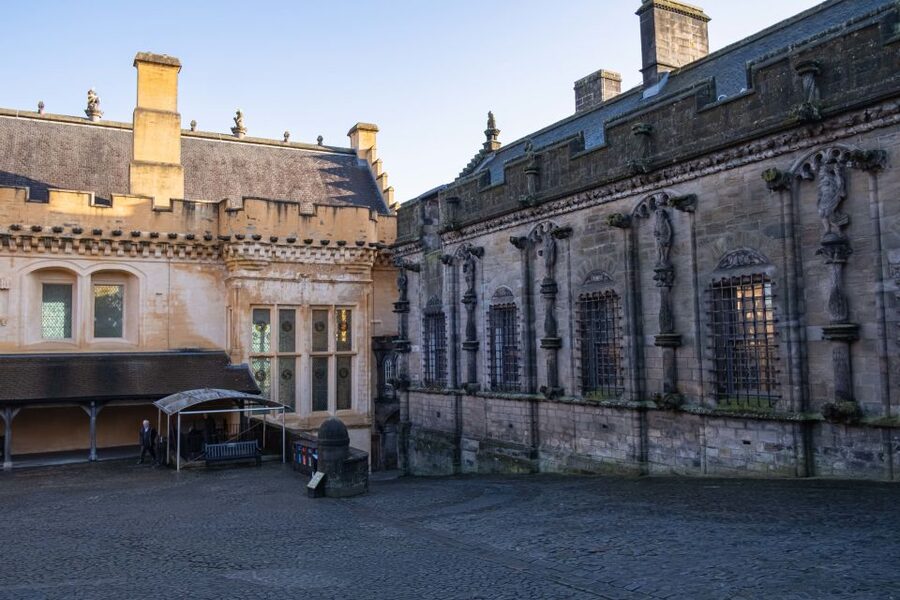
The tour lasts 1.5 hours. That is enough for a focused introduction to the castle’s main story, including the esplanade, royal palace, Great Hall, Mary Queen of Scots, sieges, John Damian, and the Arthurian connection.
The short format is useful if you are fitting Stirling into a day trip or a wider Scotland route. You get the essential context without committing half a day to a guide.
The tradeoff is depth. Stirling Castle has enough rooms, displays, and historical layers to occupy more than 90 minutes. A guide must keep to the schedule, so you may want extra time afterward for closer looking. The tour details do not promise a separate self-guided period, so confirm how the castle handles continued entry on your chosen date.
The group limit of 10 is a strong practical feature. A small party is easier to keep together in busy areas, and you are more likely to hear the guide clearly. It also makes the Spanish explanations feel less like a public speech and more like a shared walk.
Is the $45 Price Good Value?

At $45 per person, this is not the cheapest way to enter Stirling Castle. The value rests in the combination of skip-the-line access, a Spanish-speaking guide, and a small group.
If you speak Spanish and want the castle’s complicated story explained clearly, the price can make sense. The guide links the building to the Scottish Wars of Independence, royal life, Renaissance design, Mary Queen of Scots, and local legends. That saves you from piecing together the story from signs and guidebooks.
The value is also stronger when the ticket queue is long. Skipping the ticket line matters most during busy periods, when a short visit could lose a useful chunk of time outside the gate.
You may find better value by visiting independently if you already know the history, speak English comfortably, and prefer to move slowly. The guided option is aimed at people who want interpretation in Spanish and a clear route through the major highlights.
Who Should Book This Spanish Tour?
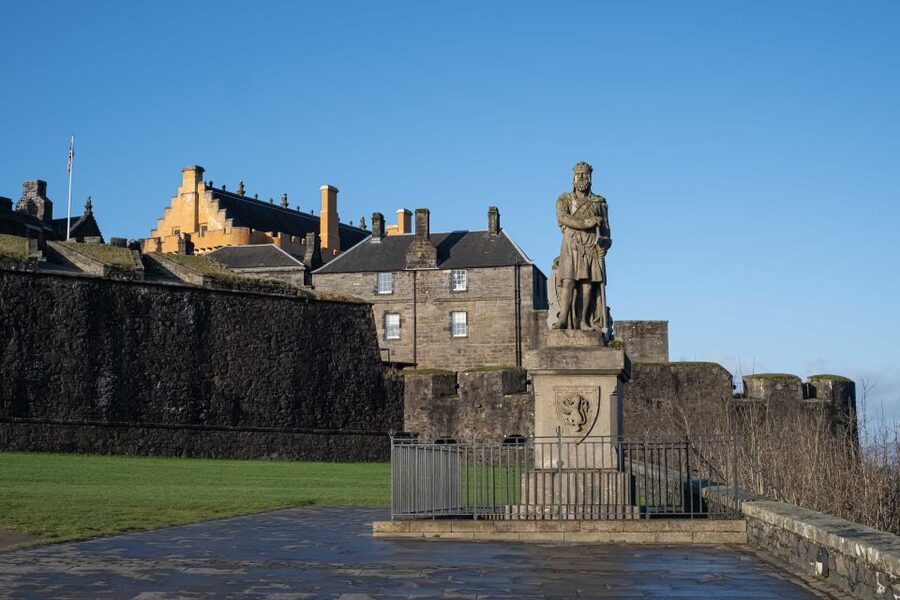
I would recommend it to Spanish-speaking visitors who want the castle’s main stories explained by a live guide. It is also a good fit for first-time visitors to Scotland, families who benefit from short stories and unusual characters, and anyone with limited time in Stirling.
The tour suits you if you like military history, royal households, Mary Queen of Scots, and legends in the same visit. It may be less suitable if you want long periods for photography, close study of every display, or a quiet visit without a set pace.
The route is wheelchair accessible according to the activity details. Large bags and luggage are not allowed, so arrive with only what you need for the visit. That restriction is worth taking seriously if you are arriving with a suitcase or making Stirling a stop between accommodations.
Weather, Timing, and a Few Smart Tips
Meet at The Portcullis Hotel, not inside the castle, and look for the black umbrella. Arriving 15 minutes early gives you time to find the group and avoid a rushed start.
Wear shoes and clothing suited to changing weather. The route may be altered to limit rain or snow exposure, but the tour is still an outdoor-to-indoor experience. Extreme weather can cancel the visit if the castle closes.
Keep your bag small. Large bags and luggage are not permitted, and the available information does not specify a storage service. If you are carrying a day pack, check its size before setting out.
The tour is offered in Spanish only. If you need another language, this is not the right booking. If Spanish is your preferred language, it is the main reason to choose this experience over a standard visit.
Free cancellation is available up to 24 hours before the start time for a full refund. You can also reserve now and pay later, which helps if your Scotland schedule is still shifting.
Final Call: A Strong Choice for Spanish Speakers
Book this tour if you want clear Spanish storytelling, fast entry, and a small group at one of Scotland’s most important castles. The strongest parts are the royal palace, Great Hall, Mary Queen of Scots, and the guide’s ability to connect the rooms with wars, ceremonies, and memorable characters such as John Damian.
Skip it if you want a long, unhurried visit or already know Stirling Castle well. For most first-time Spanish-speaking visitors, though, the $45 price buys useful context and saves time at the entrance. Just arrive early, leave your luggage behind, and remember that 90 minutes is an introduction, not the last word on the castle.
FAQ
Where is the meeting point for the tour?
Meet in front of The Portcullis Hotel. Look for the black umbrella.
How early should I arrive?
Arrive at least 15 minutes before the tour begins.
How long does the tour last?
The guided visit lasts 1.5 hours.
Is the tour conducted in Spanish?
Yes. The tour includes a live Spanish-speaking guide.
How many people are in the group?
The tour is limited to 10 participants.
Is Stirling Castle admission included?
Yes. Skip-the-line entrance to Stirling Castle is included.
Is the tour wheelchair accessible?
Yes, the activity is listed as wheelchair accessible.
Can I bring luggage or a large bag?
No. Luggage and large bags are not allowed.
What happens in bad weather?
The tour operates in all weather conditions unless extreme weather causes the castle to close. The route is adapted to reduce exposure to rain or snow.
More Skip the Line in Scotland
- Skip-the-Line: Botanic Garden Entry Ticket
★ 4.5 · 53 reviews
Just added around Scotland
- Private tour: History and Mystery in Edinburgh’s Old Town★ 5.0 · 8 reviews
- Edinburgh Private Transfer from Edinburgh city centre to Edinburgh Airport★ 4.0 · 8 reviews
- Falkirk Wheel, Doune Castle, Stirling Castle Private Tour★ 5.0 · 8 reviews
- loch Ness, Inverness and Outlander Sites From Invergordon Port★ 5.0 · 8 reviews
- Outlander Experience★ 5.0 · 8 reviews
- Edinburgh: Harry Potter, Glenfinnan Viaduct & Highland Tour★ 5.0 · 8 reviews
- Edinburgh: Dean Village & New Town Walking Tour★ 5.0 · 8 reviews
- Over The Sea to (secret) Skye★ 5.0 · 8 reviews
Stirling Tours, compared.
Stirling Old Town Daily Walking Tour (11am & 2pm)
Read our review →


3 Hour Private Tour of Stirling Old Town and Stirling Castle
Read our review →
Browse the lists this tour appears in