Reviewed · TOURS
Orkney West Mainland Tour
Orkney’s West Mainland packs some of northern Europe’s finest ancient sites into one well-planned day. You’ll see Skara Brae, the Ring of Brodgar, the Standing Stones of Stenness, and rugged Yesnaby Cliffs without hiring a car or working out the island’s roads yourself.
I like the small-group format, which means you can ask questions and hear local stories instead of following a flag through a crowd. I also like the mix of archaeology, sea views, ruined palaces, and farm life. The main catch is the minibus: seats are only 48 to 51 centimeters wide, and some people found the vehicle tight.
Key points to know before booking
- Skara Brae is the main event: Spend about 1 hour and 20 minutes at one of Europe’s best-preserved Neolithic villages, with entry included.
- The group is capped at 14 people: Most departures use a smaller group, often six to eight people, in a minibus.
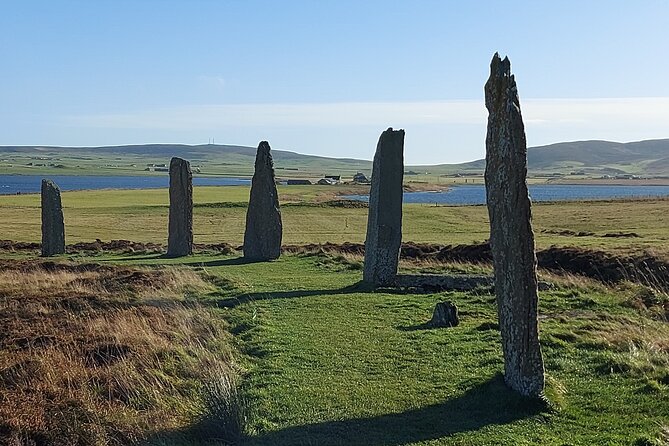
- You see Orkney’s big prehistoric landmarks: The Ring of Brodgar and Standing Stones of Stenness give the day a strong archaeological focus.
- The scenery keeps changing: Look for Scapa Flow, Yesnaby’s cliffs, Birsay’s coast, and the open countryside between stops.
- Local guides make the difference: George, Rachel, Garry, and Ron have all led highly praised outings, with history and personal island stories woven into the drive.
- Plan around the timing: Departure is at 10:00 a.m. from the Travel Centre in Kirkwall, and lunch is not included.
Why this tour works so well for a first day in Orkney
Orkney is easy to underestimate. On a map, the West Mainland looks compact. In practice, the best ancient sites are spread across open roads, coastal stretches, and quiet farming country. If you do not have a car, this tour solves the main problem neatly.
You meet at the Travel Centre in Kirkwall at 10:00 a.m. and return there at the end. The roughly six-hour outing gives you a broad introduction without asking you to plan every turn, parking area, and opening time.
I especially like the balance between major sights and smaller stops. You are not spending the whole day at stone circles. The route also includes Scapa Flow, sea cliffs, a ruined Renaissance palace, and Kirbuster Farm Museum. That variety matters because Orkney’s appeal is not only its age. It is also the way archaeology, weather, farming, and the sea fit together.
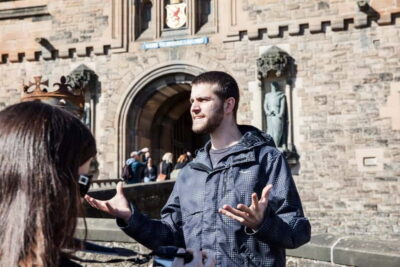
The maximum group size is 14, though several outings have had only six or eight people. That is a useful middle ground. You get shared transport and a guide, but the group is still small enough for questions and conversation.
Other Scotland days people book alongside this one:
- Edinburgh: Loch Ness, Glencoe & the Scottish Highlands Tour
★ 4.6 · 17,446 reviews - Edinburgh: Harry Potter Magical Guided Walking Tour
★ 4.8 · 11,944 reviews - Edinburgh: Underground Vaults Tour
★ 4.6 · 11,758 reviews
Crossing Scapa Flow with Orkney’s wartime story
The day begins with a scenic drive offering wide views of Scapa Flow. This sheltered body of water served as the main British naval base during both World Wars, so the view comes with a serious layer of modern history.
This part of the drive helps you see Orkney as more than a prehistoric site. The islands sit at a strategic point in the North Atlantic, and the sea has shaped daily life, defense, trade, and travel for centuries.
The guide’s commentary is important here. George, Rachel, Garry, and Ron are all noted for explaining local history in an engaging way, and several guides add personal stories to the facts. One guide explained the German sinking of a ship and the departure of the British fleet, giving the view across the water a clear historical frame.
You may not spend a long formal period at a single Scapa Flow viewpoint. Think of it as an informed scenic drive, not a museum visit. Still, it is a strong opening because it places the rest of the day in context.
Skara Brae, the village preserved by the sea
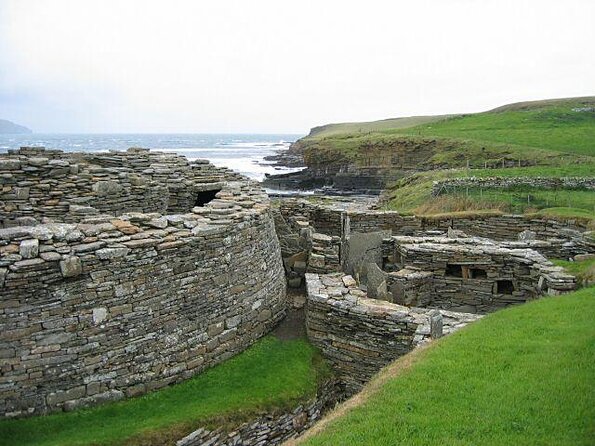
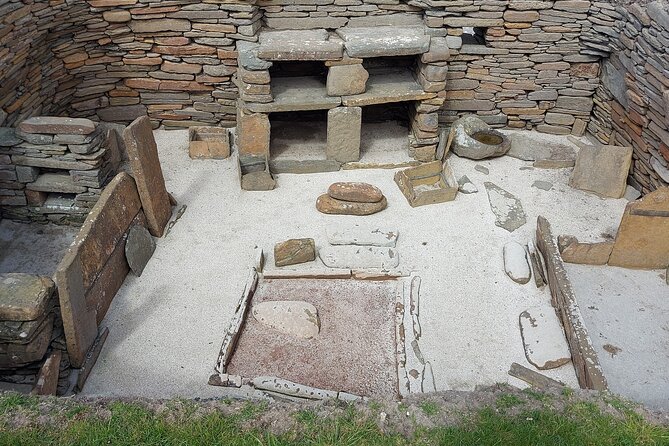
Skara Brae is the anchor of the tour. You get about 1 hour and 20 minutes here, and admission to Skara Brae and Skaill House is included in the tour price.
This 5,000-year-old Neolithic village is remarkable because its stone-built homes, passageways, and interior features survived for so long. The site gives you a more direct sense of prehistoric domestic life than a single standing stone can. You can look at the layout of the houses and picture a settled community rather than a mysterious monument in isolation.
The guide’s role here is useful. A site this old can become a blur of dates and theories if you walk through it without context. With an explanation of how the village fits with Orkney’s other prehistoric sites, the stones begin to feel like part of a much larger story.
Allow the full visit time. This is not a quick photo stop. You will want time to see the village, take in the coastal setting, and visit the nearby historic material included with admission.
There is a cafe on site, and fresh sandwiches have been singled out as a practical lunch option. Since lunch is not included, this may be the easiest place to buy food during the day. I would still avoid assuming that a cafe meal replaces a proper lunch break, especially if you need a specific diet or want a full sit-down meal.
The open setting means weather can change the feel of the visit. On a clear day, the sea and sky make the site memorable. In rain and wind, you will need a waterproof jacket and shoes that can handle uneven outdoor paths.
Ring of Brodgar and the meaning of a stone circle
The Ring of Brodgar gets about 30 minutes. Admission is free, and the guide leads you around the henge monument.
This is one of the places where a local explanation adds real value. A broad circle of stones can look simple at first glance. The guide can point out its scale, position, and place among Orkney’s other ceremonial sites, helping you understand why the area is considered so important.
Thirty minutes is enough for an introduction, photographs, and a walk around part of the circle. It is not enough for a slow archaeological study, so set your expectations correctly. You are getting a clear overview rather than a long, solitary visit.
I like the way this stop follows Skara Brae. The village shows how people lived. Brodgar shifts the focus to ceremony and communal activity. Together, the two sites give the day more depth than a string of unrelated photo opportunities.
Same country, a completely different kind of day out:
- Edinburgh Castle: Guided Walking Tour with Entry Ticket
★ 4.7 · 11,699 reviews - From Edinburgh: Loch Ness, Glencoe & Scottish Highlands Tour
★ 4.7 · 11,381 reviews - The World Famous Underground Ghost Tour
★ 4.5 · 9,272 reviews - Underground Vaults Walking Tour in Edinburgh Old Town
★ 4.5 · 8,506 reviews
Standing Stones of Stenness, a short stop with great age

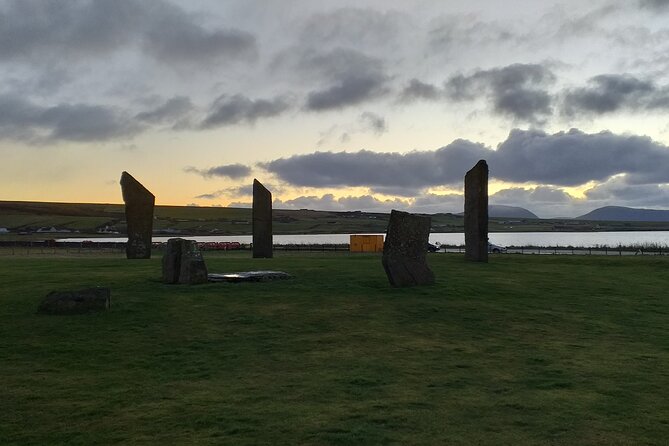
The Standing Stones of Stenness is a 15-minute photo stop. It is free to visit and is believed to be the oldest known henge monument in the United Kingdom.
Fifteen minutes goes quickly, but the stop serves a purpose. You get another view of Orkney’s prehistoric stone tradition, this time with a smaller group of surviving stones and a different feel from Brodgar.
I would listen closely during the guide’s explanation, then use the remaining time for photographs. This is not the place to expect a long walk or a detailed visit. It is a compact stop that adds another important piece to the prehistoric picture.
The sequence of Skara Brae, Brodgar, and Stenness is one of the strongest parts of the tour. You see homes, a major stone circle, and an older henge site within the same half-day route.
Yesnaby Cliffs and the power of the Atlantic edge
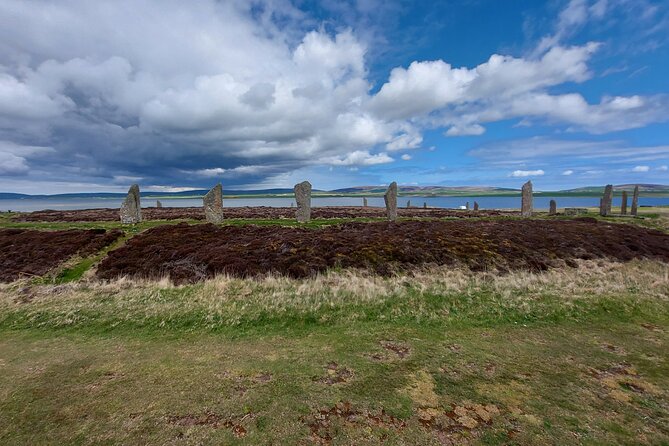
Yesnaby Cliffs gets about 15 minutes. The stop is designed for views and photographs, and the cliffs provide a sharp change from the inland archaeological sites.
Expect exposed coastal scenery, strong winds, and dramatic drops. Keep to safe ground and follow the guide’s directions, particularly if the weather is poor. The point is not a long cliff walk. It is the chance to see Orkney’s western edge and understand how much of island life faces the sea.
On a clear day, you might also see the Old Man of Hoy from Yesnaby. That sighting is not guaranteed, but one guide made it an unexpected highlight by bringing the group to a point where the famous sea stack could be viewed.
The short visit works well in the wider schedule. After several ancient sites, the cliffs give you room to breathe and a different kind of Orkney experience. If your priority is hiking, though, this tour will feel too brief. You get viewpoints, not an extended coastal trek.
Earl’s Palace in Birsay, ruins with an uneasy past
The stop at Earl’s Palace lasts about 30 minutes and is free. In Birsay, you see the remains of a 16th-century residence built by the powerful and notorious Earl Robert Stewart.
The palace was once a grand Renaissance-style mansion overlooking the sea. Now it is a romantic ruin beside the remains of the medieval Bishop’s Palace. That pairing makes the stop especially interesting. You can see two layers of power and church life close together, with the sea and the village of Birsay nearby.
I like this stop because it breaks up the prehistoric focus. The day moves from ancient ceremonial sites to a later period of Scottish and Orkney history, then places the ruins beside traditional stone cottages and open coastal views.
Thirty minutes is enough to get a feel for the site and hear the main story. It is not a long independent exploration. If you enjoy detailed architectural visits, you may want more time, but the short stop keeps the full route moving.
Kirbuster Farm Museum and everyday island life
Kirbuster Farm Museum gives you about 30 minutes and offers a look at rural Orkney over the centuries. The historic farmhouse includes a central peat fire, farming tools, vintage machinery, and gardens reflecting the island’s rural traditions.
This is a smart final stop because it brings the day back from grand monuments to ordinary work and home life. Archaeological sites can feel distant. A farmhouse, tools, and a peat fire make the island’s past easier to picture.
The half-hour visit will give you an overview rather than time for a close look at every object. If you are interested in traditional farming or historic interiors, you may wish the stop were longer. Still, it adds welcome variety and helps explain the practical life behind Orkney’s famous stones.
What the minibus is like for six hours
The small vehicle is one of the tour’s strengths and one of its limits. With no more than 14 people, you avoid the feel of a large coach. A clean, comfortable minibus and a professional pickup routine also make the day easier than arranging several separate visits yourself.
The seat width is between 48 and 51 centimeters. Legroom is generous, but the seat itself may feel restrictive for some people. One outing with seven people was described as crowded, and another person found the vehicle difficult with mild mobility problems.
If you need extra space, the operator allows you to purchase an additional seat. Contact the company before booking if this matters to you. Service animals are allowed, and most people can take part, but the vehicle size means you should think honestly about comfort before paying.
The route includes outdoor stops with uneven ground and exposed weather. A transport chair user was assisted effectively on one outing, but you should still explain your needs in advance rather than assume every part of the route will be easy.
Is $165.28 good value?
At $165.28 per person, this is not the cheapest way to see Orkney. The value comes from what the price removes from your day: car hire, navigation, parking decisions, and the work of linking widely spaced sights.
Skara Brae admission is included, along with admission to Skaill House. The other listed stops are free, so you are mainly paying for transport, the guide, and the convenience of the route.
For a first visit without a car, I think the price can be justified. You get about six hours, a small group, local commentary, and a route that covers the island’s best-known prehistoric sites plus several contrasting stops.
If you are comfortable driving and have a full day or more to explore, a rental car may offer better flexibility. One person found independent driving easy on a later day and preferred having control over the schedule. That is a fair criticism. A car lets you linger at Skara Brae, skip a stop, or spend longer at the cliffs.
The tour is strongest for people who value interpretation and efficiency. It is less compelling for independent drivers who dislike fixed timing or want long walks at each location.
Guides George, Rachel, Garry, and Ron
The guides appear to be a major reason this outing works. George has been praised for keeping the group entertained while explaining sites and wartime events. Rachel is described as engaging, pleasant, and strong at bringing the island’s story to life.
Garry is noted for historical, local, and ceremonial knowledge, while Ron has led groups through Kirkwall and the Neolithic sites with clear explanations. You may not get to choose among them, but the names give you a sense of the guide team you might meet.
The best guide style for this route is not a long lecture. You want someone who can explain a stone circle, answer questions, point out a distant view, and add local detail during the drive. The strongest accounts describe exactly that mix.
Timing, food, weather, and cancellation
The advertised start is 10:00 a.m., with the day ending back at the Travel Centre in Kirkwall. The timing fills much of the day, so do not plan another major activity afterward. One person felt the start time and tour length dominated the whole day, though the official duration is approximately six hours.
Lunch is not included. You can look for food at Skara Brae’s cafe, but bring a snack if you prefer certainty. Water is also sensible for a route with several outdoor stops.
The experience depends on good weather. If poor weather causes cancellation, you are offered another date or a full refund. You can also cancel for a full refund up to 24 hours before the start time. Changes or cancellations inside that 24-hour window are not accepted.
Who should book the West Mainland tour?
I would choose this tour if you are visiting Orkney without a car, have one main day available, and want the major prehistoric sights explained by a local guide. It is also a strong choice for a first look at the West Mainland, since the route includes archaeology, coastline, wartime history, ruins, and farming heritage.
It suits cruise passengers and short-stay visitors who want an efficient overview. It also works well for people who prefer company and commentary to independent research.
I would hesitate if you need a wide seat, have mobility concerns, or want long walks at the cliffs and archaeological sites. I would also compare the cost with car hire if you have several days and feel comfortable driving on Orkney’s roads.
Should you book it?
Book it if Skara Brae and Orkney’s stone circles are high on your list and you want someone else to handle the driving. The combination of a small group, included Skara Brae admission, strong local guides, and varied scenery makes the price reasonable for a six-hour introduction.
Skip it in favor of a rental car if flexibility matters more than guided context. Either way, the route shows why Orkney deserves more than a quick stop: its oldest stones, sea-facing cliffs, wartime waters, ruined palaces, and farmhouses all belong to the same story.
FAQ
Where does the Orkney West Mainland Tour start?
The tour starts at the Travel Centre in Kirkwall, Orkney, at 10:00 a.m.
Where does the tour end?
The activity ends back at the Travel Centre meeting point in Kirkwall.
How long does the tour last?
The tour lasts approximately six hours.
What is included in the price?
Admission to Skara Brae and Skaill House is included. Transport and the guided tour are also part of the experience.
Is lunch included?
No. Lunch is not included. The Skara Brae site has a cafe where you can buy food, including sandwiches.
How many people can join the tour?
The maximum group size is 14 people. Some departures may be smaller, with groups of six to eight people.
Can I cancel for a refund?
Yes. You can cancel at least 24 hours before the local start time for a full refund. Cancellations or changes made less than 24 hours before the start time are not accepted.
Just added around Scotland
- Private tour: History and Mystery in Edinburgh’s Old Town★ 5.0 · 8 reviews
- Edinburgh Private Transfer from Edinburgh city centre to Edinburgh Airport★ 4.0 · 8 reviews
- Falkirk Wheel, Doune Castle, Stirling Castle Private Tour★ 5.0 · 8 reviews
- loch Ness, Inverness and Outlander Sites From Invergordon Port★ 5.0 · 8 reviews
- Outlander Experience★ 5.0 · 8 reviews
- Edinburgh: Harry Potter, Glenfinnan Viaduct & Highland Tour★ 5.0 · 8 reviews
- Edinburgh: Dean Village & New Town Walking Tour★ 5.0 · 8 reviews
- Over The Sea to (secret) Skye★ 5.0 · 8 reviews
Tours, compared.

Loch Ness, Glencoe & the Scottish Highlands Tour
Read our review →

Edinburgh Castle: Guided Walking Tour with Entry Ticket
Read our review →
Loch Ness, Glencoe & Scottish Highlands Tour
Read our review →
Underground Vaults Walking Tour in Edinburgh Old Town
Read our review →