
Reviewed · GLASGOW TOURS
Glasgow: Historical Walking Tour: Guided by a local actor
Glasgow’s past is not tucked away in a single museum. It is written across George Square, old trading streets, churchyards, grand civic buildings, and lanes where fortunes were made or lost. This two-hour walking tour connects those places with stories about empire, religion, trade, politics, immigration, crime, and ordinary city life.
I like the actor-led storytelling, which gives the tour more lift than a dry list of dates. I also like the route’s mix of famous sights and overlooked corners, from the Victorian buildings around George Square to the old Merchant City. The main consideration is pace: two hours gives you a strong introduction, but not enough time to go inside every museum or sight.
Key points to know before you book
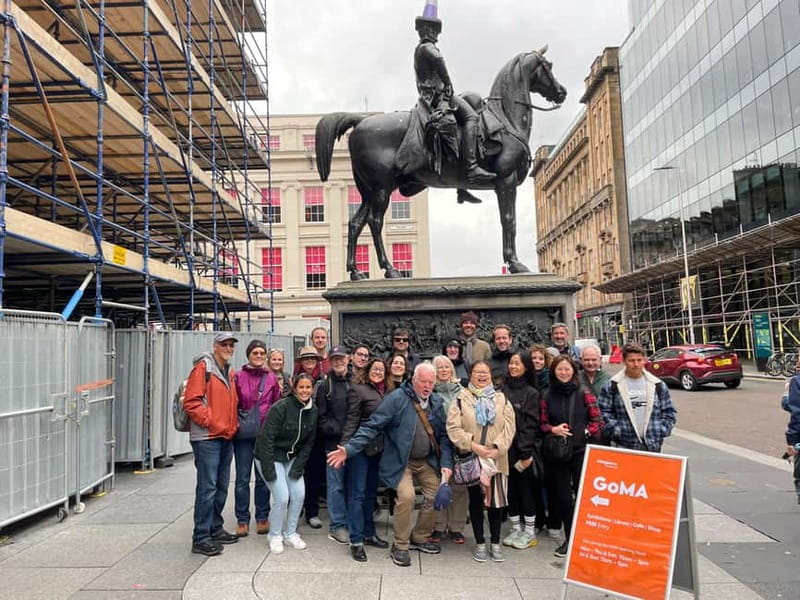
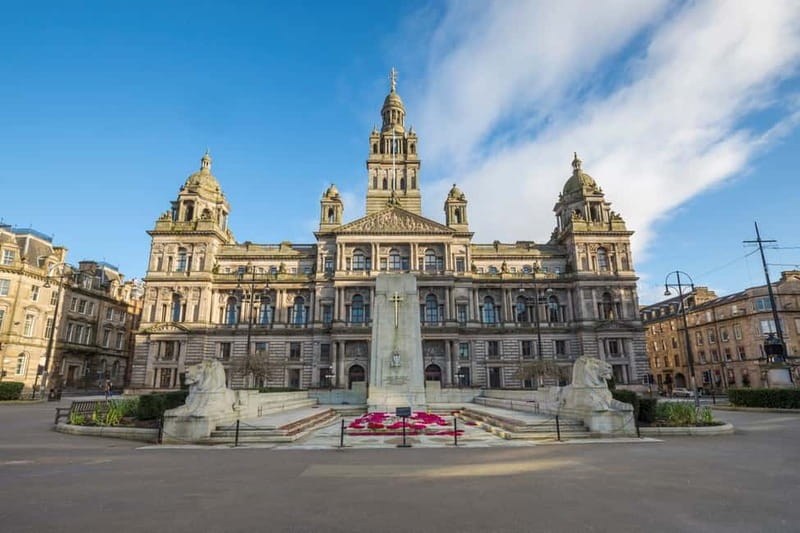
- George Square sets the scene: Begin among the City Chambers, Merchants’ House, cenotaph, and other grand Victorian buildings.
- A local actor leads the walk: Guides including Ian, Martin, Luke, and Gordon have been praised for humor, clear delivery, poetry, and dramatic storytelling.
- The route covers 1,500 years: Expect early Christian and Roman connections, medieval Glasgow, imperial trade, industrial growth, socialism, and Irish immigration.
- Merchant City is the heart of the walk: Follow old commercial streets, lanes, and former homes of wealthy trading families.
- Museums are pointed out, not explored: The Gallery of Modern Art and Police Museum are useful follow-up stops, but there is no time for a proper visit during the walk.
- Flat, rain-or-shine walking: Wear comfortable shoes and bring weatherproof clothing. The terrain is accessible for wheelchairs.
Why this Glasgow walk works so well
This is a city orientation tour with a strong theatrical streak. Instead of simply pointing at buildings, your guide uses anecdotes, local characters, political stories, and the occasional grim tale to explain how Glasgow changed over time.
That style matters in Glasgow. The city centre can look like a collection of impressive stone facades until someone explains who paid for them, what trade created the money, and what happened to the people living and working behind those grand fronts.
The guides vary by departure. Ian is praised for making history both funny and personal, while Martin is noted for connecting with large groups and projecting his voice well. Luke receives similar praise for being easygoing, clear, and entertaining. Gordon’s style includes poetry, humor, and old-fashioned storytelling. You cannot choose the guide from the information provided, but the common thread is a professionally trained local actor who lives in Glasgow.
The acting background is not just a marketing detail. It helps with timing and delivery. Several guides have been praised for making difficult subjects easier to follow and for keeping a large group involved. One particularly useful trait is the ability to answer questions after the formal walk, including suggestions for places to eat and other things to see.
More Walking Tours in Glasgow
- Glasgow City Centre Walking Tour with Local Guide
★ 5.0 · 1,326 reviews - Glasgow: Ghouls, Ghosts & Gruesome Tales Guided Walking Tour
★ 4.9 · 887 reviews - Glasgow: City Center Guided Walking Tour
★ 4.7 · 759 reviews
Meeting the guide in George Square
Your starting point is between the lions in George Square. Look just behind the White Granite Cenotaph, also called the War Memorial. This is a large square, so allow a few minutes to find the correct spot rather than arriving at the last second.
If a major disruption affects the square, the alternative meeting point is Piper Whisky Bar, at the corner of Cochrane Street and George Square. It is worth checking the latest instructions before setting out.
George Square is an excellent opening location because it puts Glasgow’s civic ambitions in full view. The City Chambers, Merchants’ House, and headquarters of Glasgow City Council create a grand stone frame around the square. Here you begin to see the tension that runs through Glasgow’s story: wealth and poverty, civic pride and political conflict, old power and new industry.
Your guide also explains why the square is named after an English king. That small detail opens into the wider question of Glasgow’s place within Britain and the British Empire. The city became known as the second city of the British Empire, a claim built on trade, manufacturing, shipping, and commercial power.
George Square and the making of a city
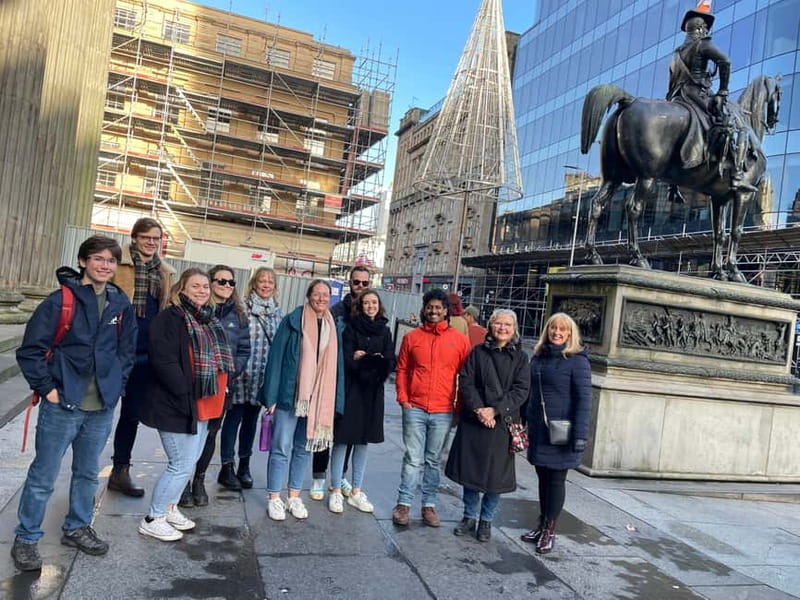
The early part of the tour spends time in and around George Square, including a guided explanation and a photo stop. You get a chance to look closely at the architecture while hearing how the square developed as a public and political centre.
Do not treat this as an architecture-only walk. The buildings matter because they show who had money and influence. The Merchants’ House points to the commercial families who helped shape the city, while the council buildings reflect Glasgow’s growth and civic confidence.
The guide also places Glasgow in a much older setting. You hear about early Christian connections, Roman activity, and the ancient tribes that influenced the area. This broad time span is one of the tour’s strengths. You are not only hearing about Victorian Glasgow, but about the earlier foundations beneath it.
The opening can feel information-heavy if you prefer a slow architectural stroll. Still, the actor’s delivery helps keep the material moving. Guides are expected to speak clearly, and feedback about Ian, Luke, Martin, and Gordon repeatedly highlights their ability to project and hold attention.
From medieval Glasgow to modern commerce
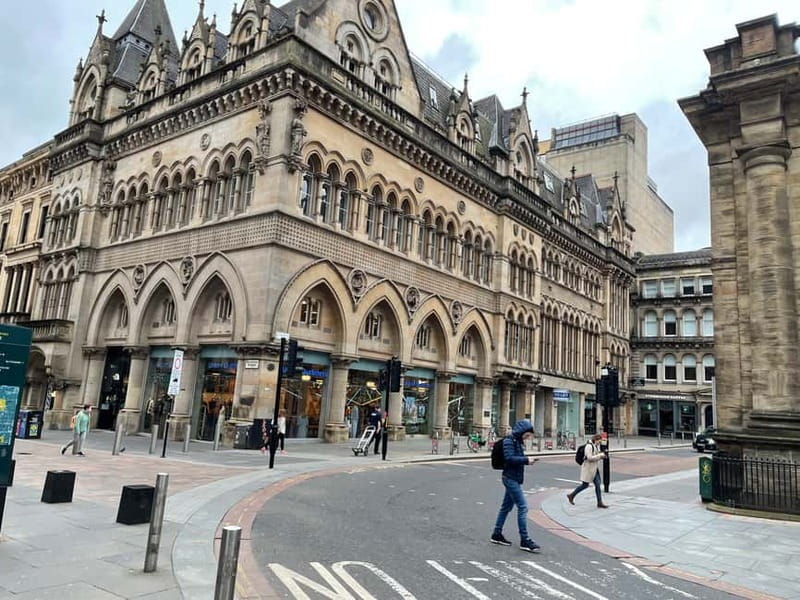
The route then moves toward the commercial district and the original medieval centre. This is where the walk shifts from civic grandeur to the practical business of making money.
Your guide explains where commercial capitalism took root and how Glasgow later became associated with socialism and the British Labour movement. That contrast gives the city a more honest shape. Glasgow’s grand fortunes did not appear by magic, and its political traditions did not develop in a vacuum.
This section is especially useful if you want context before visiting other parts of the city. The walk does not try to cover every neighborhood. Instead, it gives you a working map of the central area and explains why certain streets and buildings matter.
The route is on flat terrain, so the physical demands are modest. The bigger challenge is the city-centre setting. Streets may be busy, and you will need to keep close enough to hear the guide while looking up at the buildings. A clear voice helps, and this is one reason the actor-led format earns its keep.
More history tours in Glasgow:
- Glasgow: The Magnificent and Mysterious History of Glasgow
★ 4.9 · 302 reviews - Glasgow: Pubs & History Walking Tour with Beer Tasting
★ 5.0 · 81 reviews - Glasgow: Pubs & History Guided Walking Tour with Beer
★ 4.9 · 74 reviews - The Magnificent and Mysterious History of Glasgow
★ 5.0 · 49 reviews
Merchant City’s trading families and old lanes
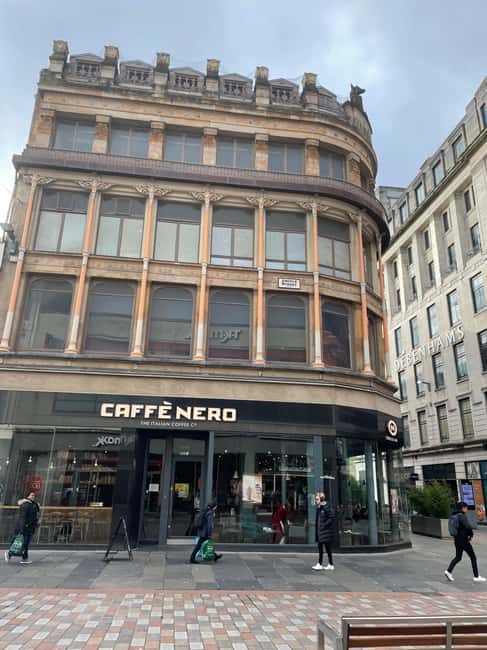
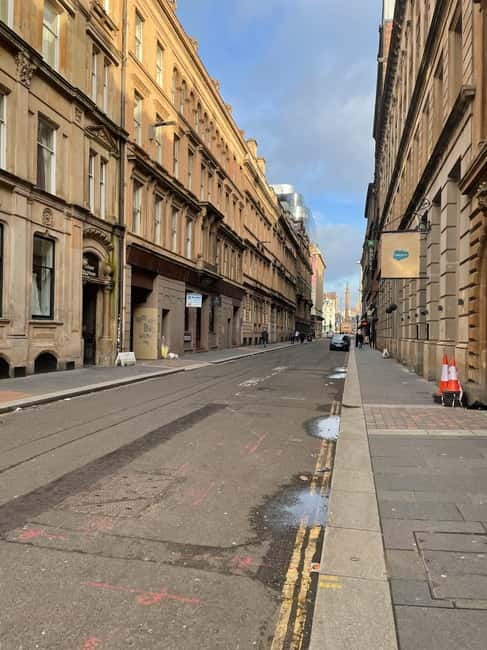
Merchant City is the most atmospheric part of the route. Here you explore old lanes and streets connected with Glasgow’s original trading barons. The area offers a useful change of mood after the open space of George Square.
You hear about homes and palaces linked to wealthy merchants, along with stories of people who made fortunes and people who lost them. The point is not simply to admire fine stonework. It is to understand how trade shaped the social order of the city.
The guide also connects Glasgow’s merchants with the American War of Independence, including the possibility that Glaswegians helped set events in motion. This is the kind of story that makes the city feel tied to wider world events rather than isolated in Scotland.
Expect anecdotes rather than a formal academic lecture. The strongest guides use humor, personal delivery, and dramatic timing. Gordon, for example, has been praised for mixing historical explanation with poetry and old-style storytelling. Ian is noted for balancing facts with amusing or relevant anecdotes. Martin’s dramatic training reportedly helps him connect with people across a sizable group.
The lanes are also where you get a sense of the city’s changing identity. Glasgow was shaped by money, migration, religion, politics, and work. Irish immigration is included in the story, with attention to how Irish communities contributed to the city’s growth.
The Gallery of Modern Art and Police Museum
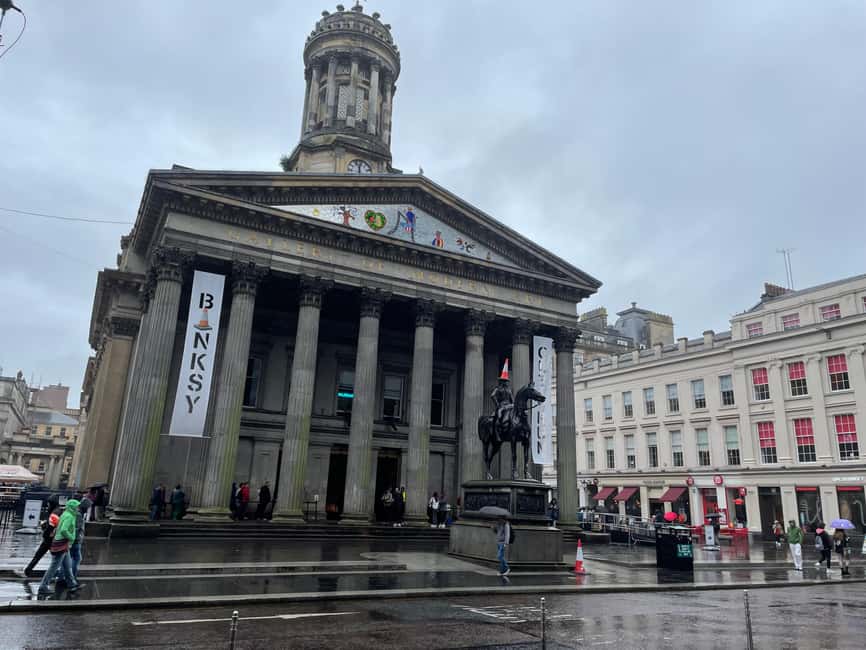
The itinerary includes the Gallery of Modern Art and Police Museum as points of interest. The guide points out the collections and explains where they fit into the city centre, but you should not expect an indoor museum visit during the two hours.
That is not necessarily a weakness. A walking tour is often most useful when it gives you a list of good follow-up stops. Glasgow’s museums and galleries are free to visit, so you can return later without adding an admission charge.
The Gallery of Modern Art is a sensible option if you want to continue with art and architecture after the walk. The Police Museum suits anyone drawn to crime, law, and the less polished side of city history. The tour itself may also touch on darker subjects, including murder, ghosts, grave robbing, and public punishment, depending on the guide’s storytelling choices.
Use the walk to decide what deserves more of your time. You will not see everything in depth, but you leave with a clearer idea of where to return.
Glasgow Cathedral, Irish immigration, and Mercat Cross
The tour brings up Glasgow Cathedral as one of the city’s major historic sights. The supplied details do not promise a full interior visit, so think of it as a sight you may wish to explore after the walk rather than a guaranteed stop with extended entry time.
The cathedral matters because it connects with Glasgow’s early Christian past. That gives the earlier discussion of religion and medieval Glasgow a physical anchor. If you plan to visit, save time after the tour rather than assuming the walking route includes a full cathedral exploration.
The formal route finishes at Mercat Cross, Glasgow Cross, an area associated with public executions in the past. It is a suitably stark ending for a tour that refuses to present the city as only grand buildings and successful merchants.
There is a small practical inconsistency in the supplied arrangements: the route names Mercat Cross as the finish, while the meeting information says the activity ends back at the meeting point. Confirm the exact endpoint with the provider when you book, especially if you have a timed train, restaurant reservation, or museum visit afterward.
What the price gives you for $20
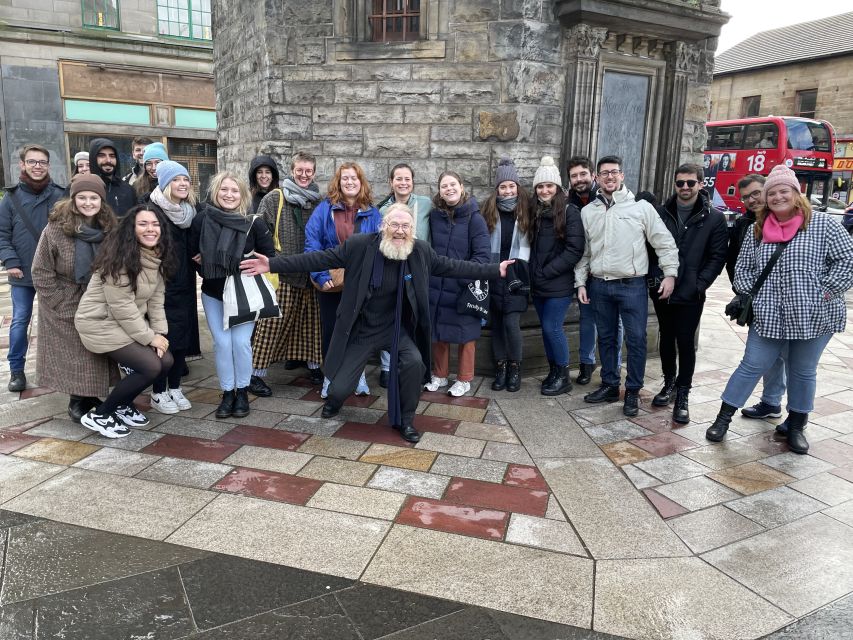
At $20 per person, this is a strong-value introduction to central Glasgow. You are paying for two hours of guided interpretation, not entrance tickets. Since the museums and galleries mentioned are free, you can continue exploring without paying again.
The value is highest if you are new to Glasgow and want a useful first look at the city. A good guide can save you time by showing which buildings, streets, and museums deserve a closer visit. The post-tour suggestions about food and things to do are also practical.
The price is less compelling if you want long interior visits or a very small, quiet group. The activity is described as private, but feedback refers to groups, including one group of about 35 people. Group size may vary, so ask for clarification if personal attention is important to you.
The guide makes a major difference. The strongest experiences appear to come from Ian, Martin, Luke, and Gordon, all praised for different versions of the same basic skill: making facts memorable. You are buying access to the route, but the quality of the performance shapes the experience.
How to prepare for the two hours
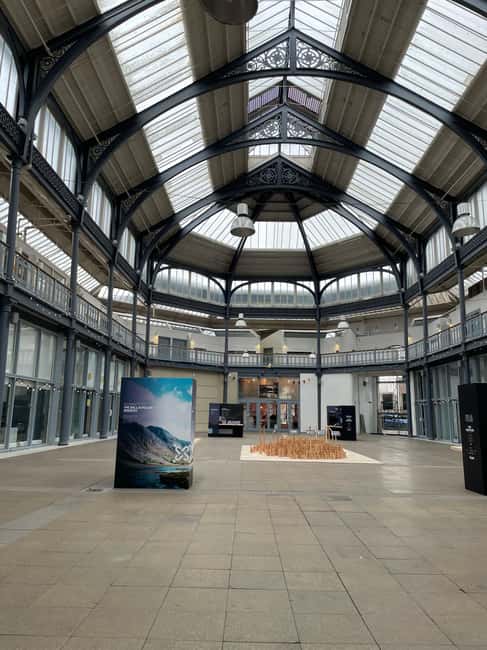
This is an outdoor walk in Glasgow weather. The tour operates rain or shine, so bring a waterproof layer and clothing suited to the forecast. Comfortable shoes matter more than fashionable ones, even though the terrain is flat.
Bring a camera for George Square, Merchant City, and the old civic buildings. You will likely spend time looking upward, so a camera or phone is useful for recording architectural details that you may want to identify later.
The tour is in English only. Guides are expected to speak clearly, and several comments praise their projection and easy-to-follow delivery. Still, if you have hearing difficulties, staying near the guide is sensible, particularly if the group is large or the streets are noisy.
Wheelchair users should find the flat route helpful. The supplied information describes the walk as wheelchair accessible, but it does not give detailed information about curb cuts, lane surfaces, or access inside individual buildings. If you need specific arrangements, confirm them before booking.
You can cancel up to 24 hours ahead for a full refund, and the reserve-now-pay-later option keeps payment flexible. Those policies are useful if your Glasgow plans depend on weather or changing transport arrangements.
Who should book this Glasgow history walk
I would recommend this tour to first-time visitors who want a quick grounding in Glasgow’s central story. It is also a good choice for anyone who learns better through voices and anecdotes than through display panels.
History fans will appreciate the range, from Roman and Christian beginnings to empire, merchant wealth, Labour politics, Irish immigration, and public executions. Architecture fans will enjoy George Square and the Merchant City, though this is not a specialist architecture tour.
Families and mixed-age groups may like the humor and theatrical delivery. The tour can also work well at the start of a weekend because it helps you decide what to revisit. A guide who can suggest food and later activities adds practical value.
You may want a different experience if you dislike group walks, prefer silent observation, or need extended access to museums and churches. This is a lively overview, not a slow study of one building.
FAQ
How long does the Glasgow historical walking tour last?
The tour lasts two hours. Starting times vary, so check availability when booking.
Where does the tour begin?
Meet the guide between the lions in George Square, just behind the White Granite Cenotaph or War Memorial.
What happens if George Square is disrupted?
If a major disruption affects the square, the alternative meeting point is Piper Whisky Bar at the corner of Cochrane Street and George Square.
Is the tour conducted in English?
Yes. The live guide conducts the tour in English.
Is the walking route wheelchair accessible?
Yes. The tour is described as wheelchair accessible and takes place on flat terrain.
Are museum and gallery admission fees included?
The tour does not include museum or gallery admissions, but the Glasgow museums and galleries mentioned are free to visit. The guide points them out, though there is not enough time for a full visit during the walk.
Should you book it?
Book this tour if you want Glasgow’s story told by a performer, not just a guide reading dates from a card. The route gives you George Square, medieval Glasgow, Merchant City, political history, immigration, darker city tales, and useful ideas for the rest of your visit.
At $20, it is an affordable way to get your bearings and add meaning to the buildings you pass later. Just dress for rain, wear good shoes, and confirm the final meeting point and likely group size if those details matter to you.
Just added around Glasgow
- Private Harry Potter, Glenfinnan Viaduct, Highlands tour Glasgow★ 5.0 · 8 reviews
- Glasgow: Mountains, Glens & The Loch Ness Monster Day Tour★ 4.8 · 8 reviews
- From Glasgow: Castles, Clans & Outlander Day Tour★ 4.8 · 8 reviews
- Edinburgh Custom Private Walking Tour With A Guide (Private Tour)★ 4.5 · 8 reviews
- From Glasgow; Loch Lomond and Highlands Private Day Tour★ 5.0 · 9 reviews
- Loch Lomond, Inveraray and Argyll Private Tour from Glasgow★ 5.0 · 9 reviews
- Fun and Flexible Treasure Hunt Around Glasgow with Cryptic Clues★ 5.0 · 9 reviews
- Fun Glasgow City Centre Walking Tour Guided★ 5.0 · 9 reviews
Glasgow Tours, compared.

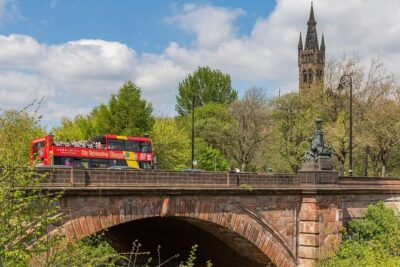
City Sightseeing Glasgow Hop-On Hop-Off Bus Tour
Read our review →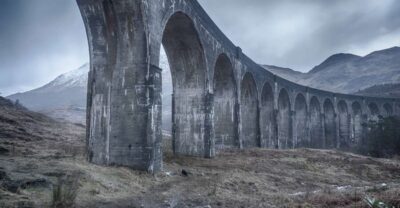
Glenfinnan, Fort William, and Glencoe Day Trip
Read our review →

Loch Ness, Glencoe and Highlands Tour with Cruise
Read our review →
Browse the lists this tour appears in